1000₺ ve üzeri alışverişlerde ÜCRETSİZ KARGO
Hafta içi saat 12.00‘ye kadar verilen siparişler AYNI GÜN KARGODA

  • 0 Items - ₺0,00
    • Sepette hiç bir ürün yok.
-30%

Orijinal fiyat: ₺365,00.Şu andaki fiyat: ₺255,00.

İslam Hukuk Sosyolojisi

Sociology of Islamic Law

10.70458/fcr.9786256123922

0000-0002-7954-7353 F0938 , Bu kitap 4 adet satın alınmıştır.
Paylaş
İslam Hukuk Sosyolojisi
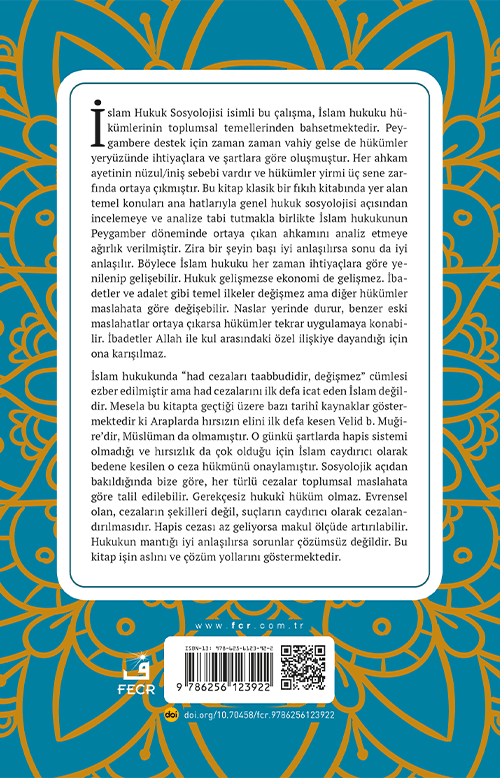
İslam Hukuk Sosyolojisi, İslam hukuku hükümlerinin toplumsal temellerinden bahseden bir kitaptır. Zira Peygambere destek için zaman zaman vahiy gelse de hükümler yeryüzünde ihtiyaçlara ve şartlara göre oluşmuştur. Her ahkam ayetinin nüzul/iniş sebebi vardır ve hükümler yirmi üç sene zarfında ortaya çıkmıştır. Bu husus bilindiği halde İslam hukukunun daha sonra değişen ihtiyaçlara ve şartlara göre gelişmesini kabulde zorluk çekenler çok oluyor. Bu hususu diğer bazı eserlerimizde de vurguladık. Eserlerimizi sosyolojik bakış açısıyla yazdık, bu kitapta onlardan da yararlanarak, klasik bir fıkıh kitabında yer alan bütün konuları ana hatlarıyla genel hukuk sosyolojisi açısından incelemeye ve analize tabi tuttuk. Kitapta İslam hukukunun Peygamber döneminde ortaya çıkan ahkamını analiz etmeye ağırlık verdik. Zira bir şeyin başı iyi anlaşılırsa sonu iyi anlaşılır. Çoğu insan Peygamber döneminde ortaya çıkan hükümleri önceden hazırlanmış dünya şartlarından soyut gizemli hükümler olarak algıladığından İslam hukuku ihtiyaçlara göre yenilenip gelişmiyor. Hukuk gelişmezse birçok şey gelişmez, ekonomi gelişmez. İbadetler ve adalet gibi temel ilkeler değişmez ama diğer cüzi hükümler maslahata göre değişebilir. Naslar yerinde durur, benzer eski maslahatlar ortaya çıkarsa hükümler tekrar uygulamaya konabilir. İbadetler Allah ile kul arasındaki özel ilişkiye dayandığı için ona karışılmaz. Geçmişte bazı alimler ileri görüşlülükle Peygamber’den sonra muamelatla ilgili hükümler maslahata göre değişebilir dediği halde, bazı sebeplerle geleneksel görüşe tabi olarak mukadderat (had cezaları vb.) taabbudidir, talil edilemez, değişmez demiştir. Ancak had cezalarını ilk defa icat eden İslam değildir; mesela bu kitapta geçtiği üzere bazı tarihî kaynaklar göstermektedir ki hırsızın elini ilk defa kesen Velid b. Muğire’dir, Müslüman da olmamıştır, Arapların büyüklerinden ve hakemlerinden olduğu için bu uygulama yaygınlaşmıştır; o günkü şartlarda hapis sistemi olmadığı için ve hırsızlık da çok olduğu için İslam caydırıcı olarak bedene kesilen o ceza hükmünü onaylamıştır. Sosyolojik bakıldığında durum böyle. Dolayısıyla bize göre her türlü cezalar toplumsal maslahata göre talil edilebilir. Gerekçesiz hukukî hüküm olmaz. Bilindiği üzere Osmanlı maslahatı gözeterek hırsızın elini kesmemiş, kürek çekme cezası vermiştir. Fatih Sultan Mehmet Han başka bazı had cezalarını da değiştirmiştir. Bu konuda makaleler yazılmıştır. Mukayeseli hukuk tarihini iyi bilmek lazım. Roma hukuk mirası üzerine kurulu Avrupa hukukları Roma hukukunda yer alan kısas ve diyeti değiştirmiştir, hapse çevirmiştir. Evrensel olan, cezaların şekilleri değil, suçların caydırıcı olarak cezalandırılmasıdır. Ceza az geliyorsa makul ölçüde artırılabilir. Hukukun mantığı iyi anlaşılırsa sorunlar çözümsüz değildir.
Anahtar Kelimeler: İslam; hukuk; sosyoloji; şartlar; konjonktür; değişim


 İÇ SAYFALAR
Sociology of Islamic Law
Sociology of Islamic Law is a book that talks about the social foundations of Islamic law provisions. Because although revelation came from time to time to support the Prophet, the provisions were formed according to the needs and conditions on earth. Every verse of decrees has a reason for revelation and the provisions emerged over a period of twenty-three years. Although this issue is known, there are many who have difficulty accepting that Islamic law developed according to changing needs and conditions later. We have emphasized this issue in some of our other works. We wrote our works from a sociological perspective, and in this book, we have examined and analyzed all the topics in a classical fiqh book in general terms from the perspective of general law sociology. In the book, we focused on analyzing the provisions of Islamic law that emerged during the time of the Prophet. Because if the beginning of something is well understood, its end is well understood. Since most people perceive the provisions that emerged during the time of the Prophet as mysterious provisions abstracted from previously prepared world conditions, Islamic law does not renew and develop according to needs. If the law does not develop, many things will not develop, the economy will not develop. Basic principles such as worship and justice do not change, but other minor rulings can change according to expediency. If the texts remain in place and similar old expediency emerges, the rulings can be put into practice again. Since worship is based on the special relationship between Allah and the servant, it is not interfered with. Although some scholars in the past, with foresight, said that rulings regarding transactions after the Prophet could change according to expediency, for some reasons, they said that fate (hadd punishments, etc.) are subject to the traditional view, they cannot be imposed, they cannot be changed. However, Islam was not the first to invent hadd punishments; for example, as mentioned in this book, some historical sources show that the first person to cut off the hand of a thief was Walid b. Mugira, who was not a Muslim either, and because he was one of the elders and referees of the Arabs, this practice became widespread; since there was no prison system in those days and since theft was common, Islam approved that punishment imposed on the body as a deterrent. When viewed sociologically, this is the situation. Therefore, in our opinion, all kinds of punishments can be determined according to social interests. There is no legal judgment without justification. As it is known, the Ottomans did not cut off the thief’s hand, considering the interests, but gave him the punishment of being driven to the galleys. Fatih Sultan Mehmet Khan also changed some other punishments. Articles have been written on this subject. It is necessary to know the history of comparative law well. European laws, based on the legacy of Roman law, changed the retaliation and blood-money in Roman law, turning them into imprisonment. What is universal is not the forms of punishment, but the punishment of crimes as a deterrent. If the punishment is insufficient, it can be increased to a reasonable extent. If the logic of the law is well understood, the problems are not insoluble.
Keywords: Islam; law; sociology; conditions; conjuncture; change;

Genel Yayın No

1534

Marka

Fecr

Marka No

938

ISBN

9786256123922

Yayım Tarihi

07.02.2025

Dil

Boyut

13,5 x 21 cm

Baskı Sayısı

1

Sayfa Sayısı

292

Kağıt Cinsi

70 gr. Enzo

Kapak

Taksitleri Güncelle