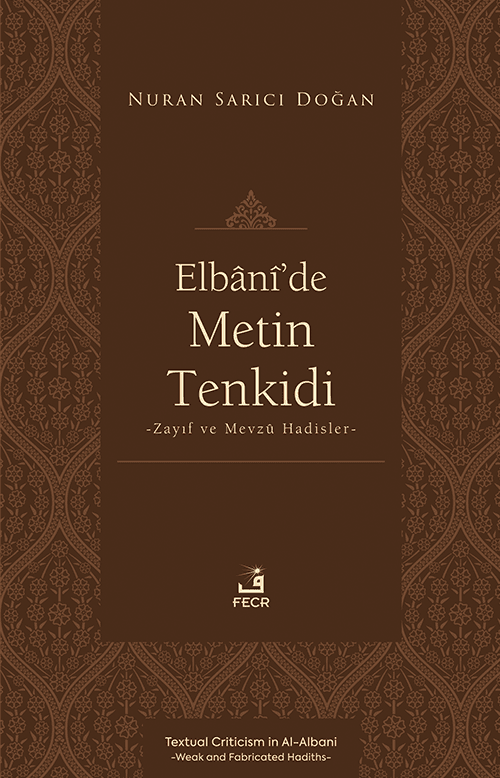
Textual Criticism in Al-Albani -Weak and Fabricated Hadiths-
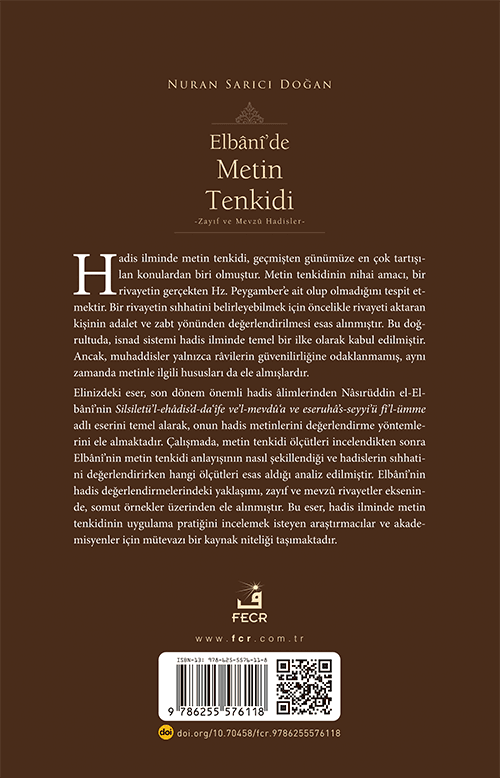
The primary aim of this study is to critically examine the claims made by some Orientalists and Islamic scholars that the classical Islamic scholars (ulema) neglected the practice of text criticism. It seeks to demonstrate that, although specific chapters dedicated solely to text criticism were not established in the process of evaluating hadiths, various aspects related to the text were thoroughly examined within the framework of different disciplines. In this context, the study analyzes Muhammad Nasir al-Din al-Albânî’s work, Silsilat al-Aḥādīth al-Ḍaʿīfa wa al-Mawḍūʿa wa Atharuhā al-Sayyiʾ fī al-Umma, which compiles weak and fabricated hadiths, using the principles of text criticism. The study consists of four main sections: an introduction, two main chapters, and a conclusion. The introduction outlines the concepts of “text” and “criticism,” while also discussing the significance of text criticism in hadith studies within a conceptual frame- work. The first chapter provides an overview of Nasir al-Din al-Albânî’s life, education, teachers, students, and works, alongside a general introduction to the aforementioned book. The second chapter delves into the principles of text criticism in detail, presenting selected examples from al-Albânî’s work where text criticism methods were applied. These examples are analyzed to explore al-Albânî’s methodologies in textual criticism. Finally, the conclusion summarizes the findings of the study, offer- ing a concise evaluation of the results.
Keywords: Text; Criticism; Textual Criticism; al-Albânî; Weak Hadith; Fabricated Hadith; Silsilat al-Aḥādīth al-Ḍaʿīfa wa al-Mawḍūʿa wa Atharuhā al-Sayyiʾ fī al-Umma

 İÇ SAYFALAR