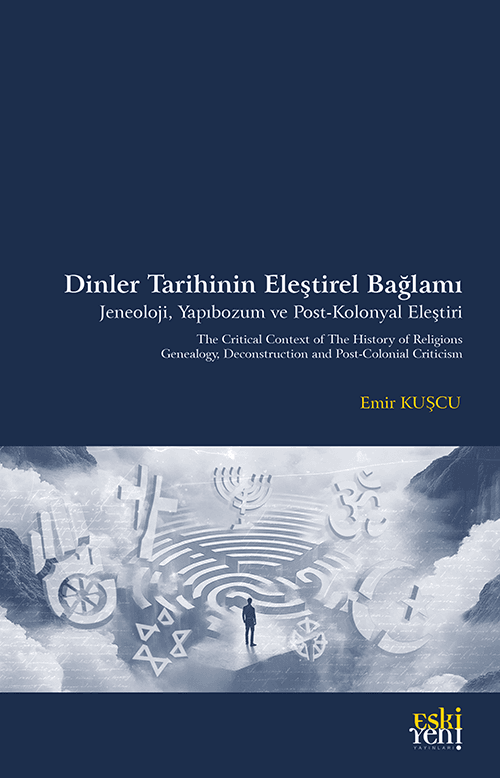
The Critical Context of The History of Religions Genealogy, Deconstruction and Post-Colonial Criticism
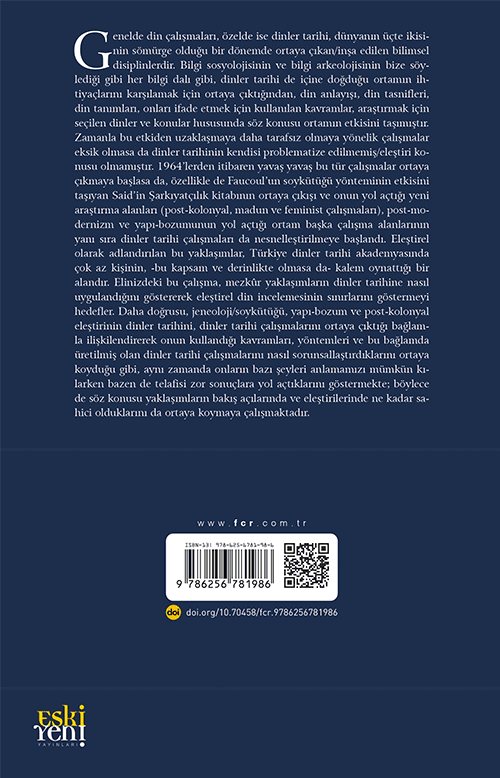
Religious studies in general and the history of religions in particular are scientific disciplines that constructed in a period when two-thirds of the world was colonized. As the sociology of knowledge and the archaeology of knowledge tell us, since the history of religions, like every other branch of knowledge, emerged to meet the needs of the environment in which it was born, the understanding of religion, the classifications of religion, the definitions of religion, the concepts used to express them, the religions and subjects chosen for research have carried the influence of this environment. Although there has been no lack of efforts to move away from this influence over time and to be more objective, the history of religions itself has not been problematized/ criticized. Although such studies slowly began to emerge from the 1964s onwards, especially with the emergence of Said’s Orientalism, which was influenced by Foucault’s genealogical method, and the new fields of research it led to (post-colonial, subaltern and feminist studies), as well as the environment created by post-modernism and deconstruction, the study of the history of religions, among other fields of study, began to be objectified. These so-called critical approaches are an area in which very few people in the academia of the history of religions in Turkey have put pen to paper, albeit not in this scope and depth. This study aims to demonstrate the limits of critical religious studies by showing how these approaches are applied to the history of religions. More precisely, it shows how genealogy, deconstruction and post-colonial criticism problematize the history of religions, the concepts and methods used by the history of religions by relating it to the context in which it emerged, as well as the history of religions studies produced in this context, while at the same time showing that while they make it possible for us to understand some things, they sometimes lead to irreparable consequences; thus, it also tries to reveal how authentic these approaches are in their perspectives and criticisms.
Keywords: Genealogy; Deconstruction; Post-colonial; Critical Theory; Religious Studies; Colonialism; Definitions of Religion; Classifications of Religions; Comparison; Feminism

 İÇ SAYFALAR