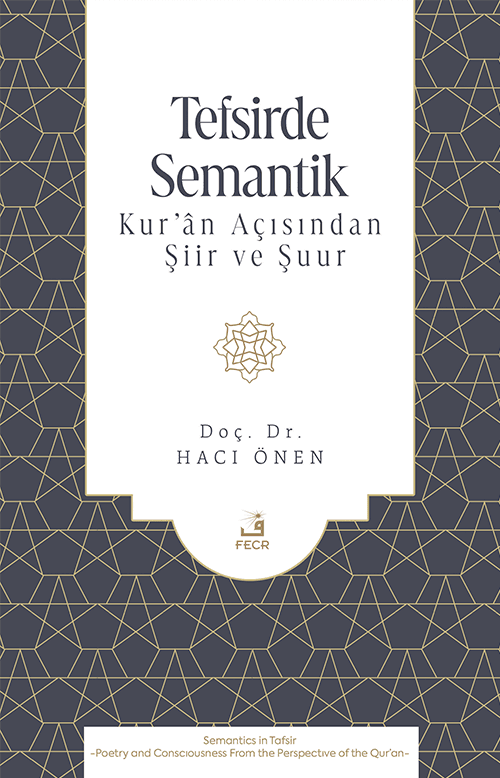
Semantics in Tafsir -Poetry and Conscıousness From the Perspectıve of the Qur’an-
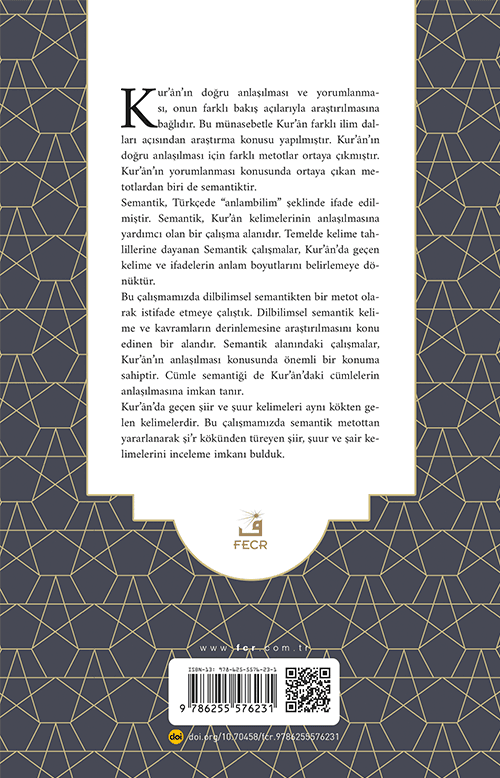
It is possible to say that semantics is accepted as one of the methods used in understanding and interpreting the Qur’an. Because semantics enables the correct understanding of the Qur’an. In scientific studies, the developments in the meanings of words are discussed from a wide range of perspectives. It is possible to say that semantics will make important contributions to understanding the Qur’an and shedding light on the historical journey of its words.
Some words in the Qur’an are used in different meanings. The concepts in the Qur’an have sometimes acquired new meanings, sometimes undergone meaning expansion and sometimes meaning contraction. Semantic method allows us to analyze these semantic changes. Semantic method is also a method that allows us to understand the Qur’an more accurately.
In this study, we have tried to deal with the subject of semantics and the views put forward within this framework. We have tried to examine how semantics can be used to understand the Qur’an.
Semantics does not only have a theoretical dimension. Because semantic analysis also has a practical dimension. In this respect, we have tried to analyze some concepts and words related to the subjects we deal with in our study. In this respect, in the third and fourth chapters of our study, we tried to examine the concepts of poetry, poet and consciousness in the Qur’an.
In the third and fourth parts of our study, we tried to investigate how semantics was applied while analyzing the words in the Qur’an. In our study, we will first try to understand how poetry was understood in Arab culture before Islam. Then we will try to discuss how poetry was understood in the Islamic period. One of the main aims of our research is to make a semantic analysis of the concepts of consciousness, poetry and poet in the Qur’an and to try to investigate how the Qur’an approaches poetry and poet.
Keywords: Qur’an, Revelation, Semantics, Verse, Poetry, Awareness

 İÇ SAYFALAR