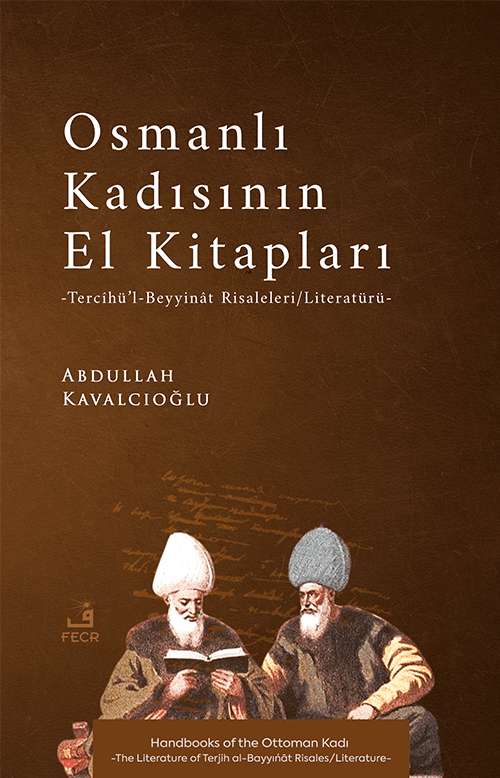
Handbooks of the Ottoman Kadı -The Literature of Terjih al-Bayyı̇ṅ āt Risales/Literature-
This study aims to introduce a series of treatises written by scholars who lived in the Ottoman Empire and also served as qadis. The first of these treatises, written by Vankulu Mehmed Efendi, explains which type of evidence should be preferred in case of a contradiction between pieces of evidence presented to the court. These treatises were written using different methods; however, they all aimed at the same goal. The term beyyine is mostly used to refer to witnesses, but it also denotes strong evidence presented to the court. These works were generally written by individuals who had served as qadis, intending to serve as handbooks for judges. In this study, the most prominent treatises on the subject have been selected. Thus, we aim to provide information on their content, purpose, methodology, and sources. This study will shed light on the principles upon which qadis-one of the most crucial elements of the Ottoman judiciary-based their judgments, as well as the sources they used in their decision-making processes. These treatises inform us about the sources utilized by Ottoman qadis in two ways. First, they clarify which type of evidence should be prioritized in cases where conflicting evidence arises. Second, their authors explicitly state the sources from which they derived their principles and examples. Therefore, these treatises serve as fundamental references that Ottoman qadis relied upon while ruling.
Keywords: Ottoman Law; Kadi; Declaration; Contradiction; Preference

 İÇ SAYFALAR