1000₺ ve üzeri alışverişlerde ÜCRETSİZ KARGO
Hafta içi saat 12.00‘ye kadar verilen siparişler AYNI GÜN KARGODA

  • 0 Items - 0,00
    • Sepette hiç bir ürün yok.
%31 İNDİRİM

Orijinal fiyat: ₺245,00.Şu andaki fiyat: ₺170,00.

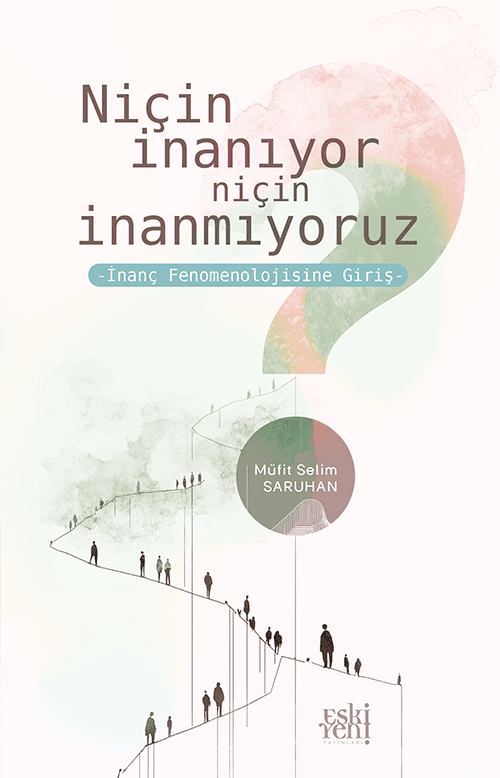
Niçin İnanıyor Niçin İnanmıyoruz -İnanç Fenomenolojisine Giriş-

Why Do We Believe Why Don’t We Believe -An Introduction to the Phenomenology of Belief-

10.70458/fcr.9786255536198

0000-0001-8065-3156 ES0306 ,
Paylaş
Niçin İnanıyor Niçin İnanmıyoruz -İnanç Fenomenolojisine Giriş-


Bu kitap, inancı da inançsızlığı da yargılamadan, okuyucusuyla birlikte düşünmeye çalışan bir sorgulamanın izini sürüyor. Niçin inanıyoruz? veya niçin inanmıyoruz? gibi temel sorulara verilen cevapların çoğu zaman derinlikten uzak, taklitle şekillenmiş ya da yalnızca sosyolojik kabullerle sınırlı olduğunu fark ediyoruz. Yazar, bu cevaplara kendi mutlak cevabını sunmaktan çok, bu tür soruların bizi hangi zihinsel ve varoluşsal eşiklere taşıdığını birlikte tartışmayı öneriyor.
Dinin toplumdaki fenomenolojik görünümleri ufuk, huzur ve kaos kavramları üzerinden düşünülüyor. Bu kavramlar, dinin nasıl algılandığına dair farklı okumaların bir haritası olarak sunuluyor. Ardından, felsefi düşünce eşliğinde, inancın sadece duygusal ya da kültürel değil, aynı zamanda kavramsal olarak da nasıl temellendirilebileceği üzerine bir öneri geliştiriliyor. Yazar, Aristotelesçi dört neden anlayışını ve kategorileri bir tür zihinsel mercek olarak kullanmayı teklif ediyor: Anlamaya çalışırken zihnimizin hangi yapılarla düşündüğünü birlikte keşfetmek için.
İnançla ilgili düşünsel geleneklerde kısa bir yolculuğa çıkan yazar, İslam düşüncesinde İbn Arabî’nin çoğulculuğa açık yapısını, Fârâbî’nin dini felsefeyle özdeşleştiren rasyonalist yaklaşımını hatırlatıyor. Batı felsefesinde ise Locke, Hume, Kant ve Spinoza gibi isimlerin inanca dair özgün yaklaşımlarına değinerek, neyi neden düşündüğümüzü sorgulamak için düşünce zemini sunuyor. Ancak hiçbirini mutlaklaştırmadan, sadece bir düşünme daveti olarak önümüze koyuyor.
Yazar, dinî metinlerin farklı yorumlara açık doğası ve bu farklılıkların doğurabileceği gerilimler üzerinde duruyor. Dinin şiirsel, burhanî ya da retorik biçimde algılanışının insan zihninde ne tür anlam değişimleri yarattığını soruyor. Herkesin anlama biçimi farklıysa, o hâlde metinler hep yeniden mi anlaşılmalıdır? Kutsal olanla ilişkiyi hangi düzlemde kurarız?
“Niçin?” sorusu, bu kitapta merkezi bir yer tutuyor. İnanma veya inanmama, başlı başına birer sonuç değil; çoğu zaman yaşanmışlıkların, karşılaşmaların, korkuların ve umutların iç içe geçmiş hâlidir. Dolayısıyla yazar, bir taraf belirlemekten çok, okuyucusunu kendi düşünsel serüvenine çağırıyor: Düşünmeye, sorgulamaya, bazen durmaya, bazen yeniden başlamaya…
Bu kitap, kesin cevaplar sunmuyor. Ama her cevabın ardında hangi sorunun gizli olduğunu birlikte aramaya davet ediyor. Çünkü inanç da inançsızlık da, nihayetinde bir bakış açısı değil, bir yolculuk biçimidir
 
Anahtar Kelimeler: Fenomenoloji; Sebepler Teorisi; Kategoriler; Din Felsefesi; Hayatın Anlamı; İnanç; Kültür; Felsefe


 İÇ SAYFALAR
Why Do We Believe Why Don’t We Believe -An Introduction to the Phenomenology of Belief-
This book traces the path of a reflective inquiry that seeks neither to glorify belief nor to dismiss unbelief, but instead to think through both-alongside the reader. It observes that responses to fundamental questions such as Why do we believe? or Why don’t we believe? are often shaped by imitation, cultural conditioning, or superficial sociological assumptions, lacking in depth or self-awareness. Rather than providing definitive answers, the author invites us to explore where these questions might lead us-both mentally and existentially.
The book explores the phenomenological appearances of religion in society through the key concepts of horizon, tranquility, and chaos. These serve as conceptual lenses to understand how religion is perceived across different contexts. Building on this, the author proposes a framework to understand belief not only through emotional or cultural dimensions but also through conceptual foundations. Drawing from Aristotle’s four causes and classical philosophical categories such as substance, relation, time, and place, the author attempts to reinterpret these traditional tools as cognitive modes that shape how we engage with belief-not merely as abstract theory but as practical ways of thinking.
Taking a brief journey through philosophical traditions, the author revisits Ibn ‘Arabī and al-Fārābī in Islamic thought-highlighting Ibn ‘Arabī’s openness to pluralism and al-Fārābī’s rationalist synthesis of philosophy and religion. In the Western tradition, figures like Locke, Hume, Kant, and Spinoza are engaged-not as final authorities, but as thinkers whose views on belief can help us ask deeper questions about our own. None are absolutized; each is offered as a thoughtful companion on the journey.
The author turns to the interpretive plurality of religious texts, questioning how these varying interpretations shape belief, identity, and sometimes tension. How does religion appear differently when perceived through a poetic, dialectical, or rational lens? If every person understands differently, must religious texts always be reinterpreted? On what grounds do we relate to the sacred?
At the heart of the book lies the question Why? Belief or unbelief is rarely a final destination; it is more often the product of experience, confrontation, fear, hope, and reflection. Thus, rather than advocating a single position, the book calls on the reader to embark on their own intellectual journey: to think, to pause, to question, and sometimes-to begin again.
This is not a book of final answers. But it is an invitation to look behind every answer and examine the question that gave rise to it. Because belief and unbelief are not ultimate positions-they are forms of travel, each with their own inner landscapes.
Keywords: Phenomenology; Theory of Reasons; Categories; Philosophy of Religion; Meaning of Life; Belief; Culture; Philosophy

Genel Yayın No

1594

Marka

Eskiyeni

Marka No

306

ISBN

9786255536198

Yayım Tarihi

28.04.2025

Dil

Boyut

13,5 x 21 cm

Baskı Sayısı

1

Sayfa Sayısı

166

Kağıt Cinsi

70 gr. Enzo

Kapak

Taksitleri Güncelle