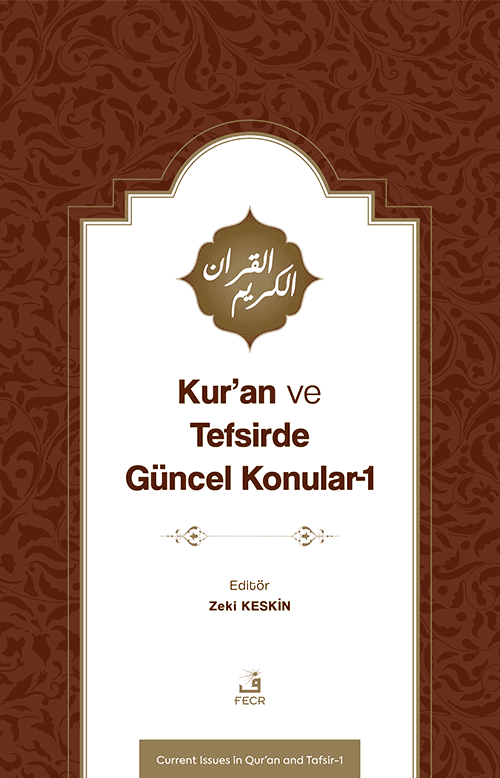
Current Issues in Quran and Tafsir-1 (Problems-Problems-Solution Suggestions)
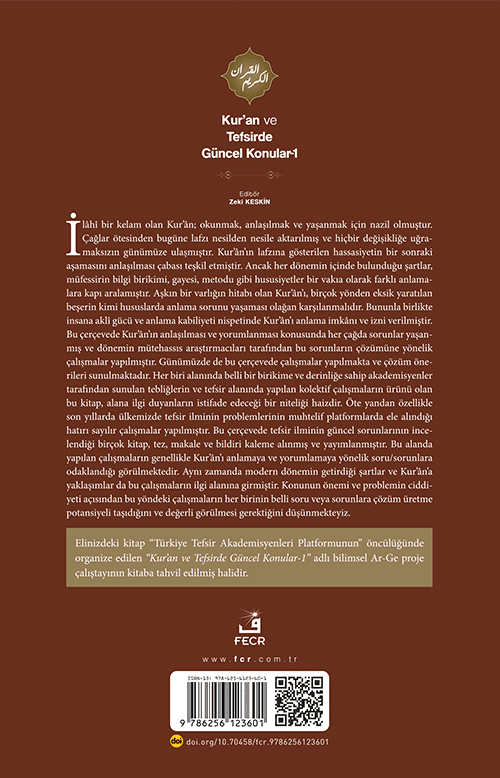
The activity of understanding and explaining the Qur’an, which began with its revelation, did not pose a significant issue in the early periods due to the presence of the Prophet (pbuh). This is because the companions would ask the To the Prophet (pbuh), the first representative of the mission of conveying the message, any questions they had regarding concepts, topics, or rulings they did not understand, thereby obtaining the necessary information directly. It can be stated that this elucidation activity initiated by the The Messenger of Allah (pbuh) formed the nucleus and laid the foundation of Qur’anic exegesis. In this respect, it can be said that exegesis (tafsir) was the first science to emerge in Islam. By the time of the Tabi’un period, changes in socio-cultural conditions and the conversion of non-Arabs to Islam led to the emergence of the phenomenon of lahn (linguistic errors), resulting in comprehension issues stemming from language differences. Over time, the scope of tafsir expanded, and it attained a well-established structure with Tabari, who passed away at the beginning of the 4th century AH. This long-standing activity over centuries has laid the groundwork for the formation of a voluminous corpus of literature. While this indicates a wealth of scholarly richness, it has also brought forth the issue of inaccessibility or lack of readability among the general public and literate individuals. This situation underscores the importance of time management as well. Over the course of changing times, significant shifts have occurred in people’s lifestyles, perspectives on life, and consequently in their approaches to understanding, interpreting, and practicing religion. As a result, it has become possible for issues addressed by the science of exegesis to change, for new problems to emerge, or for old issues to be revisited. In this regard, addressing and presenting topics related to the daily, social and cultural lives of contemporary people has become a necessity in order to meet their needs. On the other hand, for studies on Qur’anic exegesis to accurately identify issues and offer solutions, it is essential to have a comprehensive understanding of the Qur’an’s content, objectives, and aims. The book in your hands brings to light certain specific topics related to the Qur’an and its exegesis, subjecting both traditional and modern perspectives to a holistic evaluation. In addition, it addresses issues concerning the Qur’an and its interpretation by taking into account its context and objectives, aiming to offer solutions in this regard. However, it does not claim to rediscover the Qur’an with new interpretations in an academic and objective manner. In this book, issues that present challenges in Qur’anic exegesis are examined through selected topics, some of which are contemporary and others that have been revisited or updated. This research aims to shed light on certain scholarly problems and solution-seeking efforts within the field of tafsir while also drawing attention to specific issues evaluated within this discipline. The findings and conclusions reached in this regard are presented for consideration. We believe that this work will contribute to readers by emphasizing the importance of a holistic perspective in scholarly matters. In this book, key topics are presented for the benefit of the reader by a group of researchers who are experts in their field and capable of approaching the subject objectively. Our task is to reevaluate the subjects debated in the past within our field of study with a fresh and comprehensive perspective. Accurately interpreting the current state of affairs, clarifying emerging issues through an unbiased scholarly lens, and synthesizing the past’s knowledge and experience with the needs of today and the future is a duty expected of academics. We believe that our country has the qualified individuals to achieve this goal and that, with a productive working environment, successful outcomes can be realized. Effort is from us; success is from Allah.
Keywords: Tafsīr, Qur’ān, Ta’wīl, Translation of Qurʾān, Revelation, Reason/Intellect, Eloquence.

 İÇ SAYFALAR