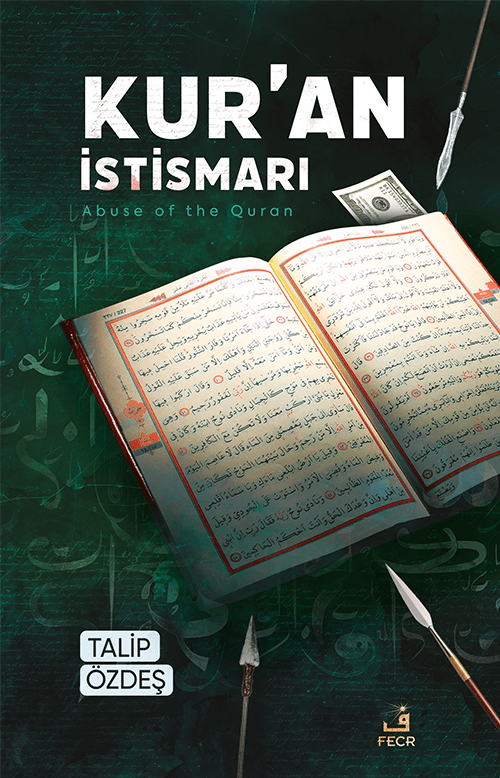
Abuse Of The Quran
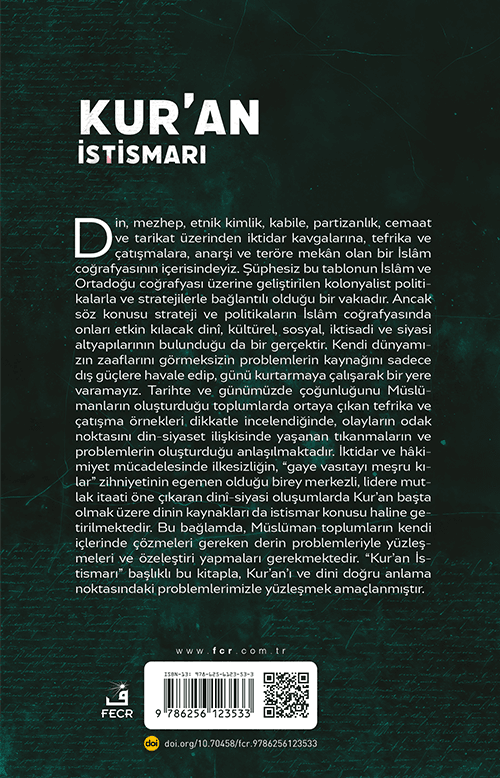
As man is a being who can perform good and beautiful deeds on earth and build civilization, he is also a being who can shed blood, cause corruption, and oppress himself and others. Although many changes and developments have occurred in the tools used by humans, their relationships, their knowledge, their experiences, and the methods and procedures they follow and apply since the beginning of human life until today, there has been no fundamental change in their basic needs, natural characteristics, instincts, demands, and tendencies. The inherent weaknesses of the human soul and its ability to cause mischief have also shown themselves in the divine books that God has revealed to His prophets throughout history. Although the text of the Quran, the fundamental source of Islam, is the same everywhere, people’s approaches to it and their interpretations of it change, and sometimes these interpretations reach the point of distortion. Just as people can approach the book of Allah with good intentions, sincerity, devotion, and purity, they can also approach it to exploit it for their corrupt intentions, ideologies, policies, sects, prejudices, ambitions, and interests. From the early periods of Islamic history to the present day, the failure to place the relationship between religion and politics on the axis, and the power struggle has played an important role in the abuse of the Quran. The Quran has been abused by using it as a tool by those in power or those who take sides in the political arena to gain legitimacy for themselves through religion in their power struggle. The Quran has also been abused by some bodies to bind people to themselves through religion and create a sphere of domination for themselves to exploit them. Since the early periods of Islamic history, those who have abused the Quran for their interests have tried to make it speak in line with their understanding, thought, ideology, sect, and policies, and have tried to make the Quran say what they wanted to say. While doing this, the integrity of the Quran and the purposes of divine revelation were not observed, the Quran was approached in a completely literal, superficial, and fragmentary/ atomic manner, and verses and Quranic concepts were detached from their context. Likewise, the historical context in which the verses were revealed, their lively relationship with facts and events, the reasons for their revelation, and the environment in which they were addressed are also left out.
Keywords: Quran, politics, power struggle, legitimacy, abuse

 İÇ SAYFALAR