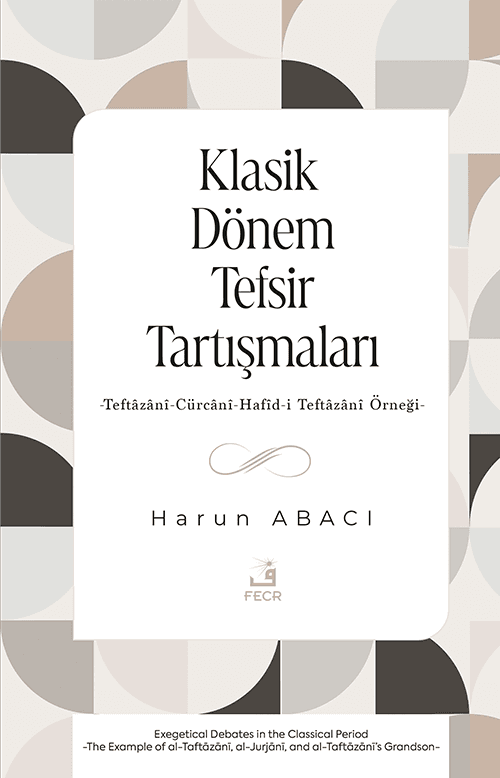
Exegetical Debates in the Classical Period -The Example of al- Taftāzānī, al-Jurjānī, and al-Taftāzānī’s Grandson-
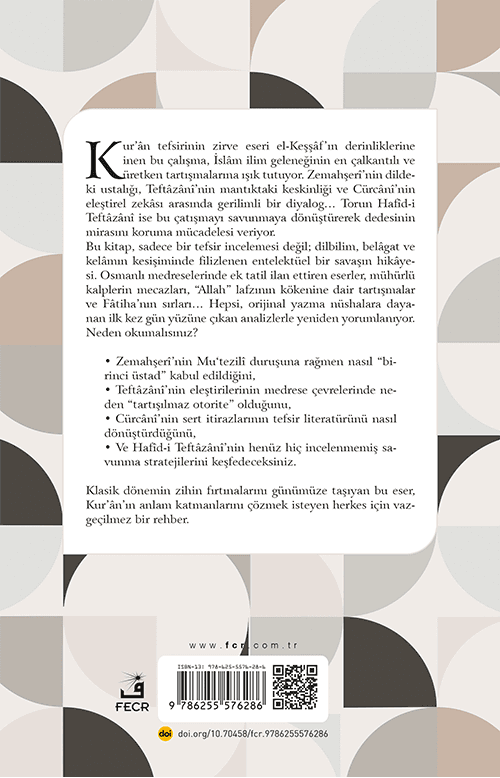
The classical tradition of Qur’anic exegesis (tafsīr) has not remained confined merely to explicating the meanings of the Qur’an; rather, it has served as a foundational source for numerous disciplines such as linguistics, literature, logic, and theology (kalām). Within this tradition, al-Kashshāf, the seminal work of al-Zamakhsharī (d. 538/1144), stands out as an exegetical masterpiece composed with the aim of uncovering the meanings of the Qur’an based on linguistic methodologies rooted in the context of its revelation. Despite his Muʿtazilī affiliation, al-Zamakhsharī’s mastery in language earned him widespread recognition even among Sunni scholars. His emphasis on rhetorical eloquence (balāgha) has rendered his work a cornerstone in the field, making it one of the most extensively annotated and commented-upon tafsīr works in the Islamic tradition.
Among the most significant marginal commentaries (ḥāshiyas) on al-Kashshāf is that of Saʿd al-Dīn al-Taftāzānī (d. 792/1390), a prominent scholar of the later period. Al-Taftāzānī systematized the linguistic and logical dimensions of the original tafsīr, thereby greatly contributing to its comprehensibility. His ḥāshiya became an indispensable reference for subsequent scholars. Sayyid Sharīf al-Jurjānī (d. 816/1413), in his renowned commentary on al-Kashshāf, offered clarifications to facilitate a better understanding of the work. However, he also adopted a more critical and detailed approach toward the interpretations offered by al-Taftāzānī. While al-Jurjānī occasionally expanded upon al-Taftāzānī’s perspectives, he also advanced independent critiques and original analyses on several points.
In response to this critical stance, Sayf al-Dīn Aḥmad b. Yaḥyā b. Muḥammad b. Saʿd al-Taftāzānī al-Harawī (d. 916/1510), popularly known as “Ḥafīd al-Taftāzānī” due to his familial lineage, authored a ḥāshiya in defense of his grandfather’s intellectual legacy. This work directly addresses the criticisms put forth by al-Jurjānī.
This study undertakes a comparative analysis of the exegetical and marginal commentary tradition that developed around al-Zamakhsharī’s al-Kashshāf, focusing particularly on the contributions of three eminent scholars: Sayyid Sharīf al-Jurjānī, Saʿd al-Dīn al-Taftāzānī, and Ḥafīd al-Taftāzānī. The criticisms articulated by al-Jurjānī concerning al-Taftāzānī’s interpretations are met with scholarly rebuttals in the ḥāshiya penned by Ḥafīd al-Taftāzānī. These scholarly exchanges are deeply embedded in issues related to lexicography, grammar, and rhetoric. Accordingly, this research not only elucidates the esteemed position of al-Kashshāf in the history of tafsīr and the scholarly merit of its associated commentaries, but also aims to trace the development of the classical Islamic tradition of critique and defense. Furthermore, the theoretical contributions of the examined ḥāshiyas to the fields of linguistic sciences and kalām are analyzed, offering a comprehensive perspective on the intellectual architecture of classical Islamic exegesis.
Keywords: Tafsir, al-Zamakhsharī, al-Taftāzānī, al-Jurjānī, Ḥafīd al-Taftāzānī

 İÇ SAYFALAR