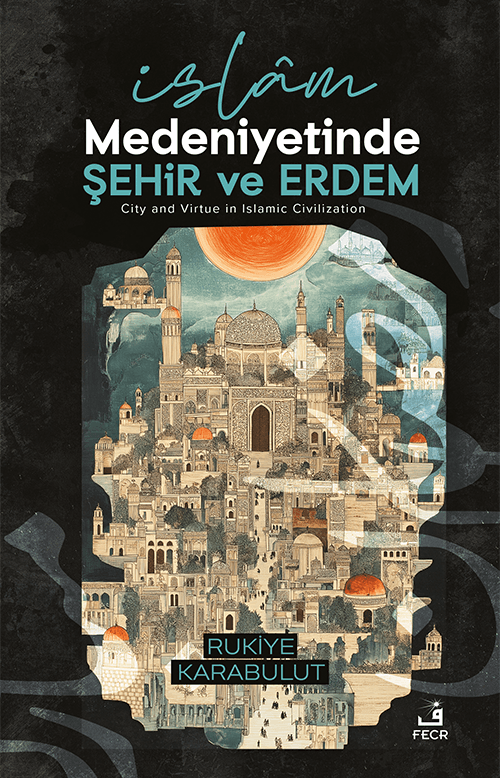
City and Virtue in Islamic Civilization
Human beings have the ability to shape their environment in line with their needs and desires. For this reason, the social environment and the physical environment live intertwined with each other. The space in which human beings live must be able to make them mentally and socially comfortable and be sufficient for their needs in many respects. When Ibn Khaldūn says, “It is the environment in which man lives that conditions him,” it is understood that he does not ignore the fact of the harmony of social and physical laws. The city is culture, civilization. It is the eternal center where the soul and life come alive. What is important for the Islamic city are the principles of morality and the basic principles of religion. The spirit, essence and leaven of Islamic civilization is tawhid. The city reflects the spirit of tawhid. Tawhid means that everything is in its proper place and that an order is established that shows the will of God. Al- Fārābī evaluated the analysis of God-universe and man in the context of state, society and individual relations and revealed the possibility of a virtuous community in the context of civilizational sciences. When al-Fārābī calls Medinet al-Fāzila (Virtuous City), he invites societies to virtue and to create virtuous societies, believing that the city he idealizes can be carried to advanced horizons with virtue, although he actually lives in a city. This study deals with the concepts of God/universe/human and city/civilization/utopia within the framework of both Islamic philosophers and other esteemed thinkers. Turkish thought and the Islamic tradition of iz’an and wisdom make this necessary. Because Turkish thought and culture has never expressed itself by centering itself to the exclusion of the thought and culture of other Muslim and non-Muslim nations. Because of this noble approach, our nation has deserved to be the center of attention of civilizations for centuries. The complexity of the study, on the other hand, has necessitated an intricate compartmentalization of our work due to its subject and argument textures. This study aims to direct those who are interested in learning Islamic thought in an organized, systematic and result-oriented manner to its original sources.
Keywords: Human; City; Civilization; Culture; al-Fārābī

 İÇ SAYFALAR