0 Items - ₺0,00
- Sepette hiç bir ürün yok.

Orijinal fiyat: ₺350,00.₺245,00Şu andaki fiyat: ₺245,00.
 İÇ SAYFALAR
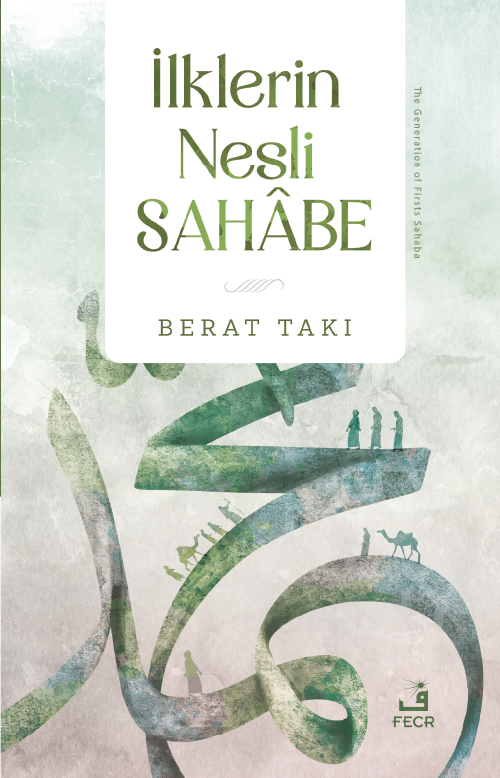
The Generation of Firsts Sahaba
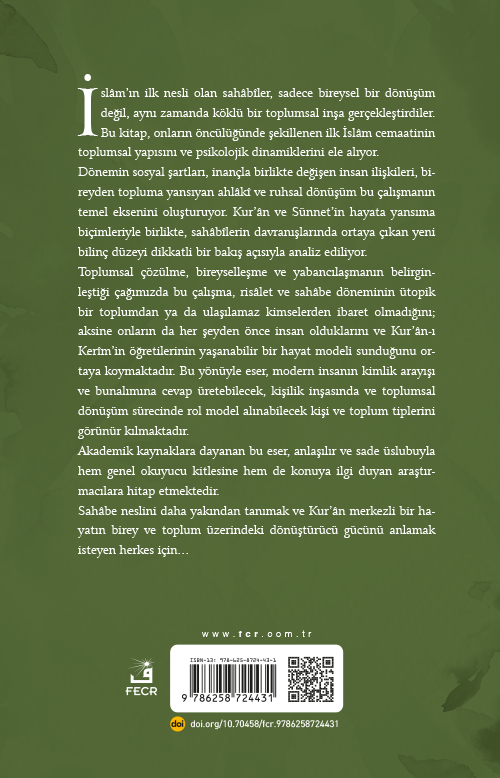
Today, societies are rapidly becoming more individualistic; modern man
evaluates success based on material criteria, thus moving away from a
life centred on meaning and values. This process brings with it social disintegration,
identity crisis and moral erosion. “The Generation of Firsts:
Sahaba” aims to rethink the development and integrity of the individual’s
character by focusing on the generation of the Companions in the face of
this negative picture. The book examines the Companions’ construction
of self, social transformation processes, value systems, forms of solidarity,
and attitudes in the face of crises. In these respects, it demonstrates that
they offer an exemplary model that transcends their own era and serves as
a reference point for modern man’s search for identity.
While establishing this perspective, the work discusses how this generation,
shaped around the Qur’an and Sunnah, conceptualised the relationship
between the individual and society; and how it grounded concepts
such as power, authority, sacrifice, and responsibility within a framework
of moral principles. In this vein, the study approaches the Sahaba
not within a biographical or chronological framework, but through
an interdisciplinary approach that considers their historical, social, and
psychological dimensions. The Sahaba are evaluated not as an idealised
and unattainable community, but as a human reality that matured under
the guidance of revelation, with their mistakes, regrets, and recoveries.
Comprising five chapters and a conclusion, the book draws on academic
literature while appealing to a general readership with its simple and accessible
style. This work proposes a reinterpretation of the Companions
not as historical figures of the past, but as a generation whose principles
continue to speak, guide, and inspire today. The work offers a guiding
framework for both those interested in Islamic history and those seeking
moral grounding in the complexities of the modern age.
Keywords: Islamic History; The Generation of the Sahaba; The Early
Islamic Community; Social Structure; Construction of Religious Identity;
Moral Values; Psychological Resilience; The Perspective of the Qur’an
and Sunnah; Historical Modelling
| Genel Yayın No | 1836 |
|---|---|
| Marka | Fecr |
| Marka No | 1088 |
| ISBN | 9786258724431 |
| Yayım Tarihi | 30.01.2026 |
| Dil | |
| Boyut | 13,5 x 21 cm |
| Baskı Sayısı | 1 |
| Sayfa Sayısı | 250 |
| Kağıt Cinsi | 70 gr. Enzo |
| Kapak |