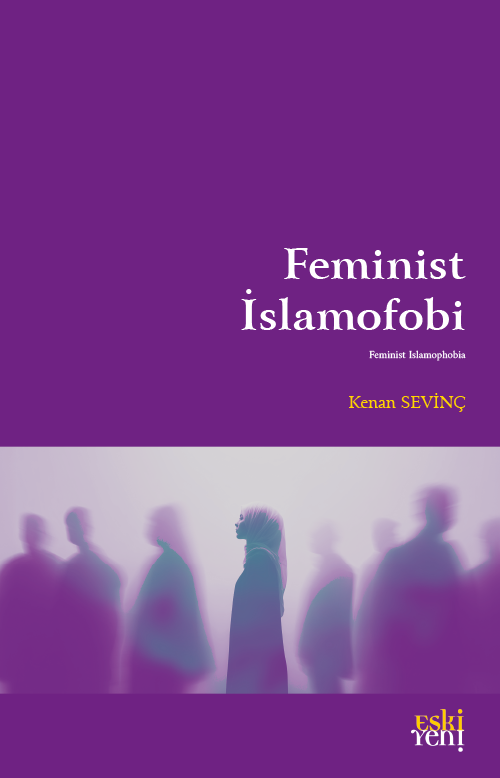
Feminist Islamophobia
This work examines the phenomenon of Islamophobia, which has ancient
roots but gained global momentum since the 2000s, by critically
examining its connection to feminist discourse. The studyʼs central argument
is that the ideology of feminism, which emerged as a defense of
womenʼs rights, has ironically transformed into a discourse of “Feminist
Islamophobia,” which supports the discrimination and marginalization
faced by Muslim women and even fuels Islamophobia. The work examines
Islamophobia from its historical roots (the Crusades, Orientalism,
the post-9/11 era) to its individual, societal, structural, and global
impacts. That Muslims are subject to prejudice, discrimination, and
violence is not fiction, but reality. The work shares concrete evidence
regarding this reality. At the heart of the negative perception of Muslims
lies the stereotypes, particularly those propagated by Western media,
that portray Islam as a “religion of fear,” portraying Muslim men as
“fanatics,” and Muslim women as “oppressed.” Although Muslim women
are the greatest victims of Islamophobia, feminist actors appear to
intentionally or unintentionally fuel this Islamophobic discourse under
the guise of defending women’s rights. This discourse keeps criticism
one-sided, ignoring other rights violations against Muslim women. The
book examines in detail the actors and claims in this complex relationship
between feminist discourse and Islamophobia, and the situation of
Muslim women facing this double victimization.
Keywords: Feminism; Islam; Islamophobia; Woman; West

 İÇ SAYFALAR