-31%₺295,00 Orijinal fiyat: ₺295,00.₺205,00Şu andaki fiyat: ₺205,00.
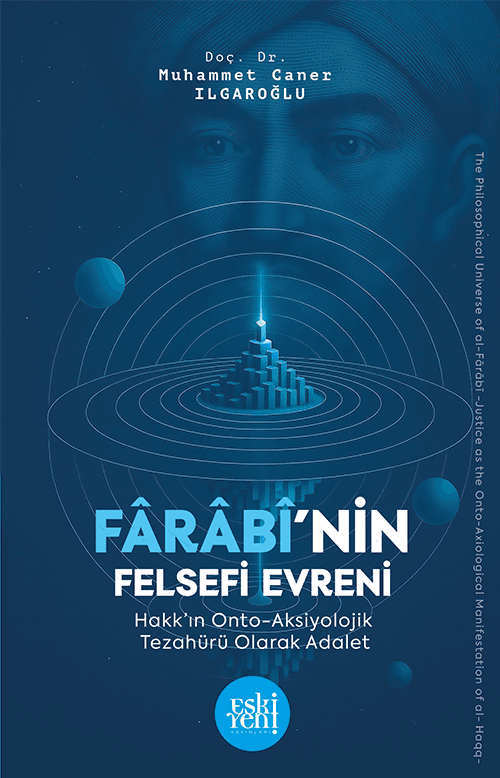
Fârâbî’nin Felsefi Evreni Hakk’ın Onto-Aksiyolojik Tezahürü Olarak Adalet
Fârâbî’nin Felsefi Evreni Hakk’ın Onto-Aksiyolojik Tezahürü Olarak Adalet
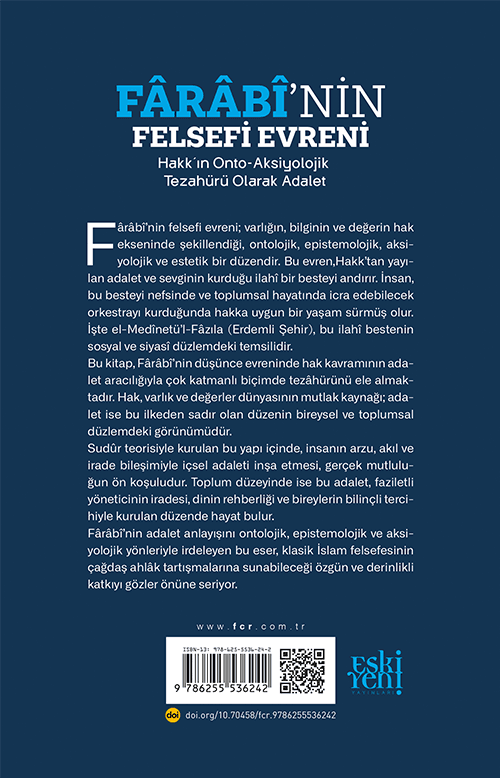
Bu çalışma, Fârâbî’nin felsefi evreninde hak (al-Ḥaqq, الحق) ve onun ahlâkî-sosyal düzlemdeki tezâhürü olan adalet (al-ʿAdl, العدل) kavramlarını ontolojik ve aksiyolojik bir bütünlük içinde ele almaktadır. Fârâbî’ye göre hak, varlığın, bilginin ve değerin sabit ilkesidir; adalet ise bu ilkenin bireysel nefste ve toplumsal yapıda düzen kurucu ve koruyucu bir tezâhürüdür. Batı düşüncesinde genellikle siyasî-hukuki çerçevede değerlendirilen bu kavramlar, Fârâbî’nin sisteminde varlık hiyerarşisinin tüm katmanlarına içkin değer ilkeleri olarak temellendirilmiştir.
Tanrı, hem el-Evvel (الأول) hem de el-Hakk (الحق) olarak Metakozmik Bir’dir; tüm varlıklar sudûr süreciyle O’ndan sadır olur ve kendi rütbesine (الرتبة), istihâkına (استحقاق) ve varlık payına (قسْط) göre konumlanır. Bu yapı, kozmik düzenin ontolojik adaletini temsil eder. İnsan, arzu (nefs), irade ve akıl yetileriyle donatılmış sosyo-politik bir varlıktır. Onun ahlâkî yetkinliği, içsel adaletin inşasıyla mümkündür. Bu inşa, arzulara dayalı yönelimler ile aklî ihtiyârî tercihler arasındaki farkla şekillenir. Böylece adalet, hem psikokozmik bir denge hem de mutluluğun (al-saʿāda, السعادة) ilkesidir.
Toplumsal düzeyde ise adalet, faziletli ilk yöneticinin (al-Raʾīs al-Awwal, الرئيس الأول) iradesi, dinin öğretisi ve bireylerin bilinçli tercihlerinin bir düzen içinde birleşmesiyle vücut bulur. Bu düzenin ideal formu ise el-Medînetü’l-Fâzıla (المدينة الفاضلة)’dır.
Bu kitapta, Fârâbî’nin metinleri kavramsal analiz ve metin çözümlemesi yöntemleriyle incelenmiş; adaletin ontolojik, epistemolojik ve aksiyolojik düzlemlerdeki görünümleri ortaya konmuştur. Bulgular, Fârâbî’nin adalet anlayışının çok katmanlı, tutarlı ve klasik İslam felsefesi açısından özgün bir değer teorisi olduğunu göstermektedir.
Anahtar Kelimeler: İslam Felsefesi; Fârâbî; Hak; Adalet; Metakozmik Bir; Makrokozmik Nizam; Sudûr; Mutluluk; Nefs; Medînetü’l-Fâzıla; Metafizik; Değer Teorisi
 İÇ SAYFALAR
The Philosophical Universe of al-Fārābī -Justice as the Onto-Axiological Manifestation of al-Ḥaqq-
This study examines the concepts of al-Ḥaqq (truth, reality) and its ethical-social manifestation al-ʿAdl (justice) within al-Fārābī’s philosophical universe, in an ontological and axiological unity. According to al-Fārābī, al-Ḥaqq is the immutable principle of existence, knowledge, and value, while justice is the regulative and preservative manifestation of this principle in both the human soul and the social order. Unlike Western thought, which tends to conceptualize these terms primarily within legal and political frameworks, al-Fārābī grounds them as value-constituting principles inherent in every level of the metaphysical hierarchy.
God, as both al-Awwal (The First) and al-Ḥaqq (The Truth), is the Metacosmic One; all beings emanate from Him (ṣudūr) and are positioned according to their ontological rank (rutba), merit (istiḥāq), and existential share (qusṭa). This structure constitutes the ontological justice of the cosmic order. The human being, endowed with desire (nafs), will (irāda), and reason (ʿaql), is a socio-political creature. Moral perfection is only possible through the construction of inner justice, which arises from the distinction between desire-driven tendencies and rational volitional choices (iḫtiyār). Thus, justice is both a psychocosmic equilibrium and the principle of happiness (al-saʿāda).
On the societal level, justice is realized through the will of the virtuous First Ruler (al-Raʾīs al-Awwal), the guidance of religion, and the conscious choices of individuals within a structured order. The ideal form of this order is al-Madīna al-Fāḍila (the Virtuous City).
In this book, al-Fārābī’s texts are analyzed through conceptual and textual methods, revealing the manifestations of justice across ontological, epistemological, and axiological dimensions. The findings demonstrate that al-Fārābī’s theory of justice is multilayered, coherent, and constitutes a unique value theory within the framework of classical Islamic philosophy.
Keywords: Islamic Philosophy; al-Fārābī; al-Ḥaqq; Justice; Metacosmic One; Macrocosmic Order; Emanation; Happiness; Soul; al-Madīna al-Fāḍila; Metaphysics; Value Theory