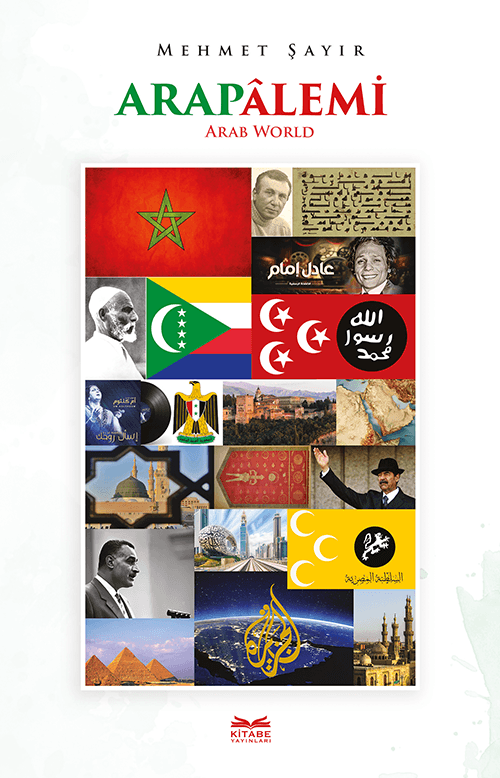
Arab World
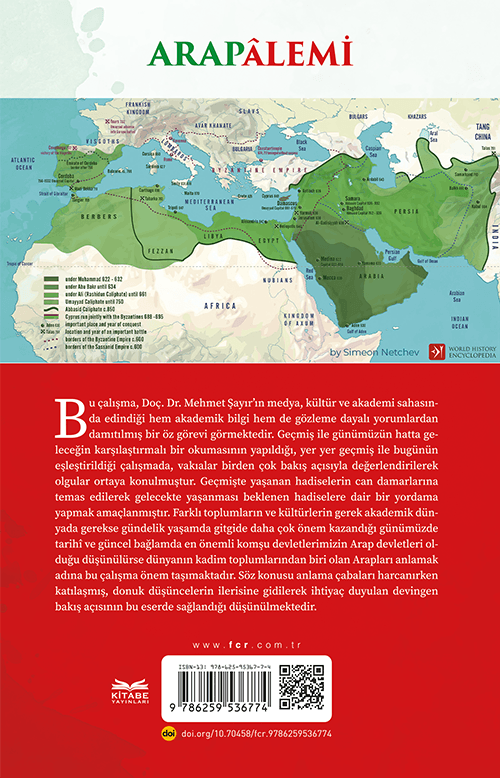
Located in the southeast of the Mediterranean basin at the crossroads of civilizations, where Egyptian, Greek, Mesopotamian and Iranian civilizations intersect, the Arabian Peninsula is a region mostly covered with deserts, known as the world’s largest peninsula where both Arabs, Arabic and the last divine religion Islam emerged. The Arabs, who made their most important breakthroughs in history with Islam, took strength from their language, which was perhaps their greatest power during the Islamic conquest period, the strategic location of the peninsula referred to as al-Jazeera, the desert and the Bedouin spirit, and most importantly their beliefs, and spread in a northwesterly direction in a direction extending from North Africa to the Pyrenees in the interior of Europe. Although the Muslim Arabs, who dominated the region that spread from the Great Wall of China to the Pyrenees in a very short period of time and spread over three continents, benefited from the momentum provided by Islam in various ways, they were unsuccessful in creating an original state, politics or administrative system that was captured in terms of religion and state, especially during the period of the first four caliphs. In time, the caliphate turned into a sultanate and the administration passed into the hands of influential families and individuals, while the Iranians, Turks, Kurds, Berbers and others who mixed with the Arabs in the same crucible of belief, culture, politics and geography in later periods did not make any significant changes in this regard. However, the momentum provided by Islam gave birth to an important artistic, cultural and scientific breakthrough in Andalusia in the west, while important institutions such as the Baytulhikme emerged as an expression of this artistic, cultural and scientific breakthrough in the east during the Abbasid period. In the process where the caliphate was replaced by the sultanate under the conditions brought by Islam, the Kharijite, Shiite, and consequently Abbasid and Fatimid oppositions, perhaps originating from the Bedouin spirit, emerged. However, although the caliphate turned into an imamate in the context of the Fatimids, nothing changed in terms of the sultanate. So much so that at one point three caliphs emerged at once, one in Baghdad, one in Cairo and one in Cordoba. While the sultans existed alongside the caliph during the period when the Abbasid state lost power, the Crusades on the one hand and the Mongol raids on the other not only brought the end of the caliphate but also caused the Arabs to withdraw from the stage of history for centuries. In Arab countries, where stability, security and territorial integrity were achieved especially under Ottoman rule, perhaps as a result of the interaction with Europeans that started with Napoleon’s Egyptian Campaign and Muhammad Ali Pasha’s seizure of power in Egypt, the Arab Renaissance, known as the nahda period, which was effective in the late 19th and early 20th centuries, entered. In addition to the Arab Renaissance, which was considered an enlightenment process that strengthened ties with the past and brought the Arabic language, Arabic poetry and Arabic culture to the fore, the Arabs had two important opportunities in the 20th century; the establishment of 22 independent Arab countries, albeit in pieces, and the emergence of strong economies in the region as a result of the discovery of oil in Arab countries and its sale as a commercial commodity. However, for various reasons, the Arabs entered the 21st century with regimes that could not renew themselves, could not transition to democracy and were described as despotic and oppressive. Thus, under the conditions created by these regimes, including the absence of human rights, democracy, freedom of expression and organization, economic difficulties, unemployment and corruption, street demonstrations and incidents known as the Arab Spring broke out in the region as soon as the first decade of the 21st century had passed. These events spread from country to country and produced different results in each country. This opened up the Arab state phenomenon, which was shaken by the occupation of Iraq by the US and its allies, to discussion. In this context, it seems that the Arabs’ adventures with Islam have not yet ended, and Islam, as a religion aspiring to power, cannot be discussed in a free environment, and the way is not opened for forces that can be described as Islamic opposition. While this situation causes a deadlock in these countries, the fact that a permanent and honorable peace has not yet been reached in the context of the Arab- Israeli Conflict remains a challenge that threatens the future of these countries. Meanwhile, while oil, on which many powerful Arab economies are based, and its future continue to be a determining factor, the fact that important rivers in the Arab region, which lacks fresh water, originate in other countries and that the source countries are carrying out various projects on these rivers threatens the “water security” of some Arab countries.
Keywords: Arabs, Islam, Arabian Peninsula, Water, Oil, Arab-Israeli Conflict, Arab Spring

 İÇ SAYFALAR