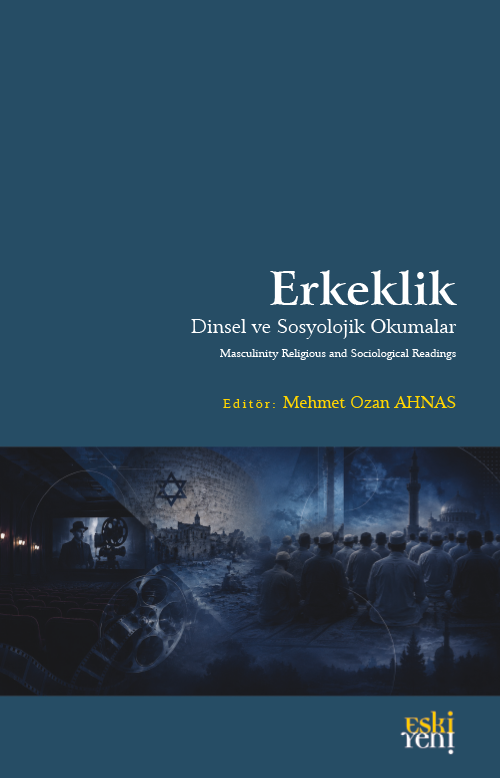
Masculinity
Religious and Sociological Readings
Modernization and the subsequent accelerated socio-cultural, economic,
and technological transformations are among the significant dynamics
leading to the reshaping of individuals’ perceptions of gender and
gender identity. This process brings about the questioning of traditional
gender roles and the emergence of new forms of identity. Considering
male identity, various structural dynamics such as industrialization,
urbanization, globalization, digitalization, and neoliberal economics
can be said to have paved the way for new approaches in the processes
of acquiring, proving, maintaining, and controlling male identity.
The main argument in discussions of masculinity is mostly focused on
issues such as “hegemonic masculinity, masculinity crisis, male dominance,”
etc. However, recent theoretical approaches such as “masculinity
oppresses men the most,” “multiple masculinities,” “masculinity as
a whole of cultural and relative practices,” and “defining masculinity”
draw attention to the multi-dimensional and layered structure of male
identity. When we evaluate the discussions at the intersection of masculinity
and religion, we encounter some problematic issues. First and
foremost, religion, in its forms of belief, practice, and interpretation,
is an institution that plays an active role in an individual’s life and in
the processes of identity formation. This also causes certain tensions
in the individual’s daily life practices. Male identity is also a structure
that can develop and change in interaction with religion. However, it
is important to distinguish between religion and religious interpretations.
Indeed, both religion and religious interpretations and practices
have active functions in the construction of male identity. Differentiating
these functional grounds allows for the separate interpretation
and consideration of the religious structure and the cultural/traditional
structure. It is possible to mention many subcategories that need to be
examined at the intersection of masculinity and religion. Cinema, literature,
spirituality, fatherhood, religious texts, religious groups, and
communities can be listed among these sub-themes. Indeed, each chapviii
ter in this book conducts analytical discussions on these subcategories.
In conclusion, this book offers a broad theoretical and analytical framework
by addressing the intersection of masculinity and religion from a
sociological perspective.
Keywords: Masculinity, Religion, Cinema, History of Religions, Spirituality,
Fatherhood, Guardian, Community.

 İÇ SAYFALAR