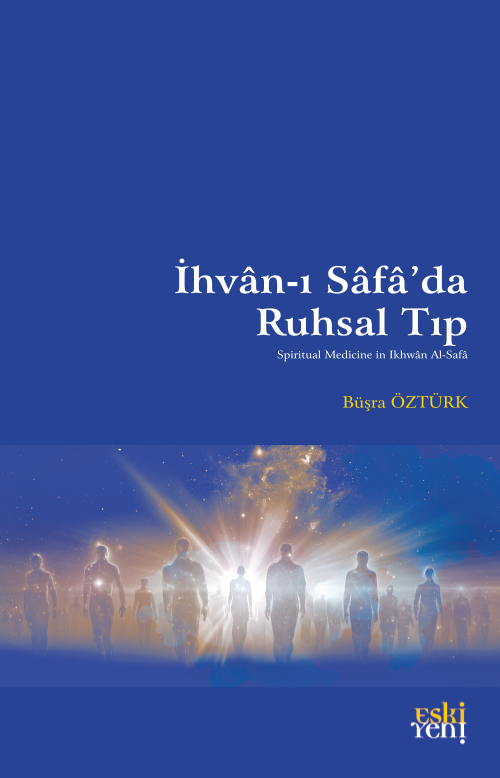
Spiritual Medicine in Ikhwān Al-Safā
Emerging in Basra in the tenth century and preserving its mystery to
this day, the Ikhwān al-Ṣafāʾ developed a unique intellectual system
that placed the spiritual dimension of the human being at its center.
This study examines the concept of “spiritual medicine” in the Epistles
of the Ikhwān al-Ṣafāʾ, focusing on three main axes: the soul (nafs),
knowledge, and ethics. It also systematically evaluates the information
contained in the epistles regarding the influence of celestial bodies, zodiac
signs, and the humoral theory (ahlāt al-arbaʿa, the four humors) on
the formation of human character.
According to the Ikhwān al-Ṣafāʾ, the human being is not merely a corporeal
entity but one integrated with a spiritual soul. Just as the body
can become ill, the soul can also suffer ailments. In the epistles, moral
corruption is described as “diseases of the soul,” while their remedies
are often defined through moral opposites, self-discipline, knowledge,
and religious values. In this context, the prophets are portrayed as “physicians
of the soul,” guiding humanity away from ignorance and negligence.
The study also presents a comparative analysis of the ideas of the
Ikhwān al-Ṣafāʾ with those of Ancient Greek philosophers and Islamic
thinkers. As a result, an eclectic understanding of spiritual medicine
emerges, nourished by both philosophical and religious sources.
Ultimately, this work highlights the Ikhwān al-Ṣafāʾ’s original philosophy
across a wide spectrum-from the relationship between body and
soul to moral education, from the influence of celestial bodies on temperament
to the methods of purifying the soul. In this respect, it serves
as a valuable resource not only for researchers of Islamic philosophy
but also for readers interested in the spiritual dimension of human existence.
Keywords: Brethren of Purity; Spiritual Medicine; Soul (Nafs); Diseases
of the Soul; Ethics / Morality; Knowledge; The Four Humors; Zodiac
Signs and Celestial Bodies

 İÇ SAYFALAR