1000₺ ve üzeri alışverişlerde ÜCRETSİZ KARGO
Hafta içi saat 12.00‘ye kadar verilen siparişler AYNI GÜN KARGODA

  • 0 Items - 0,00
    • Sepette hiç bir ürün yok.
%29 İNDİRİM

Orijinal fiyat: ₺205,00.Şu andaki fiyat: ₺145,00.

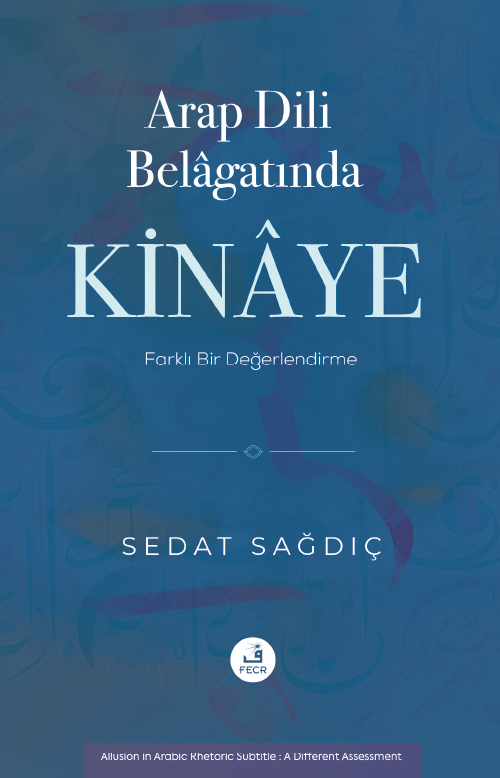
Arap Dili Belâgatında Kinâye

Allusion in Arabic Rhetoric

10.70458/fcr.9786255576613

0000-0003-3008-0841 F1006 ,
Paylaş
Arap Dili Belâgatında Kinâye
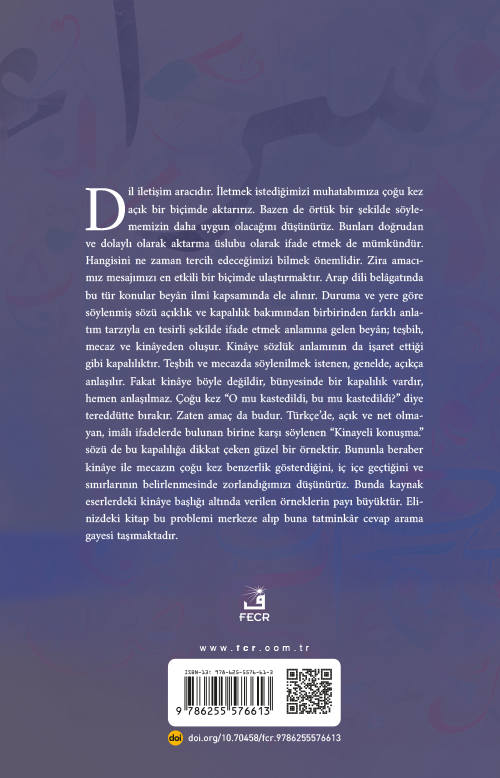
Bu çalışmamızda Arap dilinde kinâyenin kullanımını ele alacağız. Kitabımız giriş ve üç bölümden oluşmaktadır. Girişte araştırmanın konusu, önemi, kapsamı ve yöntemi ile ilgili literatür ve çalışmamızın bu literatürdeki yerine temas ettik. Birinci bölümde kavramsal çerçeveye yer verdik. İkinci bölümde ilk dönemden itibaren köşe taşı olmuş belâgat âlimlerinin kinâye ile ilgili görüşlerini ele alıp bunları değerlendirdik. Üçüncü bölümde ise vardığımız sonuç ışığında belâgat kitaplarındaki en yaygın örnekleri ve ayetleri inceleyerek çalışmamızı nihayete erdirdik. Bilindiği gibi düzgün ve yerinde söz söylemenin usul ve prensiplerini ele alan bilim olan belâgat; meânî, beyân ve bedi‘ ilimlerinden müteşekkildir. Zamana ve zemine göre söylenmiş sözü açıklık ve kapalılık bakımından birbirinden farklı anlatım biçimleriyle ifade etmek anlamındaki beyân ilmi teşbih, mecaz ve kinâyeden oluşur. Daha doğrusu diğer bütün konular bu başlıklardan birisinin altında değerlendirilir. Kinaye, terim olarak literal anlamın ifade edilmesi mümkün olmakla beraber mecaz mananın kastedildiği söz olarak tanımlanır. Klasik belâgat kaynaklarında zikredilen birçok örneğin söz konusu tanım çerçevesinde kinâye olarak değerlendirilmesi güç, bazı durumlarda ise imkânsızdır. Ayrıca, kinâyenin belâgattaki işlevi dikkate alındığında, kimi örneklerin bu kategoriye dâhil edilmesi uygun değildir. Bu tespitimiz belâgat kaynaklarında kinâye örneği olarak getirilen çok sayıda ayet-i kerime için de geçerlidir. Bu misallerde hakîkî anlam ihtimali bulunmamaktadır. Bunlar söylenildiğinde doğrudan mecaz mana akla gelmektedir. Hatta çoğu, meseller gibi kalıp hale gelmiştir. Bilindiği gibi “istiare-i temsiliyye” yaygınlaştığında “mesel” adını alır, onda artık herhangi bir değişikliğe gidilemez. Bu tür örneklerin, özellikle kinâyenin tanımını yaptıktan, “Kinâyede her iki anlam mümkündür.” tespitinden sonra kinâye olarak isimlendirilmesi yerinde değildir. Dolayısıyla bunların kinâye değil, “kinâye mecaz”, “kinâyeden mecaz”, “kinâî mecaz” olarak isimlendirilmesi daha uygundur. Çok yaygınlaşan örnekler de “mesel” benzeri bir terimle isimlendirilebilir. Bazı örnekleri de belâgatın teşbih-i beliğ, istiare, istiare-i temsiliyye, tahyîl, mecaz-ı mürsel, tevriye gibi başka herhangi bir başlığı altında değerlendirebiliriz.
Anahtar Kelimeler: Kinâye; Hakikat-Mecaz; Lâzım-Melzûm; Karine; Sekkâkî-Kazvi

 İÇ SAYFALAR
Allusion in Arabic Rhetoric
-A Different Assessment-
In this study, we will discuss the use of allusion in the Arabic language.
Our book consists of an introduction and three parts. In the introduction,
we touched upon the literature on the subject, importance, scope
and method of the research and the place of our study in this literature.
In the first part, we included the conceptual framework. In the second
part, we included and evaluated the views of rhetoric scholars, who
have been cornerstones since the early period, on allusion. In the third
part, we concluded our study by examining the most common examples
and verses in the books of rhetoric in the light of the conclusion we
reached.
As it is known, rhetoric, which is the science that deals with the methods
and principles of speaking properly and appropriately, consists of
the sciences of meânî, bayan and badi. The science of rhetoric, which
means expressing the words spoken in different ways in terms of clarity
and ambiguity according to time and place, consists of simile, metaphor
and allusion. More precisely, all other issues are evaluated under one
of these headings.
Allusion is defined as a word that is intended to have a metaphorical
meaning, although it is possible to have a literal meaning as a term. It
is difficult, and in some cases impossible, to consider many examples
mentioned in classical rhetoric sources as allusion within the framework
of this definition. Moreover, considering the function of allusion
in rhetoric, it is not appropriate to include some examples in this category.
This determination of ours is also valid for many verses of the Quran
that are given as examples of metaphor in rhetoric sources. There
is no possibility of literal meaning in these examples. When these are
said, a direct metaphorical meaning comes to mind. As is known, when
the representative metaphor becomes widespread, it becomes known
as a parable and no changes can be made to it. It is not appropriate to
name such examples as allusions, especially after defining the allusion
and determining that “both meanings are possible in allusion.” Thereix
fore, it would be more appropriate to name them not as allusion, but
as “allegory metaphor”. Examples that have become very common can
also be named with a term similar to “parable.” We can evaluate some
examples under any other heading of rhetoric, such as representation
of simile, metaphor, representative metaphor, tahyil, metonymy, and
tawriyya.
Key words: Allusion; Literal-Metaphor; Necessary-Requiring; Hint;
Sakkâkî-Qazwinî

Genel Yayın No

1675

Marka

Fecr

Marka No

1006

ISBN

9786255576613

Yayım Tarihi

19.09.2025

Dil

Boyut

13,5 x 21 cm

Baskı Sayısı

1

Sayfa Sayısı

124

Kağıt Cinsi

70 gr. Enzo

Kapak

Taksitleri Güncelle