1000₺ ve üzeri alışverişlerde ÜCRETSİZ KARGO
Hafta içi saat 12.00‘ye kadar verilen siparişler AYNI GÜN KARGODA

0,00

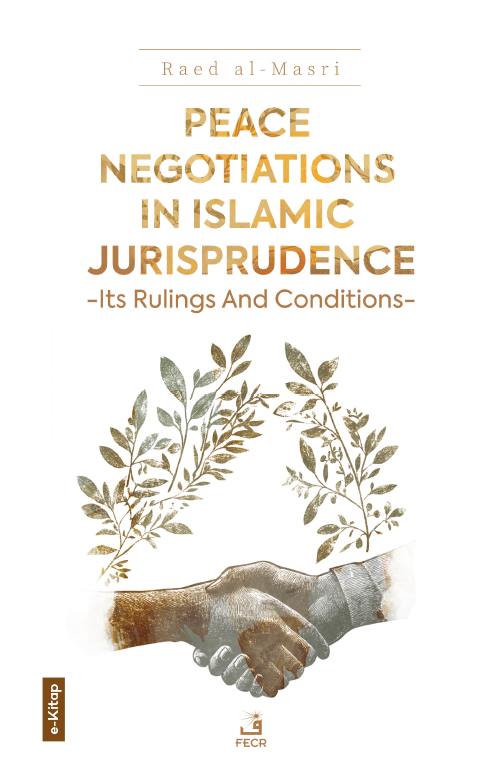
Peace Negotiations in Islamic Jurisprudence

Peace Negotiations in Islamic Jurisprudence

10.70458/fcr.9786255576569

0000-0002-1841-4151 F1002 , ,
Paylaş
Peace Negotiations in Islamic Jurisprudence
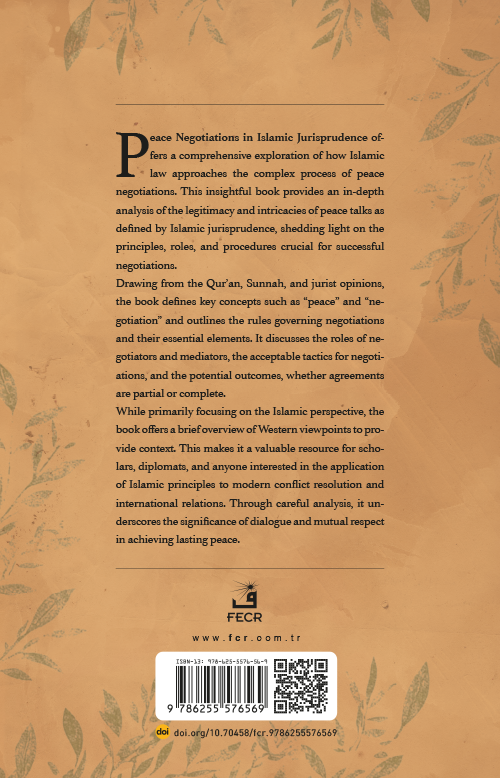
The book explores how Islam addresses peace negotiations, focusing on their legitimacy and procedural elements from an Islamic perspective. It also includes comparisons to Western approaches where necessary to highlight differences and similarities. Chapter One defines “peace” and “negotiation” in the context of Islamic jurisprudence. It establishes that peace negotiations are a recognized method for resolving conflicts and forming treaties, supported by Qur’anic injunctions, Prophetic practices and the views of Islamic jurists. This chapter demonstrates that negotiations are a legitimate way to achieve and maintain peace, provided that core Islamic principles are upheld. Chapter Two delves into the essential components of peace negotiations, including the subjects of negotiation, the roles and qualifications of negotiators, and the function of mediators. It outlines that negotiators should be qualified and discusses the potential inclusion of women and Dhimmī under certain conditions. Mediation is defined as a neutral intervention by an acceptable third party, and the chapter examines permissible negotiation tactics, with an emphasis on persuasion
and a general discouragement of coercion. Chapter Three examines the outcomes and consequences of peace negotiations. It discusses the nature of agreements, whether complete or partial, and the importance of formal ratification for their binding nature. The book also explores the scholarly debate on the obligation of oral or unsigned agreements and considers the responses to failed negotiations, which range from advocating war to recommending
alternative peaceful solutions like arbitration and conciliation. The book concludes that peace negotiations in Islam are a vital means of resolving conflicts and fostering international relations, provided they respect Islamic principles and prioritize Muslim interests. It reaffirms that persuasion is encouraged, while coercion is generally discouraged, and highlights the need for further research into Islamic conflict resolution methods to enhance understanding and application in modern diplomacy.
Keywords: Peace Negotiations; Islamic Jurisprudence; Legitimacy; Negotiator; Mediator; Persuasion; Coercion; International Relations; Conflicts; Arbitration; Agreement; Muslim Interests; Dhimmī


Bu çalışma e-kitap olarak yayımlanmıştır. E-kitap bağlantısına ulaşmak için lütfen aşağıdaki linke tıklayın;
https://www.libraryturk.com/kitap-detaylari-the-presentation-of-the-murjia-in-islamic-literature?v=9786255576552


 İÇ SAYFALAR
Genel Yayın No

1665

Marka

Boyut

13,5 x 21 cm

ISBN

9786255576569

Yayım Tarihi

18.08.2025

Dil

Baskı Sayısı

1

Sayfa Sayısı

115

Kapak

Taksitleri Güncelle