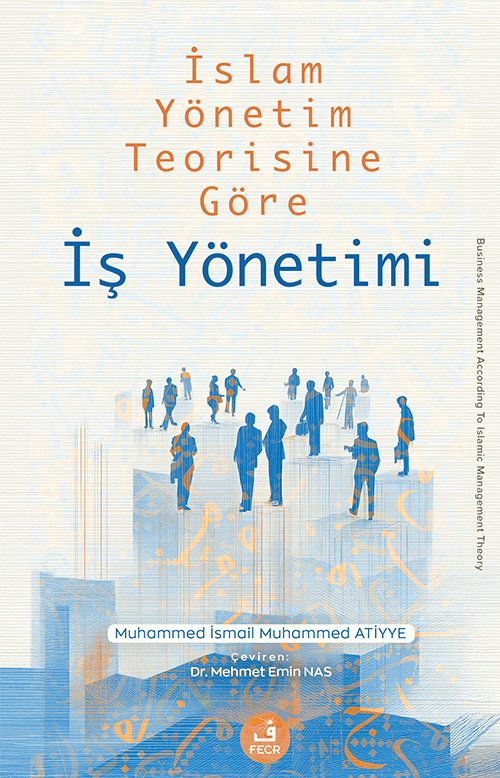
Business Management According to Islamic Management Theory
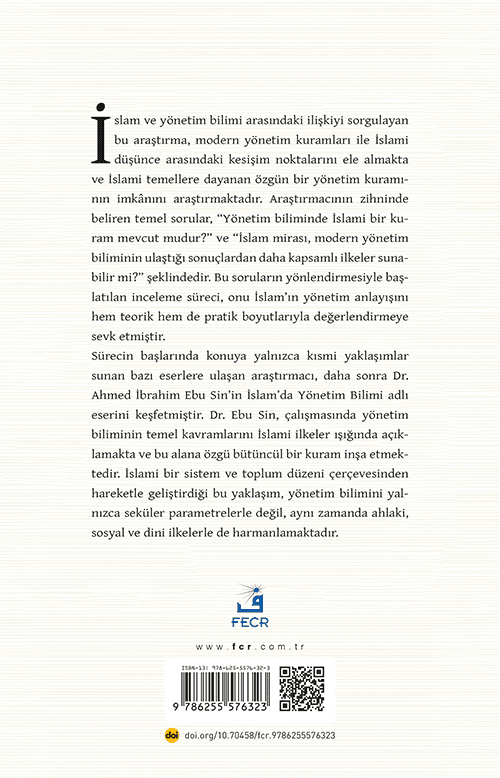
This study, which explores the relationship between Islam and the science of management, investigates the intersection between modern management theories and Islamic thought, while seeking the possibility of constructing an original management theory grounded in Islamic principles. The researcher was guided by two fundamental questions: “Does an Islamic theory of management exist within the field of management science?” and “Does the Islamic intellectual heritage offer principles that surpass the conclusions reached by modern management scholars?” These questions directed the researcher toward a comprehensive examination of Islamic perspectives on management, both in theoretical and practical dimensions.
Initially encountering works that addressed the subject only partially, the researcher eventually discovered Dr. Ahmed Ibrahim Abu Sin’s valuable book The Science of Management in Islam. In this work, Dr. Abu Sin outlines the foundational principles of management from an Islamic perspective and builds an integrated theory rooted in an Islamic system and societal structure. His approach blends conventional management science with moral, social, and religious values, offering a holistic framework beyond purely secular parameters.
Taking Dr. Abu Sin’s work as a point of departure, the researcher sought to extend the discourse by applying it to the field of business management. Drawing from extensive professional experience in the business world, the researcher aimed to reinterpret management science through an Islamic theoretical lens and develop a contextually relevant model for contemporary business practices. Accordingly, the study is structured around two primary axes.
The first axis focuses on Islamic perspectives on the core functions of management. Planning, organizing, leading, controlling, and monitoring—core tenets of modern management—are examined in light of the Qur’an, Sunnah, and classical Islamic scholarship. The second axis assesses Islam’s approach to fundamental components of contemporary business organizations. Key themes include knowledge management, harmony between theory and practice, capital and profit ethics, professional protocols, time management, human resources, individual freedoms, and the principle of shura (consultative decision-making). These elements are analyzed from an Islamic perspective and compared to modern business practices.
The study seeks to answer the following central questions: Can an Islamic management theory be effectively applied in today’s business environment? Does Islam’s historical legacy offer a universal business framework for both Muslim and non-Muslim societies? Can the implementation of such a theory contribute to solving development challenges in the Islamic world? Furthermore, can business models based on this theory elevate the Islamic world’s position in global economic competition?
In conclusion, the researcher, by presenting a model of the theory of management in Islam, contributes to shedding light on future academic studies in this field within the Islamic world.
Keywords: Islamic Law, Management Theory, Business Management

 İÇ SAYFALAR