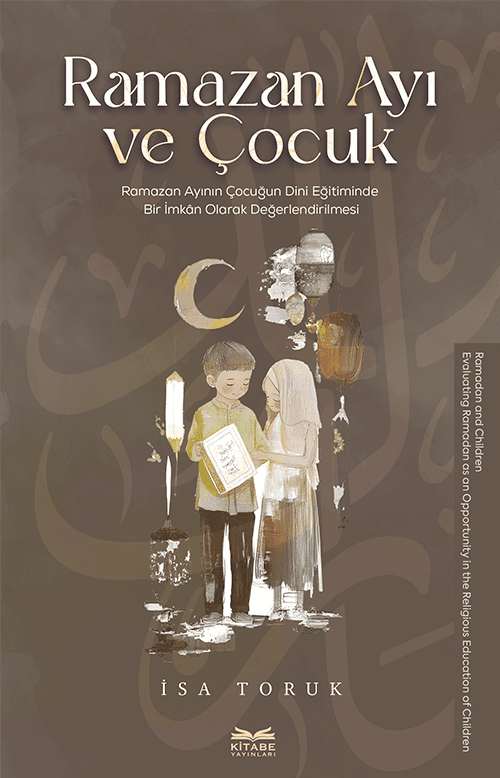
Ramadan and Children -Evaluating Ramadan as an Opportunity in the Religious Education of Children-
Three to six years of age is the period when the child’s faith development begins and when he/she shows an intense interest in religious issues. This strong influence of religion stems from the sense of belief in the child’s nature. In this period, when the child’s desire to learn is the highest and values are acquired, religious development should not be based on coincidence but on planned religious activity. Because this period forms the basis of the child’s future, religious identity and character. The best use of this critical period depends on the creation of appropriate environments and conditions in line with the child’s developmental characteristics. Ramadan, with its educational features, creates important opportunities for the child’s spiritual development and the acquisition of religious and moral values. The planned use of the opportunities of this month in religious development is the subject of this thesis. This month plays an important role in the child’s acquisition of beliefs, attitudes and behaviors. Because this month is a month of education in which spiritual renewal takes place in the individual, family and society through prayer, fasting, zakat and recitation of the Qur’an, in which the consciousness of Allah is activated, religious feelings intensify and religious commitment becomes tangible and visible. In this study, it was aimed to provide children with universal values such as love of God, truthfulness, cooperation, love, respect, responsibility, kindness, gratitude, compassion, tolerance and cleanliness in the spiritual climate of Ramadan in a planned way. For this purpose, this study was prepared by limiting the period of the child to the age range of 3-6 years and revealing the physical, cognitive, psychosocial, moral and religious development characteristics. The introduction consists of the subject, problem, purpose, importance, method, limitations and related studies. The first chapter focuses on education, religious education, family, child development characteristics and the role of play in education. In the second chapter, the month of Ramadan and the habits to be acquired by children in this month are examined. The third part includes entertaining and educational activities for 3-6 year old children. Since the 3-6 age period is the age of play, activities with religious content that appeal to the feelings of learning, curiosity and discovery as well as fun have been prepared. With many entertaining activities such as “Welcome Ramadan”, “Alms Box”, “Ramadan Month Invitation”, “Kandil Bagel”, “Ramadan Month Balloons”, it is aimed that children internalize religious values and behaviors by having fun. It is thought that this study, which is the first in its field, will fill an important gap in the religious and spiritual development of children.
Keywords: Religious Education; The Mont of Ramadan; Preschool Period; Activity; Outcome

 İÇ SAYFALAR