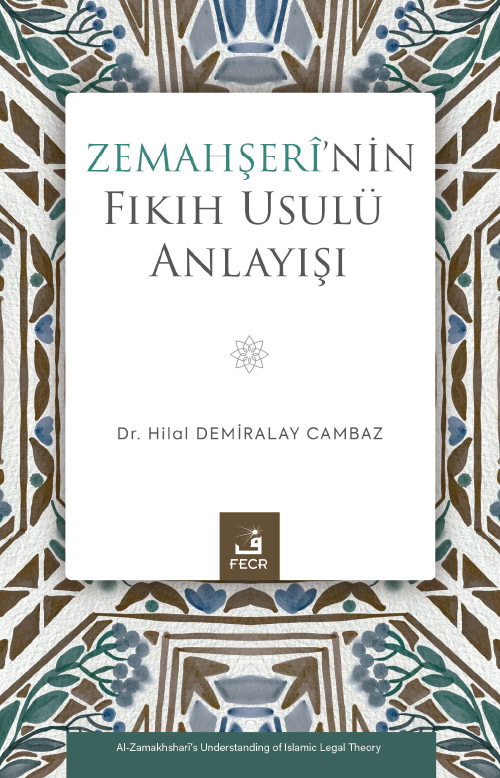
Al-Zamakhsharī’s Understanding of Islamic Legal Theory
This study examines the understanding of Islamic legal theory developed
by al-Zamakhsharī, a prominent scholar renowned for his contributions
to Qur’anic exegesis and Arabic linguistics, within the framework
of his theological commitments and juristic interpretations. Its
primary objective is to investigate how his Mu‘tazilite theological orientation
and affiliation with the Hanafī school shaped his legal methodology,
particularly regarding reason, revelation, justice, and public
interest. Employing a qualitative research approach, the study utilizes
literature review, document analysis, and hermeneutical interpretation,
focusing primarily on al-Kashshāf and Ruʾūs al-Masāʾil. The first
chapter explores the concepts of moral goodness and evil (ḥusn-qubḥ),
reason, and righteousness (ṣalāḥ-aṣlaḥ). The second investigates the
principal sources of Islamic law, methods of legal reasoning, linguistic
interpretation, and normative rulings. The third analyzes the distinctive
characteristics of al-Zamakhsharī’s jurisprudential thought. The
findings indicate that although al-Zamakhsharī does not regard reason
as an independent source of legal authority, he assigns it a significant
role in interpreting revealed texts. His methodology emphasizes public
interest, legal facilitation, social welfare, linguistic analysis, and variant
Qur’anic readings. The study concludes that his critical, multidimensional
approach transcends rigid sectarian boundaries and offers valuable
methodological insights into classical Islamic legal thought and
contemporary jurisprudential discussions.
Keywords: Al-Zamakhsharī; Islamic Legal Theory; Mu‘tazila; Moral
Goodness and Evil; Maṣlaḥa


 İÇ SAYFALAR


