0 Items - ₺0,00
- Sepette hiç bir ürün yok.


Orijinal fiyat: ₺250,00.₺175,00Şu andaki fiyat: ₺175,00.
 İÇ SAYFALAR
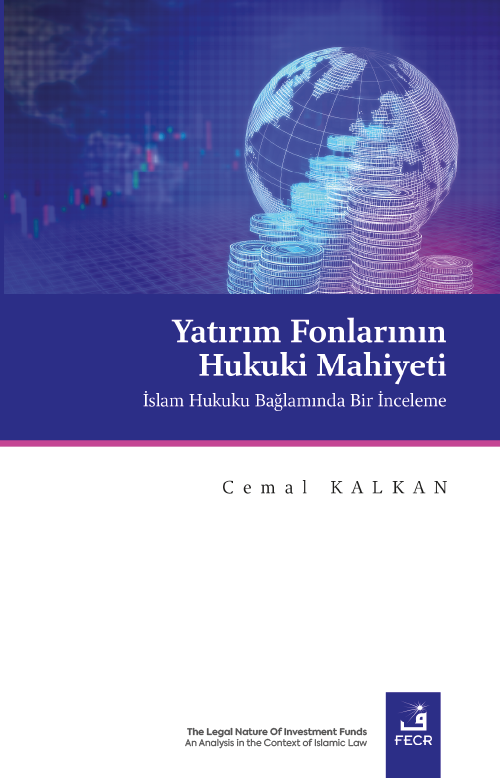
The Legal Nature of Investment Funds
An Analysis in the Context of Islamic Law
Investment funds refer to pools of assets formed from money collected
from savers and invested in various assets in accordance with the principle
of risk diversification. Although these funds do not possess legal
personality, they may at first glance appear to represent a bilateral contractual
relationship; in reality, however, they constitute a multilateral
and complex legal structure. For this reason, in order to determine the
legal nature of investment funds, the relationships among the parties
involved in the fund must be examined separately. Among these relationships,
the most important legal bond determining the fundamental
functioning of the fund is the relationship between the portfolio management
company and the holders of participation units. In Turkish
legislation, there is no specific contract type that directly regulates this
relationship. Therefore, the legal nature of this relationship is determined
on the basis of the provisions of the fund’s internal regulations
and prospectus, and in Turkish legal literature it is characterized as a
collective investment contract. From the perspective of Islamic law, this
relationship is conceptualized as wakālah bi’l-ujrah when the manager
receives a fixed remuneration, muḍārabah when the manager receives
a share of the profit, and ʿinān partnership when the fund manager also
participates in the fund portfolio. Islamic legal scholars who examine
the nature of investment funds operating in Türkiye generally evaluate
the relationship between the parties within the framework of an agency
contract, based on the fact that the fund manager receives a predetermined
fee. Accordingly, the management fee paid to the fund manager
is regarded as a natural consequence of the agency contract, while the
performance fee, which accrues upon the realization of a specified target,
is explained within the framework of the juʿālah contract. Since
participation units are redeemed at their market value, such redemption
does not constitute a capital guarantee and is therefore considered
permissible under Islamic law. Moreover, the fact that the fund assets
are registered in the name of the portfolio management company on the
vii
basis of fiduciary ownership bears similarity to the concept of limited
ownership discussed in Islamic legal literature in connection with bayʿ
bi’l-wafāʾ.
Keywords: Islamic Law; Investment Fund; Collective Investment Contract;
Agency (Wakālah); Muḍārabah
| Genel Yayın No | 1884 |
|---|---|
| Marka | Fecr |
| Marka No | 1112 |
| ISBN | 9786258724684 |
| Yayım Tarihi | 28.03.2026 |
| Dil | |
| Boyut | 13,5 x 21 cm |
| Baskı Sayısı | 1 |
| Sayfa Sayısı | 192 |
| Kağıt Cinsi | 60 gr. Enzo |
| Kapak |