1000₺ ve üzeri alışverişlerde ÜCRETSİZ KARGO
Hafta içi saat 12.00‘ye kadar verilen siparişler AYNI GÜN KARGODA

  • 0 Items - ₺0,00
    • Sepette hiç bir ürün yok.
-30%YENİ

Orijinal fiyat: ₺330,00.Şu andaki fiyat: ₺230,00.

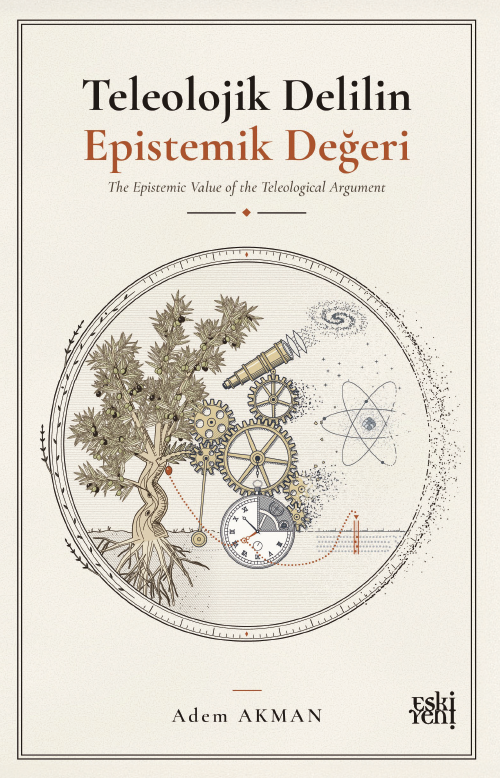
Teleolojik Delilin Epistemik Değeri

The Epistemic Value of the Teleological Argument

10.70458/fcr.9786258596762

0000-0002-2565-0910 ES0461 ,
Paylaş
Teleolojik Delilin Epistemik Değeri
 Deneyim bilgisinden hareketle Tanrı hakkında fikir sahibi olabilmenin imkân ve sınırlarını teleolojik delil ekseninde sorguladığımız bu çalışmada, bilimsel ve felsefi paradigmaların tarihsel süreç içerisindeki değişiminin, teleolojik delilin formüle edilme biçimini etkilediği gibi onun epistemik değerine ilişkin bakış açısını da şekillendirdiğini görünür kılmaya çalıştık. Bu doğrultuda öncelikle teleolojik delil gibi etkiden nedene doğru ilerleyen teistik kanıtlamaların epistemik değerine ilişkin Aristotelesçi felsefe geleneği içerisindeki tartışmaları ele aldık. Aristoteles’in ereksel doğa tasavvurunun delile meşruiyet sağlarken İkincil Analitikler’deki ispat teorisinin bu tür çıkarımları sınırladığını göstermeye çalıştık. Fârâbî ve İbn Sînâ’nın delili epistemik değeri bakımından ikincil plana iten tutumlarını inceledikten sonra İbn Rüşd ve Thomas Aquinas’ın onu müstakil bir kanıtlama olarak savunan yaklaşımlarını ele aldık. Ardından ereksel doğa tasavvurunun yerini zorunlu yasa ve mekanik evren görüşüne bırakmaya başladığı erken modern dönemde, David Hume ve Immanuel Kant’ın teleolojik delile yönelik itirazlarını değerlendirdik. Hume’un nedensellik eleştirisinin yalnızca delili değil, kendisinin de benimsediği deneyci bilimsel yöntem anlayışını sarsarak tutarsızlığa yol açtığını, Kant’ın fiziko-teolojik kanıta yönelik eleştirisinin ise deneyim temelli çıkarımın sıhhatini değil ulaşılan ilkenin mahiyetini hedef aldığını ileri sürdük. Son olarak teleolojik delile ilişkin tartışma zemininin modern ve çağdaş dönemlerde ne yönde ve nasıl değiştiğini inceledik. Bu doğrultuda evrim, akıllı tasarım ve ince-ayar tartışmalarını, gözlemlenen düzenlilik olgusundan Tanrı’nın varlığına ulaşmanın imkânı meselesinin çağdaş tezahürleri olarak ele aldık. Rakip hipotezlerin karşılaştırıldığı bu tartışmalarda William A. Dembski ve Michael J. Behe’nin bir failin varlığını çıkarsamakla yetindiğini, Richard Swinburne ve Robin Collins’in ise düzenlilik olgusunu teizmin Tanrı’sı ile ilişkilendirdiğini vurguladık. Böylece paradigma değiştikçe delilin formüle ediliş biçimi ve ona tanınan epistemik değer farklılaşsa da deneyimden hareketle deneyimi aşan bir ilkeye ulaşma çabasının doğurduğu gerilimin her dönemde varlığını koruduğu sonucuna ulaştık.
Anahtar Kelimeler: Teleoloji; Tanrı; Teizm; Tasarım; Nizâm; Gâye; Evrim; Akıllı Tasarım; İnce-Ayar
 İÇ SAYFALAR
In this study, which examines, through the lens of the teleological argument,
the possibility and limits of forming a conception of God on the
basis of empirical knowledge, we sought to make visible how changes
in scientific and philosophical paradigms over the course of history not
only affected the way the teleological argument was formulated but
also shaped perspectives on its epistemic value. Accordingly, we first
addressed the debates within the Aristotelian philosophical tradition
concerning the epistemic value of theistic demonstrations that, like the
teleological argument, proceed from effect to cause. We sought to show
that while Aristotle’s teleological conception of nature lends legitimacy
to the argument, his theory of demonstration in the Posterior Analytics
restricts such inferences. After examining the positions of al-Fārābī
and Avicenna (Ibn Sīnā), which relegated the argument to a secondary
place with respect to its epistemic value, we explored the approaches
of Averroes (Ibn Rushd) and Thomas Aquinas, who defended it as an
independent demonstration. We then evaluated the objections raised
against the teleological argument by David Hume and Immanuel Kant
in the early modern period, when the teleological conception of nature
began to yield to the notion of necessary law and a mechanistic view of
the universe. We argued that Hume’s critique of causality, undermines
not only the teleological argument but also the empiricist conception
of scientific method that he himself endorsed. Therefore, gives rise to
an inconsistency. On the other hand Kant’s critique of the physico-theological
proof targets the nature of the principle reached rather than
the validity of the inference grounded in experience. Finally, we investigated
in what direction and how the ground of the debate on the teleological
argument shifted in the modern and contemporary periods. In
this context, we treated the debates on evolution, intelligent design, and
fine-tuning as contemporary manifestations of the question of whether
the existence of God can be reached from the observed phenomenon
of regularity. We emphasized that in these debates, in which rival hypotheses
are compared, William A. Dembski and Michael J. Behe confine
themselves to inferring the existence of an agent, whereas Richard
Swinburne and Robin Collins associate the phenomenon of regularity
with the God of theism. Thus, we concluded that although the way the
argument is formulated and the epistemic value accorded to it vary as
paradigms change, the tension generated by the effort to reach a principle
that transcends experience by proceeding from experience has
persisted in every period.
Keywords: Teleology; God; Theism; Design; Order; Purpose; Evolution;
Intelligent Design; Fine-Tuning
Genel Yayın No

2053

Marka

Eskiyeni

Marka No

461

ISBN

9786258596762

Yayım Tarihi

30.10.2026

Dil

Boyut

13,5 x 21 cm

Baskı Sayısı

1

Sayfa Sayısı

247

Kağıt Cinsi

70 gr. Enzo

Kapak

Taksitleri Güncelle