1000₺ ve üzeri alışverişlerde ÜCRETSİZ KARGO
Hafta içi saat 12.00‘ye kadar verilen siparişler AYNI GÜN KARGODA

  • 0 Items - 0,00
    • Sepette hiç bir ürün yok.
-33%YENİ

Orijinal fiyat: ₺260,00.Şu andaki fiyat: ₺175,00.

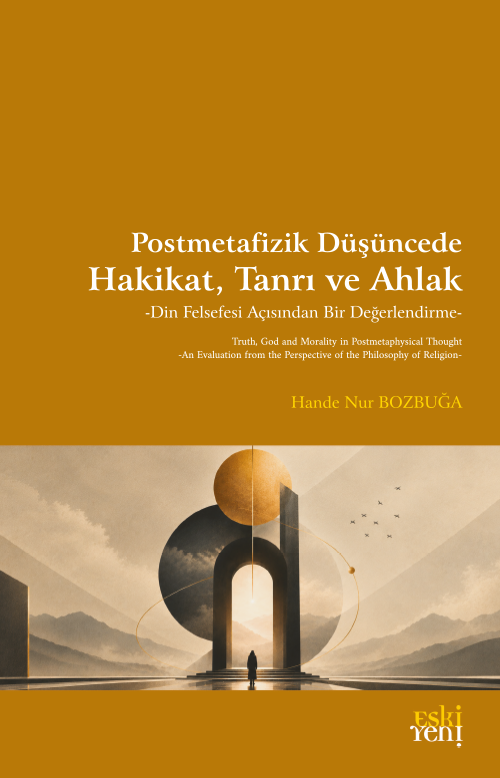
Postmetafizik Düşüncede Hakikat, Tanrı ve Ahlak

Truth, God and Morality in Postmetaphysical Thought

10.70458/fcr.9786258596601

0000-0003-3927-8088 ES0446 ,
Paylaş
Postmetafizik Düşüncede Hakikat, Tanrı ve Ahlak
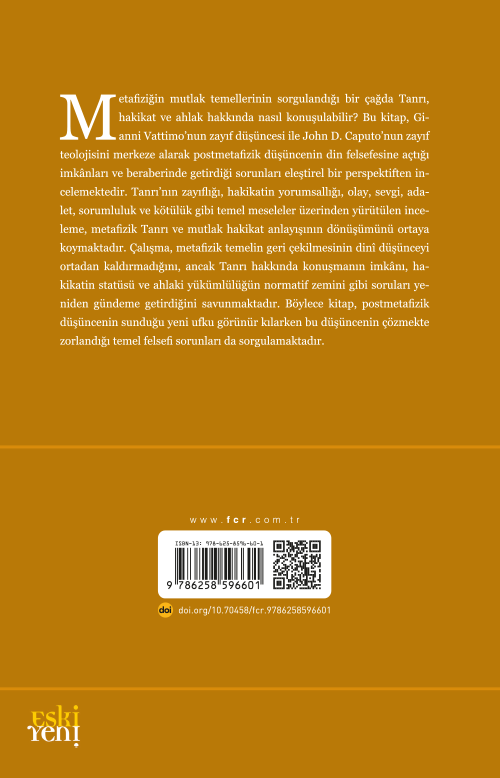
Bu çalışma, metafizik düşüncenin aşkın, değişmez ve temellendirici iddialarının sorgulandığı postmetafizik bağlamda Tanrı, hakikat ve ahlak meselelerinin nasıl yeniden ele alındığını incelemektedir. Çalışmanın temel amacı, Gianni Vattimo’nun “zayıf düşünce” ve John D. Caputo’nun “zayıf teoloji” yaklaşımlarını karşılaştırmalı ve eleştirel bir perspektiften değerlendirerek postmetafizik din felsefesinin imkân ve sınırlarını ortaya koymaktır. Bu çerçevede metafizik Tanrı anlayışının dönüşümü, hakikatin yorumsal niteliği, ahlaki sorumluluk ve kötülük problemi ele alınmaktadır. Vattimo’da metafizik varlık anlayışının zayıflaması ve Hristiyanlığın kenosis üzerinden yeniden yorumlanması, Caputo’da ise Tanrı’nın ontolojik bir varlıktan ziyade olay, çağrı ve koşulsuz sorumluluk ufkunda düşünülmesi incelenmektedir. Her iki yaklaşımın metafizik kesinlikten uzaklaşarak dinî düşünceye yeni bir imkân açtığı, ancak bu dönüşümün hakikatin statüsü, Tanrı hakkında konuşmanın imkânı ve ahlaki yükümlülüğün normatif zemini bakımından önemli sorunlar doğurduğu savunulmaktadır. Çalışma, postmetafizik düşüncenin din felsefesine katkısını kabul etmekle birlikte, onun metafizik temelin geri çekilmesiyle ortaya çıkan felsefi ve teolojik sorunlara verdiği cevapların yeterliliğini eleştirel biçimde değerlendirmektedir.
Anahtar Kelimeler: Din Felsefesi; Postmetafizik Düşünce; Zayıf Düşünce; Zayıf Teoloji; Tanrı; Hakikat; Hermenötik; Kenosis; Sorumluluk
 İÇ SAYFALAR
Truth, God and Morality in Postmetaphysical Thought
-An Evaluation from the Perspective of the Philosophy of
Religion-
This study examines how questions of God, truth, and morality
are reconsidered within the postmetaphysical context, in which
the transcendent, immutable, and foundational claims of metaphysical
thought are called into question. Its primary aim is to
reveal the possibilities and limits of postmetaphysical philosophy
of religion by evaluating Gianni Vattimo’s “weak thought”
and John D. Caputo’s “weak theology” from a comparative and
critical perspective. Within this framework, the transformation
of the metaphysical conception of God, the interpretive nature
of truth, moral responsibility, and the problem of evil are examined.
Vattimo’s weakening of the metaphysical conception of
being and his reinterpretation of Christianity through kenosis
are considered alongside Caputo’s understanding of God not
primarily as an ontological being, but within the horizon of the
event, the call, and unconditional responsibility. The study argues
that although both approaches open up new possibilities
for religious thought by moving away from metaphysical certainty,
this transformation also gives rise to significant problems
concerning the status of truth, the possibility of speaking about
God, and the normative ground of moral obligation. While acknowledging
the contribution of postmetaphysical thought to
the philosophy of religion, the study critically evaluates the adequacy
of its responses to the philosophical and theological problems
arising from the withdrawal of the metaphysical foundation.
Keywords: Philosophy of Religion; Postmetaphysical Thought;
Weak Thought; Weak Theology; God; Truth; Hermeneutics; Kenosis;
Responsibility

Genel Yayın No

2016

Marka

Eskiyeni

Marka No

446

ISBN

9786258596601

Yayım Tarihi

21.09.2026

Dil

Boyut

13,5 x 21 cm

Baskı Sayısı

1

Sayfa Sayısı

184

Kağıt Cinsi

70 gr. Enzo

Kapak

Taksitleri Güncelle