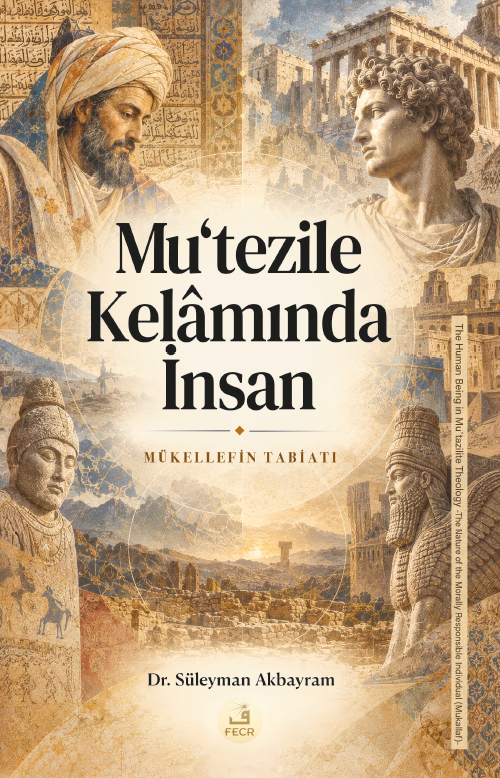
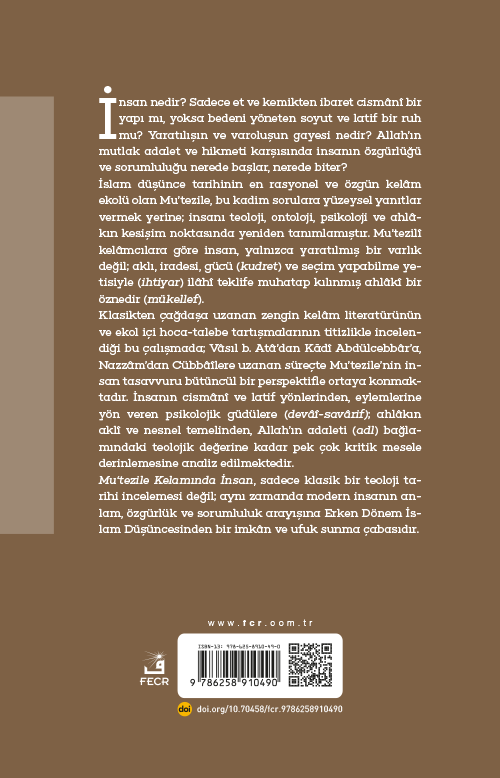
This study primarily aims to identify the definition of “human” within
the framework of Mu’tazilite Kalām. Within the school, some scholars
posit that the human essence is solely constituted by the soul (rūḥ).
Conversely, another view asserts that the human being is composed of
the physical body (badan), arguing that since both the pains and pleasures
of this life and the hereafter are experienced through the corporeal
form, the human essence must be physical. Despite these divergent
views on ontological reality, both sides converge on the necessity of
human morality. Regardless of whether the essence is spiritual or corporeal,
the mere existence of a human being in this world necessitates
a moral framework.
After investigating the essence of the human being, the text focuses on
the value attributed to humanity within Mu’tazilite theology. It is widely
accepted that their conceptions of the universe and man follow parallel
trajectories, as evidenced by their atomistic approach to both concepts.
However, when addressing the relationship between God and man, the
Mu’tazila is remarkably bold in delineating the points of divergence
and convergence between the two entities. In this context, this study
aims to reveal the innate faculties bestowed upon man during creation
and how these endowments affect both God and man in both lives. The
study identifies the concepts attributed to man by the Mu’tazila and
seeks to establish their Quranic foundations. The core of the text explores
the connection between these Quranic data and reason (aql), as
well as the ontological value they impart to the human being.
The final section investigates the Mu’tazilite interpretation of innate
human emotions and psychological states, and their function within
the God-human relationship. Viewed holistically, the findings suggest
that the Mu’tazila aimed to construct a theology that provides man with
both the fortitude to lead a principled life in this world and the necessary
preparation for the hereafter.
Keywords: Mu’tazila; Human; Soul; Body; Ethics; Mukallaf

 İÇ SAYFALAR


