0 Items - ₺0,00
- Sepette hiç bir ürün yok.

Orijinal fiyat: ₺400,00.₺280,00Şu andaki fiyat: ₺280,00.
 İÇ SAYFALAR
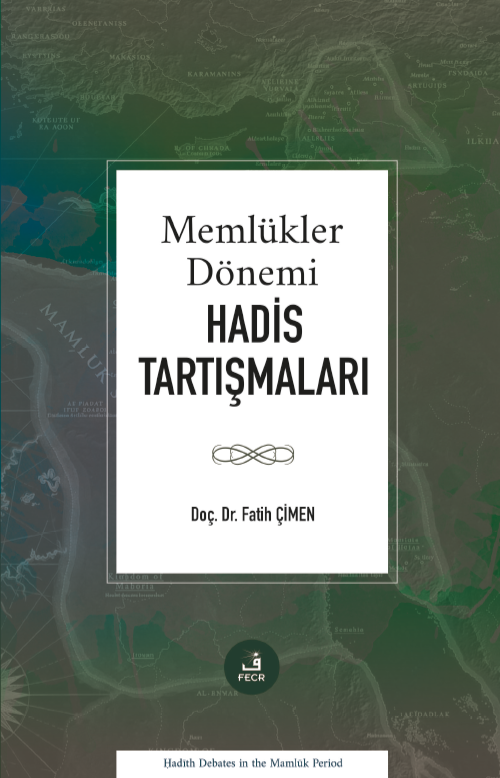
Ḥadīth Debates in the Mamlūk Period
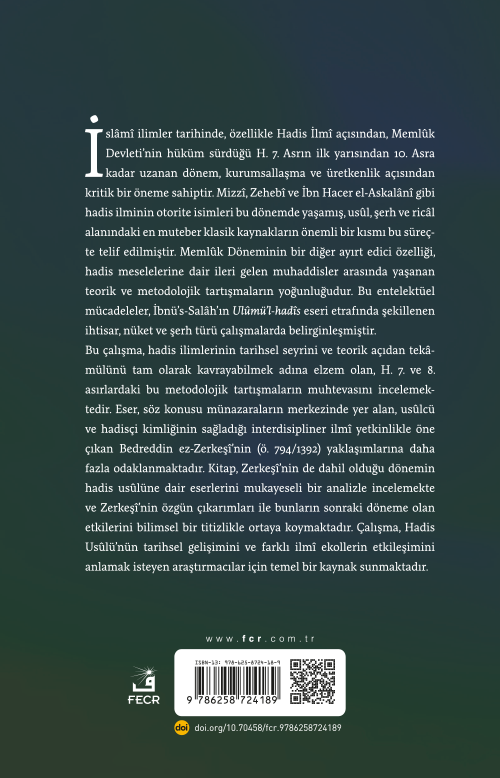
Certain periods hold significant importance for the development and
historical trajectory of Islamic sciences. For instance, the second and
third centuries of the Hijra, regarded as the era of codification and
classification (Tadwīn and Taṣnīf), are fundamental for Ḥadīth studies.
The time span stretching from the first half of the seventh century
AH to the tenth century AH, concurrent with the reign of the Mamlūk
state, is likewise a critically important and research-worthy period
for Islamic sciences in general, and Ḥadīth studies in particular. This
is because celebrated figures in Ḥadīth history, including al-Mizzī (d.
742/1341), al-Dhahabī (d. 748/1348), and Ibn Ḥajar (d. 852/1449),
lived during this era, and many authoritative sources in the fields of
Ḥadīth methodology (Uṣūl), commentary (Sharḥ), and biographical
criticism (Rijāl) were authored. Another distinctive feature of the Mamlūk
period in Ḥadīth studies is the debates that took place among the
leading muḥaddithūn (Ḥadīth scholars) concerning various Ḥadīth issues.
These discussions, predominantly occurring in the seventh and
eighth centuries AH, are manifested in works of abridgement (ikhtiṣār),
critical notes (nukat), and commentary (sharḥ) written on Ibn al-Ṣalāḥ’s
(d. 643/1245) seminal work, Ulūm al-Ḥadīth (al-Muqaddimah). The
content and nature of these debates are crucial for understanding the
historical development of the Ḥadīth sciences.
This study comprises an introduction and two chapters. The introduction
provides an overview of the political, social, religious, and scholarly
conditions of the Mamlūk era, followed by an introduction to Badr al-
Dīn al-Zarkashī (d. 794/1392) in terms of his multifaceted contributions
to Ḥadīth science. The first chapter examines the debates among Mamlūk
Ḥadīth scholars concerning Ḥadīth terminology, while the second
chapter investigates discussions on specific Ḥadīth issues. The debates
are chronologically analyzed, focusing on Ibn al-Ṣalāḥ as the central
figure, and covering the periods preceding and succeeding al-Zarkashī.
Furthermore, special emphasis is placed on al-Zarkashī and his distinct
views and conclusions, which stem from the scholarly competence afvii
forded by his dual identity as both a legal methodologist (Uṣūlī) and
a Ḥadīth scholar, particularly as articulated in his work al-Nukat on
Ibn al-Ṣalāḥ’s Ulūm al-Ḥadīth. In examining the debates, the works on
Ḥadīth methodology by the aforementioned scholars are comparatively
analyzed, with particular attention paid to al-Zarkashī’s conclusions
and perspectives on Ḥadīth issues and their subsequent influence. This
approach ultimately underscores the importance of addressing Ḥadīth
issues from diverse scholarly perspectives.
Keywords: Ḥadīth; Ḥadīth Methodology (Uṣūl al-Ḥadīth); Mamlūks; al-
Zarkashī; Debate
| Genel Yayın No | 1792 |
|---|---|
| Marka | Fecr |
| Marka No | 1063 |
| ISBN | 9786258724189 |
| Yayım Tarihi | 25.12.2025 |
| Dil | |
| Boyut | 13,5 x 21 cm |
| Baskı Sayısı | 1 |
| Sayfa Sayısı | 325 |
| Kağıt Cinsi | 70 gr. Enzo |
| Kapak |