1000₺ ve üzeri alışverişlerde ÜCRETSİZ KARGO
Hafta içi saat 12.00‘ye kadar verilen siparişler AYNI GÜN KARGODA

  • 0 Items - ₺0,00
    • Sepette hiç bir ürün yok.
-31%YENİ

Orijinal fiyat: ₺480,00.Şu andaki fiyat: ₺330,00.

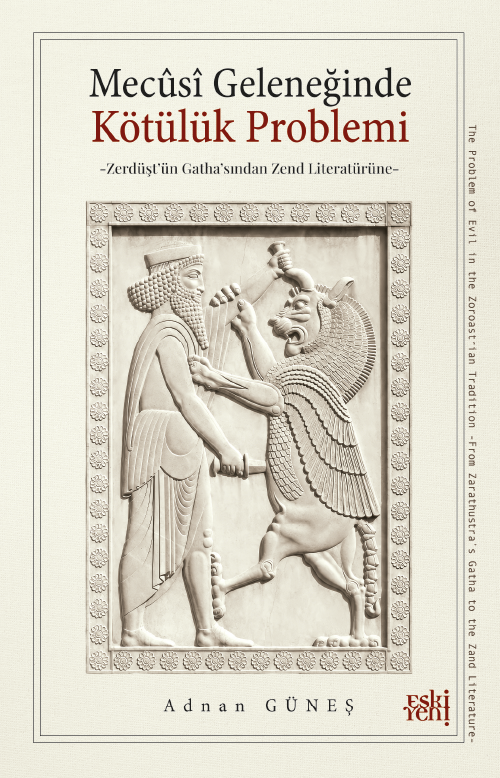
Mecûsî Geleneğinde Kötülük Problemi

The Problem of Evil in the Zoroastrian Tradition

10.70458/fcr.9786258596786

0000-0001-8888-5111 ES0462 ,
Paylaş
Mecûsî Geleneğinde Kötülük Problemi
Bu kitap, Mecûsî/Zerdüştî geleneğinde kötülük problemini farklı dönemlere karşılık gelen Gatha, Avesta ve Zend metinlerindeki teolojik değişim-dönüşümleri dikkate alarak inceleme konusu etmektedir. Mecûsî teolojisinde kötülük anlayışındaki değişim-dönüşümün Tanrı, evren, insan ve eskatoloji tasavvurlarında belirleyici bir ilke olduğu anlaşılmaktadır. Nitekim bu tasavvurlar, kötülüğe atfedilen konuma göre şekillenmektedir. Kötülüğün, erken dönem kutsal metni olan Gatha’dan Sâsânî dönemi Zend metinlerine kadar süreç içinde mahiyet ve konum itibarıyla değişime uğradığı tespit edilmiş; dönemsel olarak kötülük problemine dair çözümler geliştirilmiştir. Öyle ki metinler, kimi zaman Tanrı’nın mutlak iyiliği ile insan özgürlüğünü bağdaştırarak kötülüğü insana dayandırırken, kimi zaman da iyilik ve kötülüğün ontolojik bağımsızlığını tesis eden düalist bir teolojiye yönelmiştir. Ancak her iki yaklaşımda da kötülüğün varlığı meselesi gerek mantıksal gerekse teolojik açıdan önemli açmazları ve belirsizlikleri daima gündemde tutmuştur. Çalışma, geleneğin kutsal metinlerinde dönemsel teolojik farklılıkların olması ve tektanrıcılıktan düalizme bir dönüşümün yaşanması nedeniyle kötülüğün mahiyetinin ve ona yüklenen anlamın aynı olmadığını ortaya koymaktadır. Bu kapsamda kutsal metinlerde kötülük algısı, kötülüğün mahiyeti, Tanrı, evren, insan ve eskatoloji ile ilişkisi analitik ve eleştirel bir perspektifle betimlenmektedir. Aynı metotla İkiz Ruh’un soyuttan ontolojik bir yapıya dönüşmesi ve geleneğin kötülüğe bakışının günümüzde nasıl algılandığı gibi hususlar da ele alınmaktadır. Çalışma, tematik-kronolojik olarak kurgulanmaktadır. Böylece her başlıkta dönemsel olarak kutsal metinlerdeki veriler işlenmekte; kötülüğe dair metinlerdeki teolojik farklılıklar ve dönüşümler ortaya konmaktadır. Bu kutsal metinlerden elde edilen bulgular, Mecûsîliğin kötülük problemine, Tanrı-kötülük ilişkisine, evrendeki kozmik düzenin/dengenin nasıl kurulduğuna, kötülüğün kökenine ve nihai akıbetine ilişkin özgün bir yaklaşım sunduğunu göstermektedir.
Anahtar kelimeler: Mecûsîlik/Zerdüştîlik; Kötülük; Angra Mainyu/Ehrimen; Ahura Mazda/Ohrmazd; İkiz Ruh Doktrini
 İÇ SAYFALAR
The Problem of Evil in the Zoroastrian Tradition
From Zarathustra’s Gatha to the Zand Literature
This book examines the problem of evil in the Zoroastrian tradition
by taking into account the theological changes and transformations
reflected in the Gatha, the Avesta, and the Zand texts, each corresponding
to different historical periods. In Zoroastrian theology, the
changes and transformations in the understanding of evil appear to
be a defining principle in conceptions of God, the cosmos, the human,
and eschatology; indeed, these conceptions are shaped in accordance
with the position assigned to evil. Moreover, it is observed
that from the Gatha, the earliest text, to the Zand literature of the
Sasanian period, evil underwent a transformation in terms of both
its nature and its status, and specific solutions to the problem of evil
were developed in those periods. Thus, the texts at times attribute
evil to human beings by reconciling God’s absolute goodness with human
freedom, while at other times they move toward a dualistic theology
that establishes the ontological independence of good and evil.
In both approaches, however, the question of the existence of evil
continually gives rise to significant logical and theological difficulties
and ambiguities. The study demonstrates that the nature of evil and
the meaning attributed to it are not uniform, owing to the presence in
the tradition’s sacred texts of both theological differences across periods
and a transformation from monotheism to dualism. Within this
framework, the perception of evil in the sacred texts, its nature, and
its relationship to God, the cosmos, and humanity are examined from
an analytical and critical perspective. Using the same methodological
approach, the study also explores the transformation of the Twin
Spirit from an abstract concept into an ontological entity, as well as
the way the tradition’s understanding of evil is interpreted in the contemporary
world. The study is structured thematically and chronologically.
Accordingly, under each heading, the textual data from the
sacred writings are examined in relation to their respective periods,
and the theological differences and transformations concerning evil
are brought to light. The evidence derived from these sacred texts
demonstrates that Zoroastrianism offers a distinctive approach to the
problem of evil, the relationship between God and evil, the establishment
of cosmic order, and the origin of evil.
Keywords: Zoroastrianism; Evil; Angra Mainyu/Ahriman; Ahura Mazda/
Ohrmazd; The Doctrine of the Twin Spirits
Genel Yayın No

2067

Marka

Eskiyeni

Marka No

462

ISBN

9786258596786

Yayım Tarihi

14.11.2026

Dil

Boyut

13,5 x 21 cm

Baskı Sayısı

1

Sayfa Sayısı

412

Kağıt Cinsi

70 gr. Enzo

Kapak

Taksitleri Güncelle