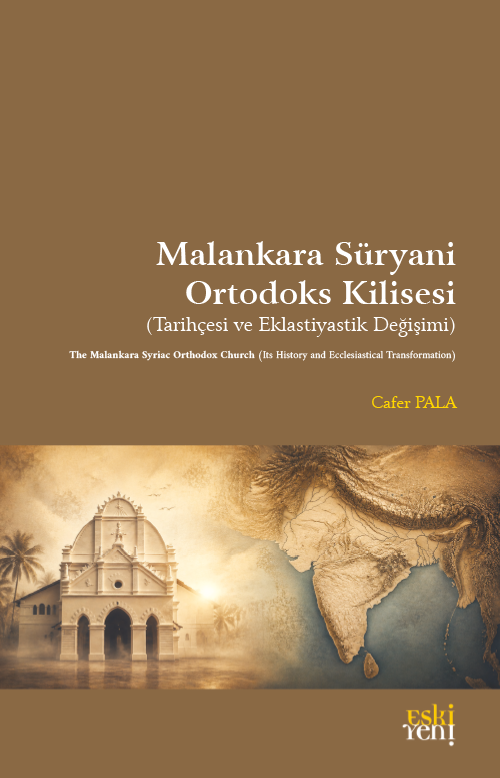
The Malankara Syriac Orthodox Church
(Its History and Ecclesiastical Transformation)
This study examines the historical origins, theological identity, liturgical
traditions, and institutional structure of the Malankara Syriac Orthodox
Church, which continues to exist in the Kerala region of India.
According to traditional accounts, the origins of the church rest upon
the arrival of the Apostle St. Thomas on the Malabar Coast in 52 CE.
From the third century onwards the community established a canonical
bond with the East Syriac (Seleucia-Ctesiphon) Patriarchate in Mesopotamia
and remained within the spiritual jurisdiction of that hierarchy
for approximately twelve centuries. During this period Syriac was
institutionalised as the liturgical language, while local administration
was conducted by archdeacons drawn from the Pakalomattom family.
In the sixteenth century, the Latinisation policies pursued by the Portuguese
colonial administration under the Padroado system, together
with the decrees of the Synod of Diamper of 1599, abolished the ancient
autonomy of the community. This pressure culminated in a permanent
rupture with the Coonan Cross Oath of 1653, dividing the community
into the Pazhayakuttukar and the Puthankuttukar. Following the canonical
bond established in 1665 through the arrival in India of Mor
Gregorios Abdul Jaleel, the representative of the Syriac Orthodox Patriarchate
of Antioch, the community gradually shifted from the East
Syriac tradition to the West Syriac rite and to Miaphysite Christology.
At the beginning of the twentieth century, the catholicate dispute between
the Patriarch of Antioch and the local spiritual leadership produced
a permanent schism in 1912. The faction that maintained its
allegiance to the ecumenical authority of the Patriarch of Antioch,
known as the Bava party, constitutes the focus of this research and is
distinguished from the Mitran party (the Malankara Orthodox Syrian
Church), which defended administrative independence.
The study adopts a qualitative research approach, employing a historical-
descriptive and analytical model together with the technique of document
analysis. Given the limited number of dedicated studies on the
Malankara tradition in Turkish academic literature, this research aims
to address a distinct gap in the fields of Eastern Christianity and the
history of religions. The study demonstrates that this church is the sole
Asian-origin member of the family of Oriental Orthodox Churches and
that it represents a distinctive cultural-religious synthesis summarised
in the formula “Indian in culture, Christian in faith, Syriac in worship.”
Keywords: History of Religions; Patriarchate of Antioch; Eastern Christianity;
Malankara; Malankara Syriac Orthodox Church; Miaphysitism;
Syriac


 İÇ SAYFALAR