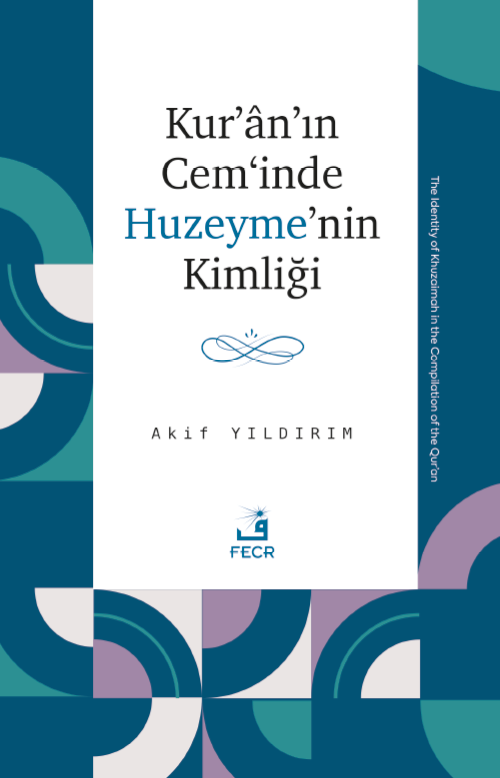
The Identity of Khuzaimah in the Compilation of the Qur’an
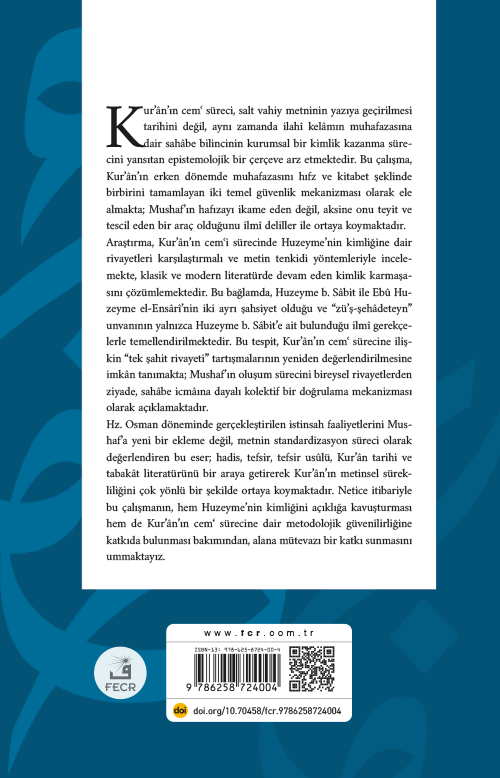
This study approaches the process of the collection (jamʿ) of the
Qur’an not merely as the historical transcription of a revealed text, but
as an epistemological framework that reflects the institutionalization
of the Companions’ (ṣaḥāba) consciousness regarding the preservation
of divine revelation. It examines the preservation of the Qur’an
through two complementary mechanisms -memorization (ḥifẓ) and
writing (kitābah)- and demonstrates, through scholarly evidence, that
the muṣḥaf functioned not as a substitute for memorization but rather
as an instrument for its confirmation and authentication.
The research conducts a comparative analysis of the narrations concerning
the identities of Khuzaima b. Thābit and Abū Khuzaima al-
Anṣārī, employing methods of narrative comparison and textual criticism
(naqd al-matn). It establishes, on sound scholarly grounds, that
the epithet “dhū al-shahādatayn” (“the possessor of two testimonies”)
pertains exclusively to Khuzaima b. Thābit. This finding provides a
new interpretive framework for the debates surrounding the “singlewitness”
reports in the Qur’an’s collection process, thereby situating
the compilation of the muṣḥaf within a collective verification mechanism
grounded in the consensus (ijmāʿ) of the Companions rather than
in individual reports.
The work interprets the copying (istinsākh) activities during the caliphate
of ʿUthmān b. ʿAffān not as additions to the muṣḥaf, but as a
process of standardization of the text. By bringing together the sources
of ḥadīth, tafsīr, tafsīr methodology, Qur’anic history, and ṭabaqāt literature,
the study presents a multidimensional analysis that reveals
the textual continuity of the Qur’an. Ultimately, it aims to make a distinctive
scholarly contribution by clarifying the identity of Khuzaima
and reinforcing the methodological reliability of the Qur’an’s collection
process.
A comparative examination of ḥadīth, tafsīr, tafsīr methodology, and
Qur’anic history and ṭabaqāt sources demonstrates that, despite the
numerical abundance and verbal variations of the narrations, a coherent
and consistent picture emerges when they are read holistically.
Qur’an 9:128–129 (al-Tawbah) was recorded in the muṣḥaf during the
caliphate of Abū Bakr based on the written copy preserved by Abū
Khuzaima al-Anṣārī. Likewise, Qur’an 33:23 (al-Aḥzāb) was registered
in the first collection through the written copy of Khuzaima b. Thābit
and the testimony of Zayd b. Thābit, and was merely verified -rather
than newly added- during the ʿUthmānic recension. The epithet “dhū
al-shahādatayn”, while affirmed in ḥadīth sources as an expression of
Khuzaima b. Thābit’s personal virtue, did not denote any technical
function in the process of the Qur’an’s compilation. Thus, the authenticity
(mawthūqiyyah) of the muṣḥaf is grounded in methodological
principles and evidentiary practices consistent with the Companions’
collective consensus during the process of collection.
Keywords: History of the Qur’an; Collection and Standardization of
the Qur’an; Khuzaima b. Thābit; Abū Khuzaima al-Anṣārī; Dhū al-
Shahādatayn

 İÇ SAYFALAR