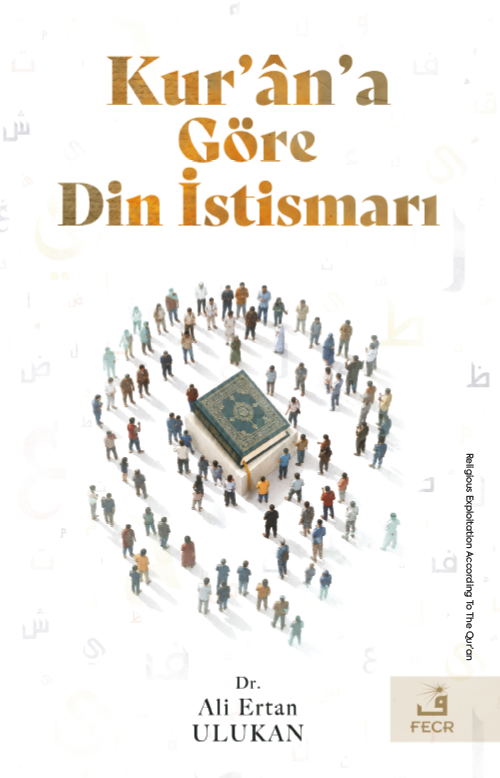
Religious Exploitation According To The Qur’an
The exploitation of religion is a multidimensional problem that manifests
itself as the instrumentalization of religion and sacred values
for worldly interests. Although the Qur’an criticizes the exploitation
of religion in various contexts, it has been exploited throughout history
for religious, political, sectarian, ideological, and socioeconomic
purposes. In this study, the exploitation of religion is examined from a
Qur’an-centered perspective; the aim is to explore the Qur’an’s view on
the exploitation of religion and to reveal how the Qur’an has been exploited.
The study employs a qualitative research method based on an
inductive process. The document analysis technique, one of the qualitative
research methods, was utilized. Data regarding the conceptual
framework of religious exploitation, religious exploitation from the
Qur’anic perspective, and Qur’anic concepts as objects of exploitation
were obtained from classical and contemporary sources. The data obtained
were analyzed using content analysis, one of the qualitative data
analysis methods.
Our study consists of an introduction and three chapters. The introduction
outlines the subject, problem, significance, purpose, methodology,
scope, and sources of the research. In the first chapter, the conceptual
framework of religious exploitation is outlined; terms and concepts in
the Qur’an that denote religious exploitation such as tampering, alteration,
distortion, hypocrisy, insincerity, and sedition are analyzed; and in
the context of the manifestations of religious exploitation, the concepts
of superstition, innovation, bigotry, taqiyya, and takfirism are addressed.
In the second chapter, titled the dimensions of religious exploitation and
the Qur’an’s approaches to exploitation, the religious, political, commercial,
psychological, and social dimensions of religious exploitation are
presented; and the hadith-based, literalist, esoteric, narrative-based, superstitious,
and distortionist approaches that pave the way for the misinterpretation
and exploitation of the Qur’an are evaluated. The third
chapter examines certain Qur’anic concepts that have been exploited. At
the end of this chapter, individual and institutional responsibilities for
preventing the exploitation of religion are emphasized.
Keywords: Exegesis; Abuse of Religion; Exploitation of Religion; Instrumentalization
of the Quran; Quality Education.

 İÇ SAYFALAR


