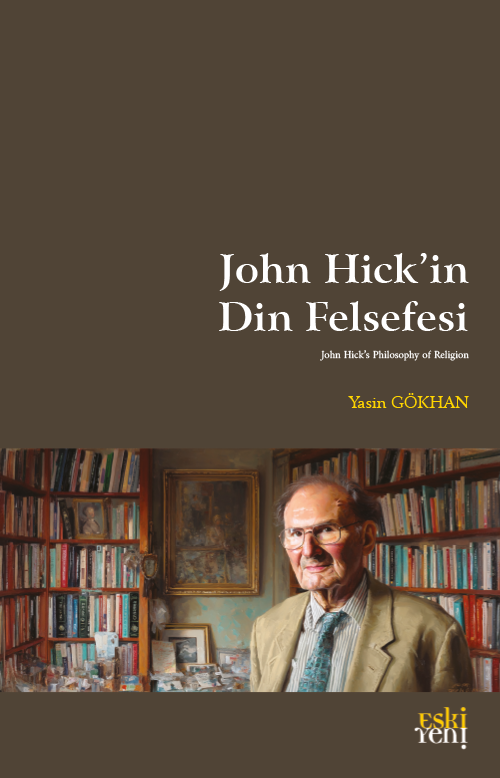
John Hick’s Philosophy of Religion
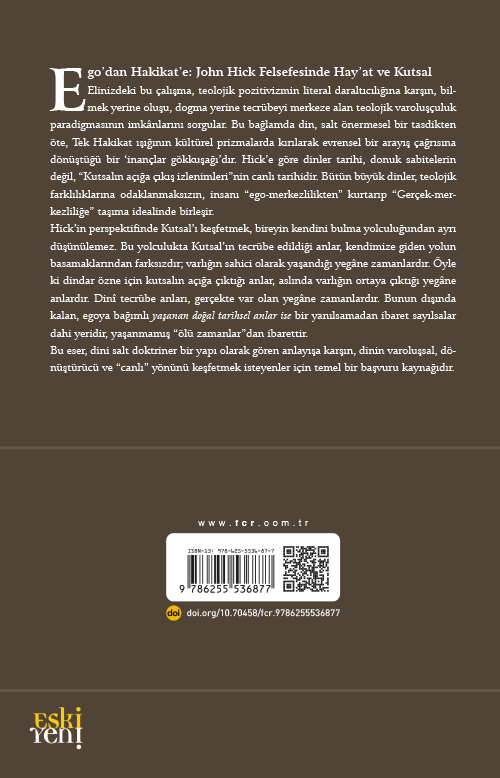
John Hick’s philosophy of religion offers a distinctive contribution to
contemporary theological debates by centering on the tension between
the transcendence of God and the immediacy of human religious experience.
According to Hick, God is an absolute and transcendent reality
that lies beyond the limits of human cognition; therefore, no linguistic
or conceptual expression can fully objectify or circumscribe the divine.
Religious experience emerges as the manifestation of this transcendence
within human consciousness, signifying the individual’s direct encounter
with the presence of God. Hick emphasizes that propositional
or literal language is incapable of fully conveying this experience, for
language is inherently limited and cannot encompass all dimensions of
the transcendent. In this regard, religious language functions not only
as a medium of existential expression but also as an instrument that encompasses
the cognitive, affective, and volitional aspects of the human
subject.
Another essential component of Hick’s theological approach is his theory
of religious pluralism. This theory not only acknowledges cultural
diversity but also highlights the epistemic limitations inherent in humanity’s
search for truth—limitations that can be transcended primarily
through experience. Within this framework, Hick’s work offers two
major contributions to the philosophy of religion. First, by placing religious
experience at the center, he exposes the limits of purely rational
and propositional theology. Second, by interpreting the diversity of religions
as varied manifestations of the same ultimate reality, he demonstrates
the possibility of a universal theological perspective. Such an
approach provides a rich analytical framework for understanding both
personal faith experiences and interreligious relations.
In conclusion, Hick’s philosophy of religion presents a coherent treatment
of the dialectical relationship between divine transcendence and
human experience, as well as the quest for truth within a framework of
religious pluralism. Religious language is understood not merely as a
vehicle of information but as a medium that guides individuals toward
transformative experience; similarly, the world’s diverse religions are
approached as cultural manifestations of a single transcendent reality.
Hick’s work thus offers both a methodological guide for contemporary
philosophy of religion and a reminder of the existential responsibility
inherent in the human pursuit of truth.
Keywords: Religious Language, Non-Evidential Rational Faith, Cognitive
Freedom, The Path Toward the Self, Religious Experience, Religious
Pluralism, The Rainbow of Beliefs, Soul Making Theodicy, Eschatological
Verification

 İÇ SAYFALAR