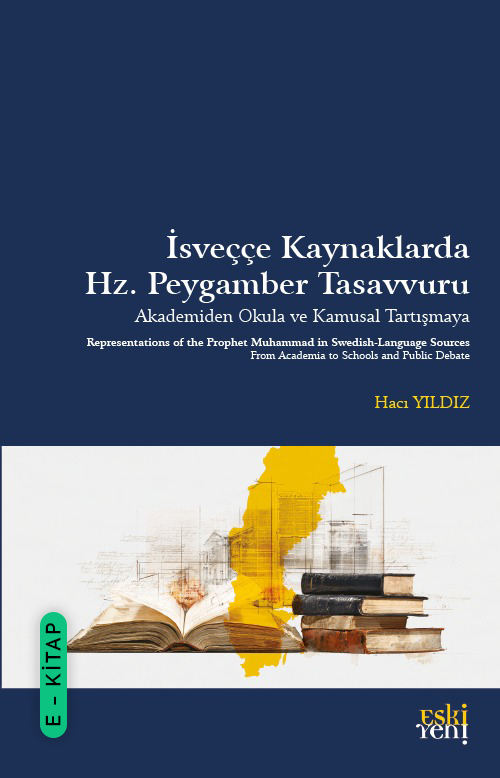
Representations of the Prophet Muhammad in Swedish-Language
Sources: From Academia to Schools and Public Debate
Swedish-language accounts of the Prophet Muhammad offer contrasting
understandings of his life and mission. Some present him as a messenger
receiving revelation, a moral guide and the source of the Sunna.
Others portray him as the founder of a religion, a lawgiver, a political
leader or a reformer. This book examines the sources behind these accounts,
traces how the accounts have changed over time, and asks how
statements about the Prophet are used in scholarship, teaching and
public debate.
Swedish Orientalism developed in contact with the wider European
tradition of Oriental studies, acquiring a distinctive character within
Sweden’s academic and cultural setting. The book explores this history
through scholarship at Uppsala and Lund universities. It places
manuscript collections, translation work and research in the history
of religions within this development, considering them against the
background of education and publishing.
The book draws on Swedish translations of the Qur’an, works of sīra
and shamāʾil, encyclopaedia entries and textbooks. Travel writing, popular
publications and academic studies also form part of the material
examined. Primary sources are used wherever possible, and the texts
are compared in their historical contexts. Particular attention is paid
to the terms used for the Prophet and the judgements made about him.
The Swedish case shows a shift from harsh polemics towards more academic
and educational accounts. In most texts, however, prophethood
is redefined through historical, philological or psychological explanations.
The book also examines these representations in religious publications
and educational texts. Public sensitivities and Christian-Muslim
relations are assessed to understand the social significance of these accounts.
Keywords: Hadith; Conception of the Prophet Muhammad; Orientalism;
Swedish Orientalism; Qur’an Translations

 Kitabın PDF Dosyası