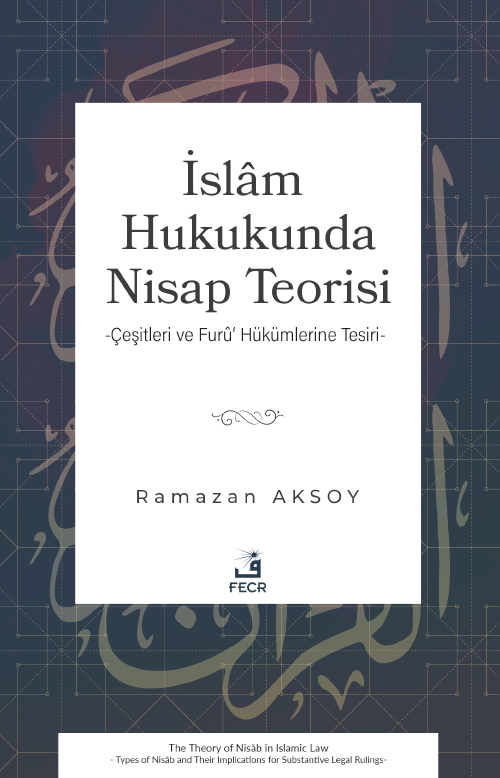
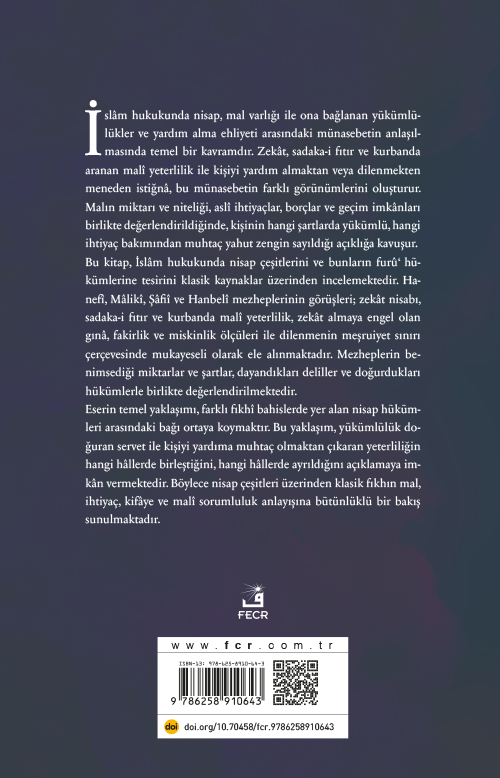
This book examines niṣāb in Islamic law in relation to financial obligations
and eligibility for assistance, explaining its types, their relationships,
and their implications for substantive legal rulings. Its central
question concerns the criteria establishing liability for zakāt, eligibility
to receive it, and permission to request assistance. The analysis encompasses
the financial requirements for zakāt, ṣadaqat al-fiṭr, and ritual
sacrifice, alongside the sufficiency thresholds that preclude receiving
zakāt or soliciting assistance.
Drawing on classical Hanafi, Maliki, Shafi‘i, and Hanbali sources, the
study combines conceptual analysis with comparative jurisprudence.
Scriptural evidence, juristic reasoning, and substantive legal cases
are examined together. It considers how asset type, ownership, basic
needs, growth potential, the passage of a lunar year, and debt affect
rulings. The analysis covers monetary assets, livestock, trade goods,
and agricultural produce, as well as the implications of the distinction
between the poor (faqīr) and the needy (miskīn) for zakāt distribution,
payment amounts, and establishing need.
The findings distinguish prescribed asset amounts from the conditions
under which possession produces legal consequences. Hanafi classifications
differentiate levels of wealth according to their effects, while
the other schools give particular attention to subsistence and earning
opportunities in determining eligibility. Their assessments nevertheless
differ in duration and criteria. Under certain conditions, liability
for zakāt can coexist with eligibility to receive it; eligibility to receive
zakāt also differs from permission to solicit assistance.
Bringing rulings from separate chapters of classical works into a common
framework, the book explains financial sufficiency in relation to
each ruling’s subject and conditions. It preserves the authority of scripturally
prescribed amounts while clarifying the distinct grounds of
assessments based on need and sufficiency.
Keywords: Islamic Law; Niṣāb; Zakāt; Financial Obligations; Eligibility
to Receive Zakāt; Financial Self-Sufficiency (Istighnāʾ); Adequacy of
Means (Kifāya)

 İÇ SAYFALAR