0 Items - ₺0,00
- Sepette hiç bir ürün yok.

Orijinal fiyat: ₺440,00.₺300,00Şu andaki fiyat: ₺300,00.
 İÇ SAYFALAR
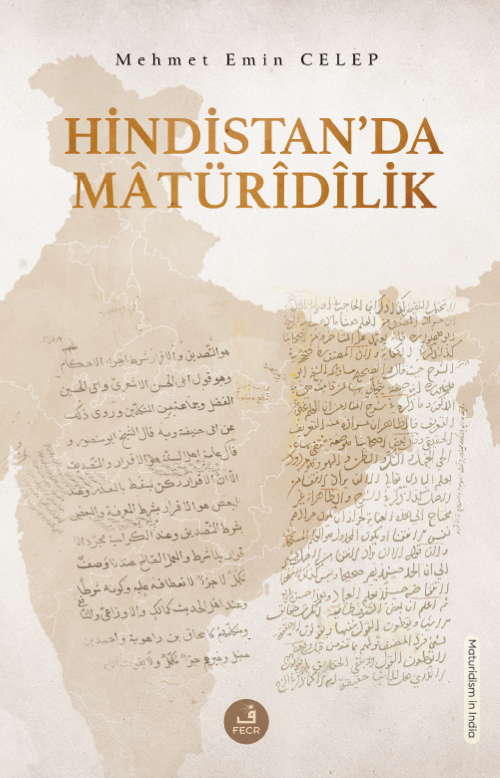
Maturidism in India
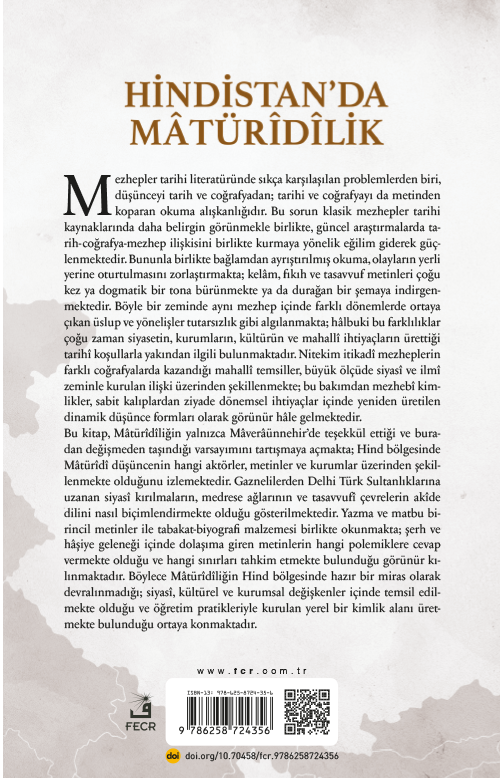
Māturīdism has generally been examined within the Islamic intellectual
tradition through the lens of its Transoxanian (Māwarāʾ al-Nahr)
center. This study approaches, from a holistic perspective, the historical
background and intellectual foundations of Māturīdī representations
that took shape in the Hind region between the 5th/11th and
10th/16th centuries. In this respect, the dissertation aims to analyze
how Māturīdism found expression beyond its classical centers in different
political and scholarly environments, thereby addressing a gap in
the existing literature. The first chapter investigates how Māturīdism
entered the Hind region through political, Sufi and legal (fiqh) channels,
particularly by means of prominent figures and the madrasa institution;
the second chapter seeks to establish the affiliation of local
scholars with the Māturīdī tradition on the basis of their doctrinal positions.
Taking into account the role of political entities such as the
Ghaznavids, Ghurids, and the Delhi Sultanates, as well as the influence
of the Ḥanafī madrasa tradition and the Chishtī–Suhrawardī Sufi
networks, the study evaluates the formation of Māturīdism in India.
Within this framework, the doctrinal approaches found in the works
of leading scholars of the period -such as Mekrānī, Gīsūdarāz, and
Dawlatābādī- are analyzed along the axis of the relationship between
kalām and taṣawwuf, and the intellectual and scholarly reflections of
Māturīdī thought in the Hind region are identified. The research is
based on biographical sources, creed (ʿaqīda) treatises, and Sufi texts,
and employs a qualitative analytical method attentive to historical
context. In this study, which focuses on the historical and intellectual
context, a multi-layered qualitative research method was followed,
combining document screening, text analysis and biographical history
approaches based on primary written and printed sources. The findings
demonstrate that Māturīdism was adopted as a doctrinal school in the
Hind region, yet developed within a multi-layered scholarly and theoretical
framework shaped by Sufi inclinations and political structures.
By mapping this trajectory, the study not only contributes to our unvii
derstanding of the geographical diffusion of Māturīdism, but also lays
a foundation for further research into the traces of this tradition within
Islamic thought in the Hind region.
Keywords: India; Maturidism; Hanafism; Chishti Order; Delhi Sultanates
| Genel Yayın No | 1828 |
|---|---|
| Marka | Fecr |
| Marka No | 1081 |
| ISBN | 9786258724356 |
| Yayım Tarihi | 2.03.2026 |
| Dil | |
| Boyut | 13,5 x 21 cm |
| Baskı Sayısı | 1 |
| Sayfa Sayısı | 375 |
| Kağıt Cinsi | 60 gr. Enzo |
| Kapak |