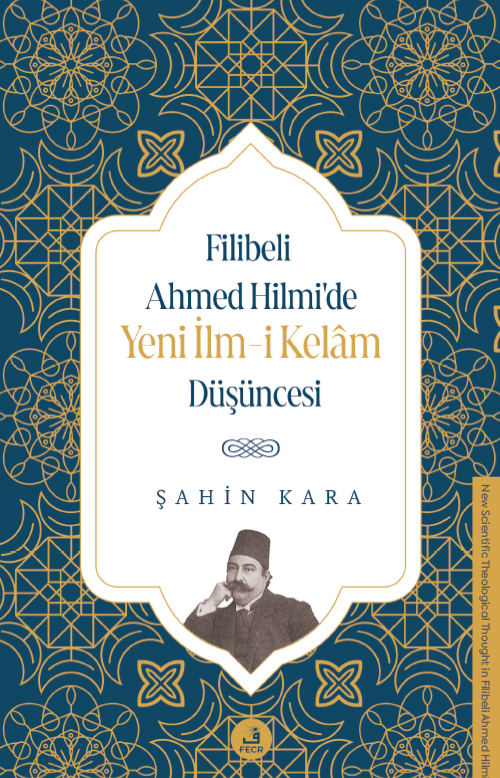
New Scientific Theologiċ al Thought inFilibeli Ahmed Hilmi
In our study, the theological thought of Şehbenderzade Filibeli Ahmet
Hilmi, one of the leading thinkers of the new scientific theological
period, was discussed. A versatile thinker, Filibeli diagnosed the religious,
intellectual and social problems of his time and offered solutions
to them. He expressed these ways of solutions by organizing various
conferences, publishing newspapers and magazines, and writing article
types of texts. Our thinker included eclecticism and analysis understanding
as a method of theology.
In our thesis, the negative effects of the denialist movements that became
increasingly stronger and more widespread in the new period of
theology were investigated on the Islamic world, especially on the Ottoman
geography. In this respect, the works and criticisms of Muslim
thinkers and especially works of some of the personalities whom Filibeli
wrote in refutation were touched upon. Analysis and evaluation of denialist
movements such as atheism, materialism, Darwinism, positivism,
socialism, agnosticism and skepticism were made, specific to Filibeli.
In this study, the first part of the principles of belief called Usul-i Selase,
the subject of divinity, that is, issues such as the existence, unity
and attributes of Almighty Allah, were examined. In this context, it has
been seen that Filibeli claimed that marifatullah was possible and tried
to prove the existence of Allah based on a classification as enfus and
afak. In our thesis, it was pointed out that one of the thinkers who has
done the most beautiful work of proving and describing Allah throughout
history is undoubtedly Ahmet Hilmi of Filibe. It has also been determined
that Filibeli attempted to base his understanding of monotheism
on the doctrine of unity of existence.
In our research, Filibeli’s approach to fate-destiny and the problem of
theodicy in connection with this is included. In this context, attention
is drawn to the negative consequences of misunderstanding the issue
of will and good-evil in terms of belief and society. Filibeli emphasized
free will as a distinctive characteristic of the new period of theology
and especially criticized fatalism harshly. It has been revealed that Filibeli
defended the need to interpret religious texts in matters related to
guidance and misguidance. In addition, Filibeli emphasized the belief
in prophethood and that the Prophet Muhammad was the last of the
prophets and stated that the claims of orientalists about the Prophet
Muhammad were unfounded and baseless. He generally relied on narrations
in explaining the subjects of the sky, and he made use of scientific
facts in dealing with issues such as the occurrence of the apocalypse
and resurrection.
Keywords: Filibeli Ahmed Hilmi; New Science of Kelam; Unity of Existence;
Ottoman Empire; Denıalist Movements

 İÇ SAYFALAR