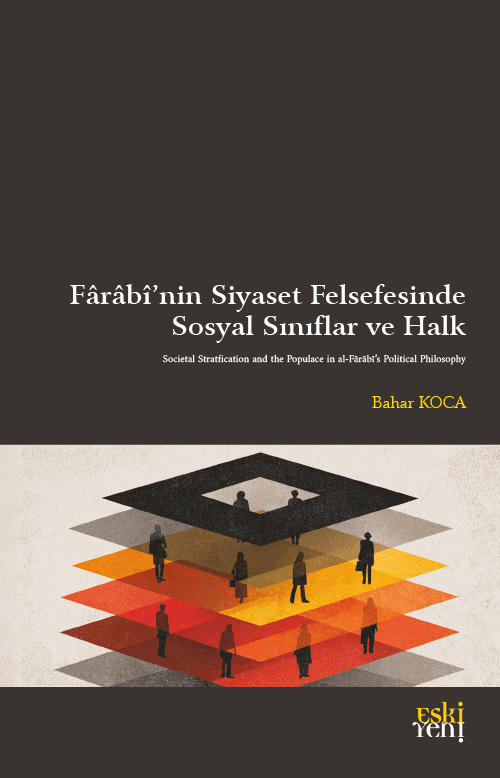
Societal Stratfication and the Populace in
al-Fārābī’s Political Philosophy
Al-Fārābī’s political philosophy is closely connected to the political and
social circumstances of the period in which he lived. His political vision,
constructed upon metaphysical and epistemological foundations, was
shaped by the intellectual dynamism of the 10th century, the political
and ideological weakening of the Abbasid Caliphate, and the influence
of various sectarian movements. This historical background constitutes
a significant context for Fārābī’s efforts to understand society, reorganize
it, and establish an ideal political order.
Fārābī’s political thought offers a wide field of inquiry in historical
and theoretical terms. The principal sources examined in this study include
works such as al-Madīna al-Fāḍila, al-Siyāsa al-Madaniyya, Fusūl
al-Muntaẓa, Kitāb al-Milla, Taḥṣīl al-Saʿāda, Tanbīh ʿalā Sabīl al-Saʿāda,
and Kitāb al-Ḥurūf. These texts are of particular importance in revealing
how Fārābī classifies the populace, how this classification relates to the
political order, and what kinds of socio-political implications it yields.
This study aims to systematically examine Fārābī’s views on the origins
of the ruled/populace and social classes within the framework of his
political philosophy. Fārābī’s classification of the populace on the basis
of knowledge, virtue, and social function demonstrates the depth of his
understanding of political order -an understanding that offers significant
implications not only for his own historical context but also for
contemporary political theory.
Keywords: Al-Fārābī; Governed; Populace; Social Hierarchy; Social
Classes; Politic

 İÇ SAYFALAR