1000₺ and above purchases FREE SHIPPING
weekday hours 12.00Orders placed up to SAME DAY CARGO

  • 0 Items - ₺0,00
    • There are no items in the cart.
-30%

Original price: ₺505,00.Current price: ₺355,00.

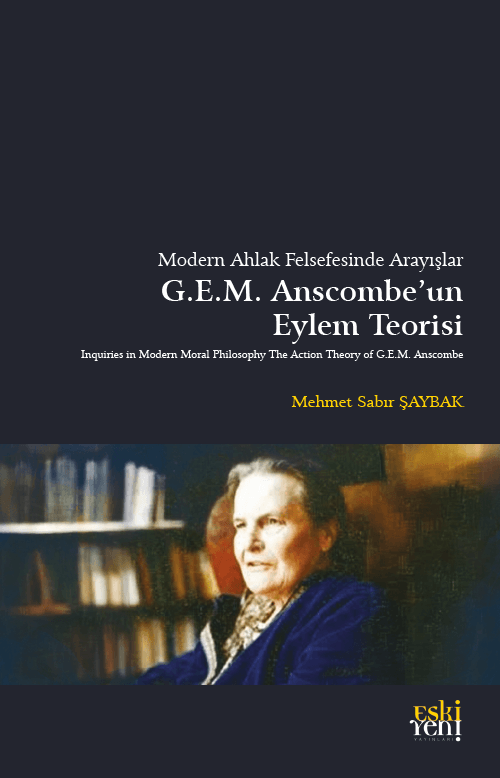
Quests in Modern Moral Philosophy: GEM Anscombe's Theory of Action

Inquiries in Modern Moral Philosophy The Action Theory of GEM Anscombe

10.70458/fcr.9786255536396

0000-0002-5585-2935 ES0326 , ,
Quests in Modern Moral Philosophy: GEM Anscombe's Theory of Action
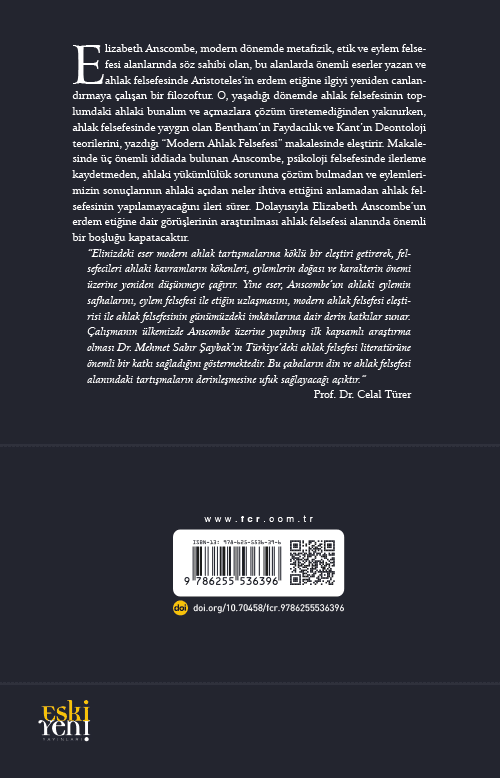
This study examines Anscombe's moral philosophy as a whole, and from this perspective, examines her observations, critiques, and recommendations regarding existing moral theories. Anscombe published her article "Modern Moral Philosophy," considered her major work in moral philosophy, in 1958. Anscombe's article is organized around the claim that moral theories that break with ancient traditions are incapable of addressing the challenges of the modern age and presents three main theses: It is necessary to proceed through the philosophy of psychology in the field of morality; the question of moral obligation cannot be resolved with concepts such as "duty," "ought," "right," and "wrong"; and there is no difference among philosophers who evaluate moral action solely by its consequences. The first chapter addresses Anscombe's first thesis, that is, "it is necessary to proceed through the philosophy of psychology in the field of morality." Within this framework, Anscombe's philosophy of action, centered on the concept of intention, was discussed, and the concepts of action, self, first person, practical knowledge, practical reason, and practical inference that define this understanding were explored. The second section examined Anscombe's other two theses together. This section discussed the meaning of Anscombe's theses: "The question of moral obligation cannot be resolved by concepts such as 'duty,' 'ought,' 'right,' and 'wrong,'" and "there is no difference between philosophers who evaluate moral action solely by its consequences." This section explored the connections between these claims and ancient and modern moral theories, the meaning of 'consequentialism,' and ultimately, the understanding of all these terms. Ultimately, according to Anscombe, a functional moral theory capable of addressing contemporary problems can only be achieved through psychology. Furthermore, the moral problem cannot be solved with concepts like duty, law, and moral ought, which are remnants of our ancient moral conception, because they cannot address the problems of the modern era. Philosophers/theories who judge moral action solely by its consequences have failed to clarify the issue of moral responsibility by making a distinction between the intended and foreseen consequences of the action.
Keywords: Morality; Ethics; Anscombe; Intention; Action; Moral Obligation; Consequentialism
 INSIDE PAGES
Inquiries in Modern Moral Philosophy
The Action Theory of GEM Anscombe
This study deals with Anscombe's moral philosophy, and examines his
observations, criticisms, and recommendations on existing moral theories.
In his 1958 article “Modern Moral Philosophy”, which is considered
to be his main work in the field of moral philosophy, Anscombe
argues that moral theories that break away from the ancient tradition
cannot cope with the problems of the modern age and puts forward
three main theses: It is necessary to proceed through the philosophy
of psychology in the field of morality; the issue of moral obligation
cannot be resolved with concepts such as “duty”, “ought”, “right” and
“wrong”; there is no difference between philosophers who evaluate
moral action only according to its consequences. In the first chapter,
Anscombe's thesis that “it is necessary to proceed through the philosophy
of psychology in the field of ethics” has been presented. In this
context, Anscombe's philosophy of action centered on the concept of
intention has discussed and the concepts of action, self, first person,
practical knowledge, practical reason, and practical inference that describe
This understanding has been explained. In the second part, the
Implications of Anscombe's other two theses, namely, the question of
moral obligation cannot be settled by concepts such as “duty”, “ought”,
“right” and “wrong”, and there is no difference between philosophers
who evaluate moral action only in terms of its consequences, have been
discussed. Thus, the connections of these claims with ancient and modern
moral theories, the meaning of “consequentialism” and ultimately
What should be understood from all these terms have been emphasized.
In conclusion, according to Anscombe, a functional moral theory that
can respond to the problems of our age can only be accessed through
psychology Moreover, the problem of morality cannot be solved with
concepts such as duty, law, and ought, which are the remnants of our
ancient conception of morality, because they cannot respond to the
problems of the modern era. Philosophers or theories that judge morale
action based solely on its consequences have failed to clarify the issue of
moral responsibility by distinguishing between the intended and foreseen
consequences of action.
Keywords: Morality; Ethics; Anscombe; Intention; Action; Moral Obligation;
Consequentialism

General Publication Number

1648

Brand

Eskiyeni

Brand Number

326

ISBNs

9786255536396

Publication Date

12.07.2025

Log out

Sizes

13,5 x 21 cm

Baskı Sayısı

1

Page Number

376

Paper Type

70gr. Enso (Color Printing)

Cover

Update Installments