1000₺ and above purchases FREE SHIPPING
weekday hours 12.00Orders placed up to SAME DAY CARGO

  • 0 Items - ₺0,00
    • There are no items in the cart.
-31%NEW

Original price: ₺480,00.Current price: ₺330,00.

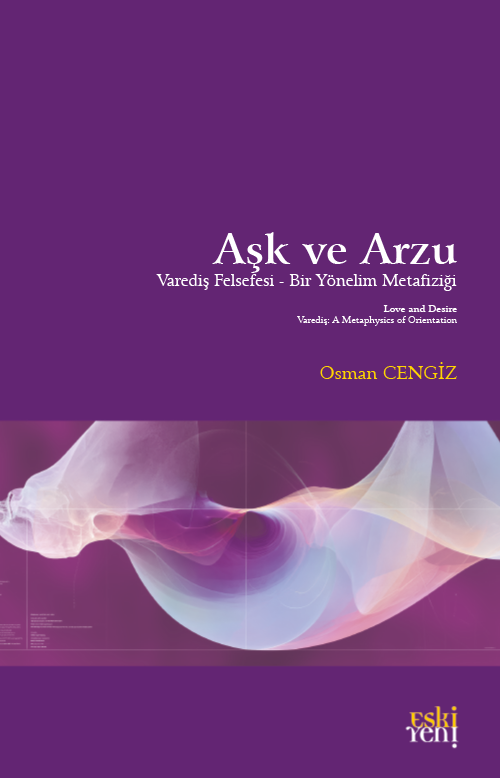
Love and Desire

0000-0001-8143-5388 ES0441 ,
Love and Desire
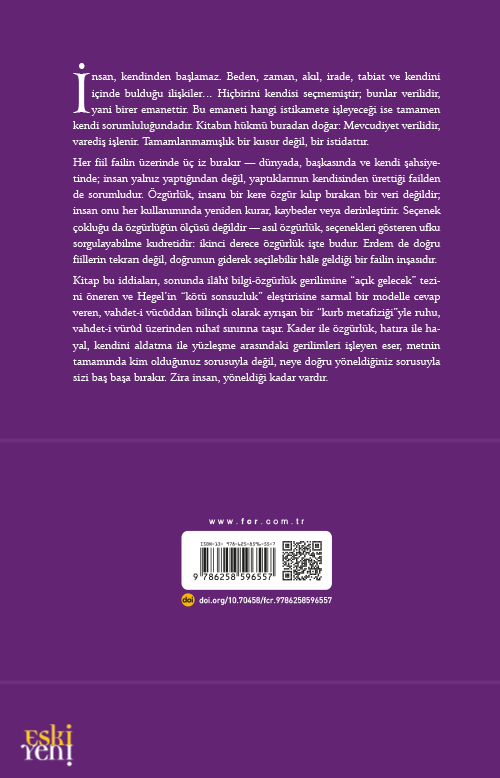
This book rethinks human existence in the world around two fundamental concepts: presence and creation. What is given to man—body, time, mind, will, nature, and relationships—is an existence he finds ready-made, not one he chooses; the direction in which this existence is developed is man's own responsibility. The concept connecting these two poles is trust: man is neither the source nor the absolute owner of his own existence, but he is accountable for it. Based on this foundation, the book systematically addresses issues such as being and carrying, the ontology of time, the levels of reason, the distinction between memory, imagination, and reality, the dialectic of freedom and fate, self-deception and confrontation, the ontology of morality, the tension between desire, will, and instinct, the structure of emotions, the triangle of love, hate, and fear, a new conception of man, society and civilization, and finally, happiness and freedom, in fourteen chapters. The central claim of the work is to unify the existential phenomenology's (Sartre, Heidegger, Kierkegaard) understanding of freedom, the classical virtue ethics' (Aristotle, MacIntyre) concept of character, and the Islamic theological metaphysics of creation and freedom (Ash'ari, vürûd, âdetullah) within a single conceptual architecture consisting of the chain of existence-trust-orientation-creation-personality. The appendices of the book transform this synthesis into technical, defensible propositions in at least three points: it offers a solution to the classical tension between divine knowledge and human freedom through the thesis of an "open future"; it bases personal identity not on a fixed essence, but on three distinct traces left by the agent; and it develops a "metaphysics of proximity" that consciously diverges from the Sufi tradition of unity of existence. The work views human incompleteness not as an ontological flaw but as a potential; It redefines freedom not as a meaningless nothingness, but as a responsibility directed towards truth.
Keywords: Existence; Presence; Trust; Orientation; Personality; Freedom and Destiny; Islamic Metaphysics
 INSIDE PAGES
Love and Desire
Arrival – A Metaphysics of Orientation
This book rethinks human existence around two foundational concepts: presence
(presence) and self-actualization (existence). What is given to the human being -body,
time, reason, will, nature, and relationships- is an unchosen, already-present condition;
the direction in which it is worked out, however, is the person's own responsibility. the
concept binding these two poles is trust (amānah): the human being is neither the source
nor the absolute owner of his own existence, yet is responsible for it. On this foundation,
the book works through fourteen chapters on being and agency, the ontology of time, the
hierarchy of reason, memory and imagination, the dialectic of freedom and fate, self-deception,
the ontology of morality, desire and will, the structure of emotion, love and fear,
a new conception of the human being, society and civilization, and the relationship between
happiness and liberty. Its central claim is to bring the freedom-concept of existentialist
phenomenology (Sartre, Heidegger, Kierkegaard), the character-concept of classical virtue
ethics (Aristotle, MacIntyre), and the creation-and-freedom metaphysics of Islamic
theology (Ash'arite occasionalism, vürûd, âdetullah) together within one conceptual architecture:
presence–trust–orientation–self-actualization–personhood. The appendices
convert this synthesis into technical, arguable propositions on three fronts: an “open
future” response to the tension between divine foreknowledge and human freedom; a
theory of personal identity grounded not in a persistent substance but in three traces left
by the agent's acts; and a “metaphysics of nearness” (kurb) that consciously departs from
the Sufi doctrine of the oneness of being (wahdat al-wujud), answering Hegel's critique of
“bad infinity” with a spiral, asymptotic model. The work recasts human incompleteness
not as a defect but as a capacity for orientation, and freedom not as a contentless void but
as a responsibility directed towards truth.
Keywords: Self-Actualization; Presence; Trust (Amānah); Orientation;
Personhood; Freedom and Fate; Islamic Metaphysics

General Publication Number

2007

Brand

Eskiyeni

Brand Number

441

ISBNs

9786258596557

Publication Date

16.09.2026

Log out

Sizes

16 x 24 cm

Baskı Sayısı

1

Page Number

328

Paper Type

70 grams of Enzo

Cover

Update Installments