Alevism-Bektashism
Historical, Religious, Social and Current Dimensions
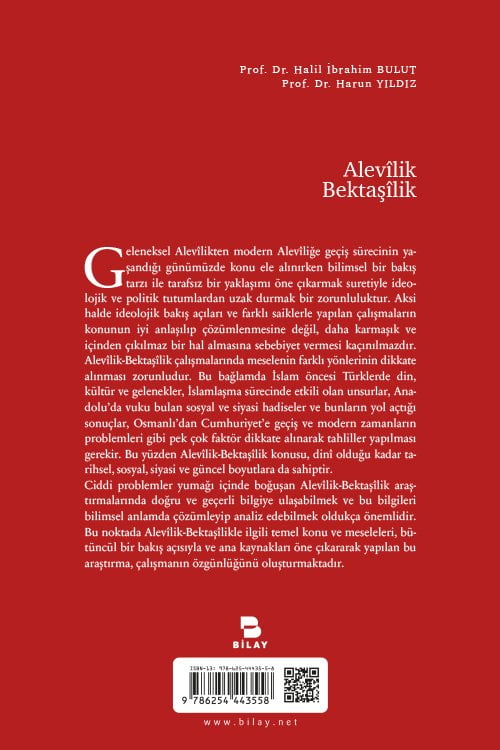
In today's transition from traditional Alevism to modern Alevism, it is imperative to prioritize a scientific perspective and an impartial approach while addressing the issue, thus avoiding ideological and political stances. Otherwise, studies conducted from ideological perspectives and with differing motivations will inevitably lead to further complexity and incomprehension rather than a better understanding and analysis of the issue. It is essential to consider the different aspects of the issue in studies on Alevism and Bektashism. In this context, analyses should be conducted by considering numerous factors, including religion, culture, and traditions among pre-Islamic Turks, the factors influencing the Islamization process, the social and political events that occurred in Anatolia and their consequences, the transition from the Ottoman Empire to the Republic, and the challenges of modern times. Therefore, the issue of Alevism and Bektashism has historical, social, political, and contemporary dimensions, as well as religious ones.
In Alevism-Bektashism research, grappling with a complex set of serious problems, it is crucial to access accurate and valid information and to analyze and analyze this information scientifically. This research, which examines the fundamental issues and problems related to Alevism-Bektashism from a holistic perspective and highlights the primary sources, constitutes the originality of this study.