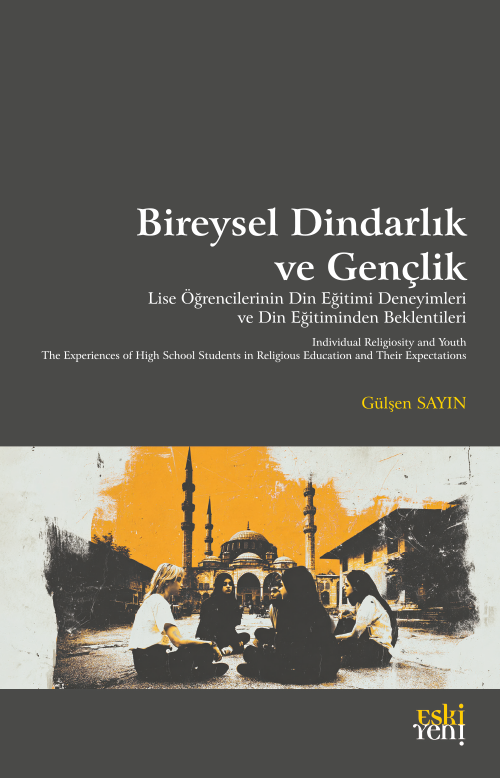
The process of individualization in modern societies profoundly influ-ences young people’s perception of religion and their forms of religios-ity. The central problem addressed in this study is that the experiences and expectations of high school students regarding religious education in the context of individualized religiosity have not been sufficiently ex-plored. The purpose of the research is to reveal students’ perceptions of religious knowledge, meaning-making, and educational practices, and to evaluate the extent to which religious education responds to their needs in the context of individualizing religiosity.
The study is based on the assumption that individualization plays a de-cisive role in the development of young people’s religious identity and sense of belonging. Thus, it provides valuable insights for both religious education policies and teaching practices.
Employing a qualitative research design, the study used purposive and snowball sampling methods and conducted semi-structured interviews with students from different types of high schools. The data were ana-lyzed through descriptive and thematic analysis techniques.
Findings indicate that students expect religious education to go beyond the transmission of knowledge and to provide meaning-making, guid-ance for daily life, and support for spiritual development. Moreover, students emphasized their need for approaches that allow questioning and the development of individual interpretations. Current practices, which heavily focus on theoretical knowledge, do not fully align with the processes of individualized religiosity.
In conclusion, the research highlights the necessity for religious educa-tion to adopt a more flexible and student-centered structure that ac-knowledges individual differences and responds to young people’s search for meaning.
Keywords: Religious Education; Individualized Religiosity; Youth; Spiri-tuality; Student Experiences; Student Expectations

 İÇ SAYFALAR