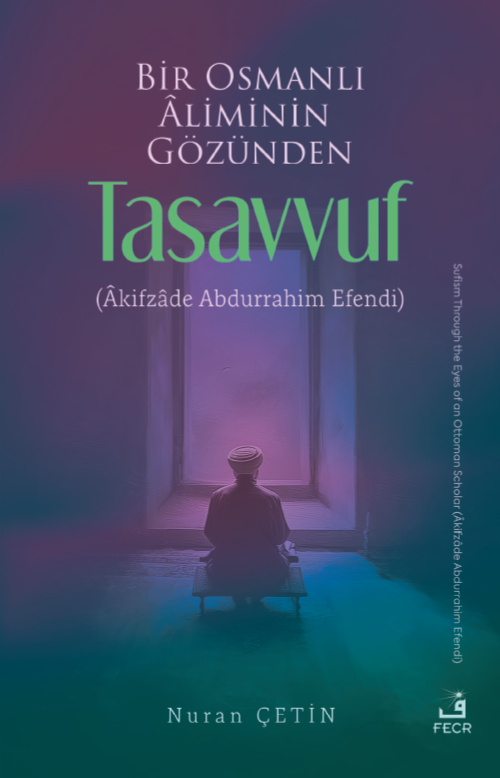
Sufism Through the Eyes of an Ottoman Scholar
Akifzade Abdurrahim Efendi, a prominent Islamic scholar in the Ottoman
tradition of knowledge and wisdom, was born in the 18th century
in Amasya, known as the “City of Princes.” He lived during the reigns
of five sultans: Mustafa III, Abdulhamid I, Selim III, Mustafa IV, and
Mahmud II. Descended from the lineage of Zayn al-Abidin, the son of
Hazrat Fatima and Hazrat Ali, Akifzade came from a distinguished scholarly
family his father and grandfather were both muftis and Islamic
scholars. Raised in an intellectually rich environment, he studied under
the leading Islamic scholars of his time, mastering the Quran, exegesis
(tafsir), hadith, jurisprudence (fiqh), Sufism, theology (kalam), Arabic
and Persian literature, as well as mathematics, astronomy, medicine,
geometry, and logic. After completing his education, Akifzade served
as a professor, mufti, judge (qadi), and inspector in major centers of
learning and culture, including Amasya, Istanbul, Mecca, and Medina.
Alongside his official duties, he authored numerous works in literature,
jurisprudence, Sufism, and biography. Akifzade, who had an excellent
command of Turkish, Arabic, and Persian and wrote works in all three
languages, passed away at the age of 54. Akifzade’s works reflect not
only a theoretical understanding of Sufism but also his lived mystical
experiences. Adopting a Sufi perspective firmly rooted in the Quran
and Sunnah, he conveyed spiritual discipline (suluk) within a scholarly
framework. This book provides a detailed examination of his life,
works, intellectual legacy, and Sufi thought, particularly highlighting
an Ottoman scholar’s approach to Sufism in alignment with Islamic tradition.
For those seeking to explore the Ottoman scholarly and spiritual
heritage or to understand Sufism through the lens of a scholar-mystic,
this work serves as a valuable resource, inviting readers on a profound
journey into the depths of the human soul.
Keywords: Sufism; Âkifzâde; Ottoman; Islamic; scholar; Sufi; Mufti

 İÇ SAYFALAR