Throughout history, Anatolia was the scene of struggles among various
political powers, a circumstance that caused certain cities situated
along major routes to acquire particular military, political, and economic
importance. Amorium, whose ruins are located today within the
boundaries of the Emirdağ district of Afyonkarahisar, was one of these
cities. Connected to Anatolia’s major transportation networks since antiquity,
the city gradually developed during the Roman period and became
one of the principal military and administrative centers of Anatolia
under Eastern Roman rule. Its status as the center of the Anatolikon
Theme, its formidable fortifications, its position on the routes leading to
Constantinople, and its association with three emperors of the so-called
“Amorian Dynasty” further enhanced the city’s significance.
This study examines the historical development of Amorium and its
place in the Muslim–Eastern Roman struggle over an extended historical
period. To this end, it first addresses the geographical location of the
city, the origin of its name, its development during antiquity and the
Roman period, and the military, administrative, and religious character
it acquired under Eastern Roman rule. The city’s early connections with
the Arabs are also evaluated within the framework of reports concerning
Salmān al-Fārisī’s presence in Amorium prior to his conversion to
Islam. The study then examines Muslim–Eastern Roman relations beginning
in the time of the Prophet Muhammad (pbuh), together with
the expeditions into Anatolia undertaken during the periods of the
Rightly Guided Caliphs, the Umayyads, and the Abbasids. In this context,
it seeks to explain why Amorium repeatedly emerged as a major
objective of Muslim armies as Constantinople became an increasingly
important target for the Muslims.
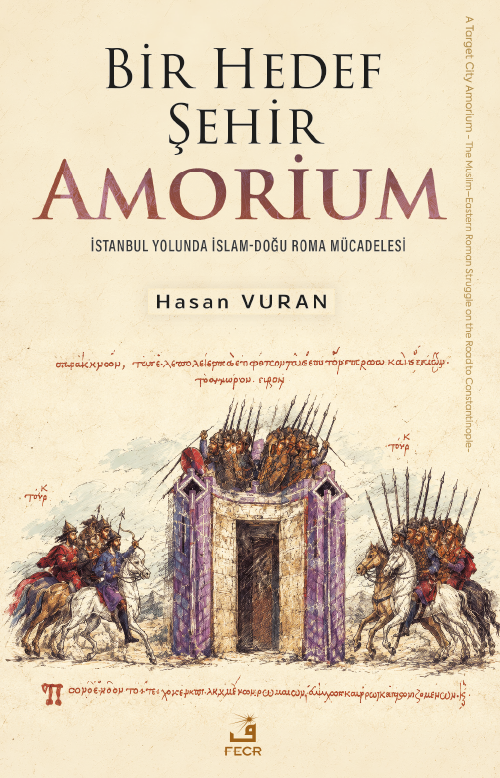
At the center of the study is the Great Amorium Campaign of 223/838,
which constituted the most remarkable phase of this long historical process.
The developments during the reign of the Eastern Roman emperor
Theophilos, the attacks on Zibatra and Malatya, al-Muʿtaṣim Billāh’s
preparations for the campaign, the Abbasid army’s advance into Anatolia,
the Battle of Dazimon, the capture of Ankara, the siege of Amo
rium, and the conquest of the city are examined in detail in the light
of the available sources. The developments following the campaign, its
impact on both the Eastern Roman Empire and the Abbasid Caliphate,
Abū Tammām’s ode “Fath Ammūriyya”, and the subsequent historical
course of Amorium are also included within the scope of the study.
The study comparatively evaluates Islamic historical sources and Eastern
Roman chronicles alongside geographical, biographical, and literary
works, archaeological evidence, and modern scholarship. In this
way, it seeks to establish the historical significance of Amorium within
the framework of its geographical location and the military, political,
and strategic functions it performed over the centuries.
Keywords: Islamic History; Amorium; Ammūriyya; Anatolia; Constantinople;
Muslim–Eastern Roman Relations


 İÇ SAYFALAR