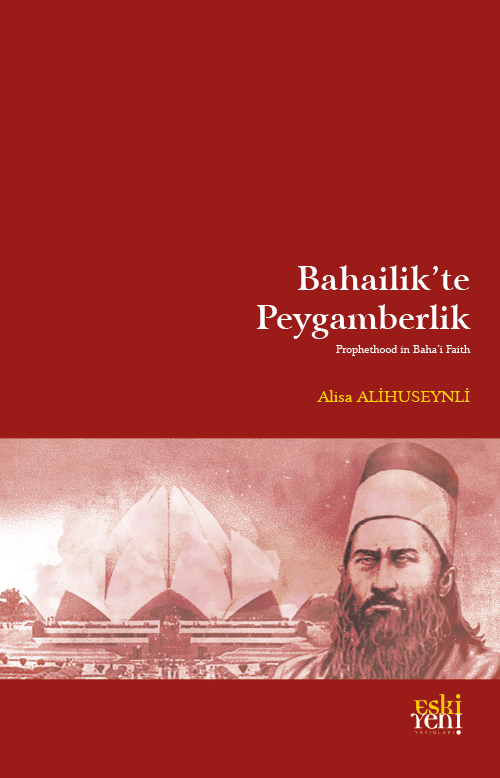
Prophethood in Baha’i Faith
The 19th century can be considered a dynamic period in the Islamic
heresiography. In India, Ahmadiyya emerged; in Iran, the Bahá’í
faith appeared; and in Saudi Arabia, Wahhabism completed its formation.
Alongside these developments, many existing schools underwent
changes and transformations. The emergence of these groups makes the
19th century worthy of study, and it is also worthwhile to examine the
schools and sects that emerged during this century. Among the groups
mentioned, the Bahá’í Faith gains significance because it emerged from
Shia Islam and claimed later to be a new religion. To study the emerging
sects and religions, it is essential to identify and understand their
tenets. Undoubtedly, prophethood (nubuwwat) is an important principle
among the articles of faith and it determines the main orientations
of the group. Additionally, like every article of faith, the concept of
prophethood undergoes changes over time. Therefore, it would be crucial
to study the formation and development of the belief in prophethood
in the Bahá’í Faith.
The Imami branch of Shia Islam, and within it, Shaykhism and Bábism,
constitute the historical background of the Bahá’í Faith. Thus, the belief
in prophethood in the Bahá’í faith should be studied considering its
sectarian and historical background. Another aspect that needs examination
is the historical course of a belief and the transformations it
undergoes within this course. From this perspective, any research on
the belief in prophethood in the Bahá’í faith should take into account
the Shia, Shaykhism and Bábism groups and examine the issue in the
context of these groups. As far as we can determine, there is no independent
academic research on prophethood in the Turkish, Arabic, and
English literature. This gap in the literature has prompted us to undertake
such a study.
In research on the Bahá’í Faith, the similar and different points related
to prophethood among the founding figures- the Báb, Bahá’u’lláh, ’Abdu’l-
Bahá, and Shoghi Effendi-have not been considered. Additionally,
the sociopolitical situations each founding figure expe-rienced and the
intellectual impacts these situations created have been overlooked. We
aim to fill these gaps, and additionally, to determine when and why
these changes and similari-ties occurred, the extent of the similarities
and differences in the belief in prophethood between the Bahá’í faith,
Shia and Shaykhism, and which characteristics were added to or removed
from the concept of prophethood throughout the historical process.
We believe that such a study will contribute not only to the Turkish
literature but also to the English and Arabic literature in the subject.
Keywords: Bahaism; Prophethood; Bâb; Baha’u’llah; Abdu’lbaha;
Shoghi Effendi

 İÇ SAYFALAR