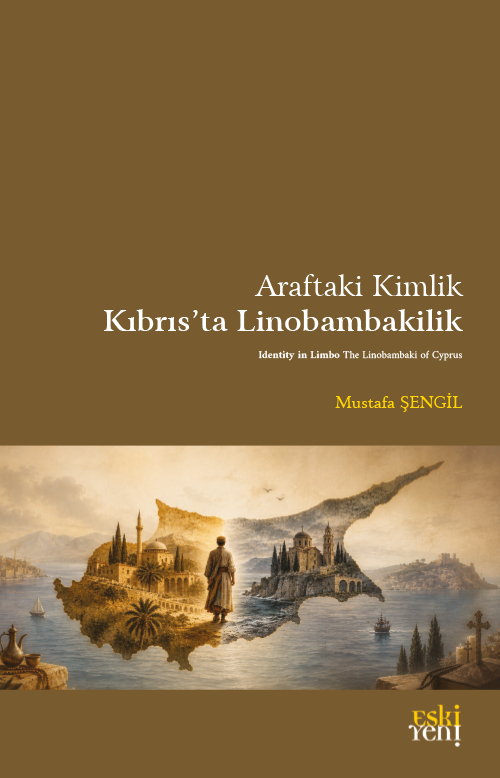
Identity in Limbo:
The Linobambaki of Cyprus
This study examines the Linobambaki (“linen-cotton”) community of
Cyprus, a hybrid religious group that emerged after the Ottoman conquest
of 1571. Known publicly as Muslims while privately preserving
Christian rituals or practicing both faiths simultaneously, the Linobambaki
have long been misinterpreted by reductionist Greek and Turkish
nationalist historiographies. Drawing on the methodologies of the History
of Religions, anthropology, and comparative history, this research
reconstructs the phenomenon as a sophisticated survival strategy rather
than a coerced Islamization or a marginal anomaly. The central argument
posits that Linobambaki identity was shaped at the intersection of
the Ottoman millet system’s flexible boundaries, the hegemonic rivalry
between the Orthodox and Catholic Churches, and the everyday pragmatic
choices of individuals. The study highlights the hitherto neglected
Latin Catholic and Maronite roots of the community, arguing that many
Linobambaki were former Latin elites and Lebanese-origin Maronites
who sought to escape Orthodox dominance after 1571. A critical deconstruction
of Roland Michell’s colonial-era report -a quintessential example
of Orientalist discourse- reveals how Western observers misrepresented
the group as “chameleon-like” and “indecisive.” Furthermore,
the work demonstrates how the Linobambaki narrative has been appropriated
as a political myth in contemporary identity politics, serving
Greek nationalist claims of “Turkified Greeks,” Turkish Cypriot secularism
against Anatolian orthodoxy, and the tactical use of EU citizenship.
Ultimately, the Linobambaki experience proves that identity is not a
fixed essence but a fluid construct, continuously negotiated through
historical contingencies, power relations, and the mundane necessities
of coexistence.
Keywords: Linobambaki; Crypto-Christianity; Dual Religion; Identity;
Ottoman Millet System

 İÇ SAYFALAR