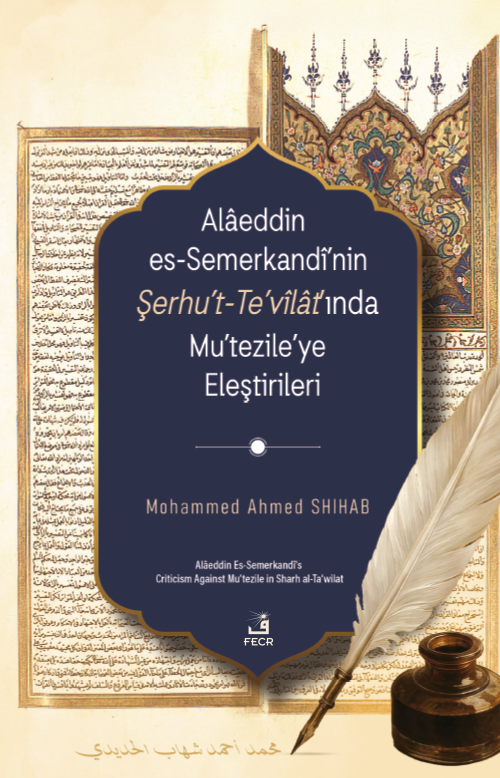
Alâeddin Es-Semerkandî’s Crıtıcısm Agaınst Mu’tezıle in Sharh al-Ta’wilat
The divisions among Muslims regarding doctrinal and political issues have sometimes
been the cause, and sometimes the result, of sectarian differences in the interpretation
and exegesis of the Quran. Almost every sect has experienced divisions stemming from
these differing approaches, sometimes among its own members, but mostly with its opponents.
The traditions where this division occurred most prominently include the Ahl
al-Sunnah and the Mu’tazilites. Both sects harshly criticized the views of the other and
defended their own principles and beliefs, using the Quran as a basis for their interpretation.
One of the leading figures in presenting and explaining the doctrinal ideas of the Ahl
al-Sunnah is Abu Mansur al-Maturidi. While writing his work Ta’wilat al-Qur’an, Maturidi
grounded his doctrinal beliefs in the Quran and criticized other schools of thought, particularly
the Mu’tazilite school. Alaeddin al-Samarqandi, a member of the same tradition
and circle, elaborated upon the criticisms leveled against the Mu’tazilites in his Sharh al-
Ta’wilat, a commentary on Maturidi’s work, presenting them in his own style. This study
identifies and analyzes the doctrinal and political criticisms directed at the Mu’tazilites
in Samarqandi’s commentary. The introduction describes the scope and methodology of
the study, followed by a presentation of the sources consulted, primarily all manuscript
copies of Sharh al-Ta’wilat. The first chapter provides information about Samarqandi’s
life, scholarly personality, teachers, and students. The second section is devoted to the
criticisms leveled against the Mu’tazilites regarding the principles of Allah’s unity (Tawhid)
and justice in Samarqandi’s Sharh al-Ta’wilat. The third section contains criticisms
directed at the Mu’tazilites concerning al-Asma wa’l-Ahkam. The conclusion evaluates
the findings and conclusions reached by the study. Under the heading “Appendices,” pages
from manuscript copies illustrating the inclusion of Sharh al-Ta’wilat in the margins
and within the text of Ta’wilat, a table showing the deficiencies found in the manuscripts
of Sharh al-Ta’wilat, and a table showing the topic headings in the margins of Sharh al-
Ta’wilat are provided.
Keywords: Samarqandi; Maturidism; Sharh al-Ta’wilat; Ahl al-Sunnah; Mu’tazilites

 İÇ SAYFALAR