1000₺ ve üzeri alışverişlerde ÜCRETSİZ KARGO
Hafta içi saat 12.00‘ye kadar verilen siparişler AYNI GÜN KARGODA

%29 İNDİRİM

Orijinal fiyat: ₺205,00.Şu andaki fiyat: ₺145,00.

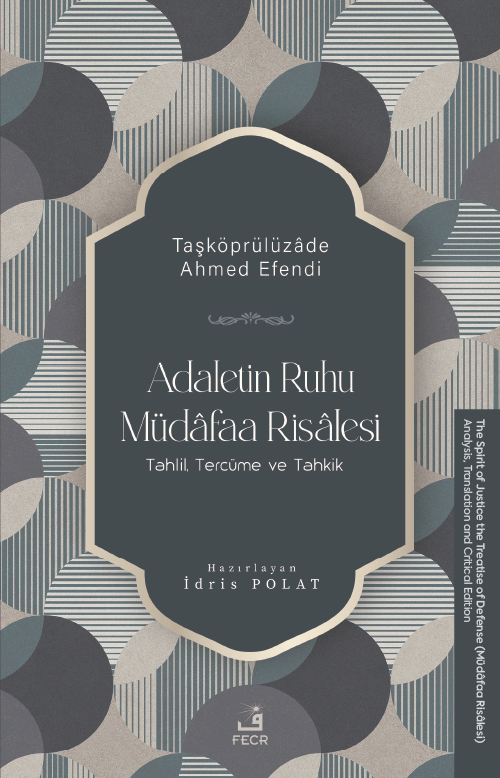
Adaletin Ruhu Müdâfaa Risâlesi Tahlil, Tercüme ve Tahkik

The Spirit of Justice The Treatise of Defense (Müdâfaa Risâlesi)

10.70458/9786255576767

0000-0002-2333-9862 F1022 ,
Paylaş
Adaletin Ruhu Müdâfaa Risâlesi Tahlil, Tercüme ve Tahkik
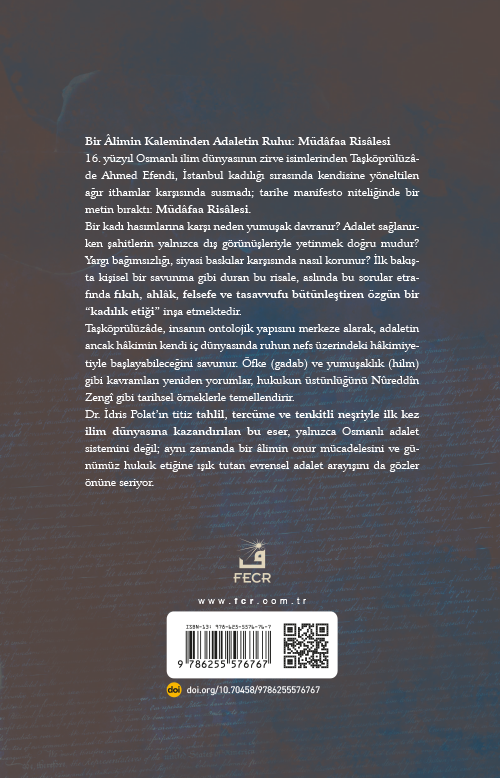
Bu çalışma, 16. yüzyıl Osmanlı ilim ve düşünce dünyasının en velûd simalarından Taşköprülüzâde Ahmed Efendi’nin (ö. 968/1561), İstanbul kadılığı görevinden ayrılmasının hemen ardından hicrî 958 (m. 1551) yılında kaleme aldığı Müdâfaa Risâlesi adlı eserinin tenkitli neşrini ve tahlilini içermektedir. Risâle, müellifin kadılık tecrübelerinden süzülmüş, şahsına yöneltilen ithamlara karşı bir savunma olmanın çok ötesinde, fıkıh, ahlâk ve tasavvufu bütünleştiren özgün bir “kadılık etiği” manifestosu niteliği taşımaktadır. Taşköprülüzâde, risâlenin mukaddimesinde insanın ontolojik yapısını ruh (emir âlemi) ve beden (halk âlemi) ikiliği üzerinden analiz eder. Ona göre adaletin ilk şartı, kadının kendi iç dünyasında ruhun öfke ve şehvet gibi nefsânî kuvvetler üzerindeki hâkimiyetini sağlamasıdır. Bu metafizik temele dayandırdığı savunmasında; hilmi öfkeye tercih etmek, şahitlerin zâhirî durumuyla yetinmek ve yöneticilerin maslahat odaklı “siyaset” anlayışına uymamak gibi eleştirilere fıkhî ve aklî delillerle cevap verir. Özellikle kadının siyasî otoriteden bağımsız olarak yalnızca şeriatın en sahih görüşleriyle hükmetmesi gerektiğini vurgulayarak yargı bağımsızlığının ve hukukun üstünlüğünün altını çizer. Eserin “Hâtime” bölümü, bireysel ve kurumsal adalet anlayışını toplumsal bir çerçeveye taşır. Taşköprülüzâde, iyiliği emredip kötülükten sakındırma (emr bi’l-maʿrûf ve nehy ʿani’l-münker) görevinin ideal toplum düzeninin teminatı olduğunu savunur. Bu bölümde kadı ile muhtesibin (kamu düzeni görevlisi) yetkilerini kesin çizgilerle ayırarak, kadının görevinin yargılama, toplumsal ahlâkın denetiminin ise idarî bir sorumluluk olduğunu belirtir. Bu bütüncül yaklaşımıyla risâle, yalnızca bir kadının kişisel savunması değil, aynı zamanda 16. yüzyıl Osmanlı adalet, ahlâk ve toplum felsefesine dair temel bir metin hüviyetindedir.
Anahtar Kelimeler: Tasavvuf; Kadılık Etiği; Osmanlı Ahlâk Düşüncesi; Adalet Felsefesi; Taşköprülüzâde Ahmed Efendi.

 İÇ SAYFALAR
The Spirit of Justice The Treatise of Defense (Müdâfaa Risâlesi)
Analysis, Translation, and Critical Edition
This study presents the critical edition and analysis of Müdâfaa
Risâlesi, authored by Taşköprülüzâde Ahmed Efendi (d. 968/1561),
one of the most prolific figures of the sixteenth-century Ottoman intellectual
tradition. Written in 958/1551, shortly after his resignation
from the office of judge in Istanbul, the treatise reflects the author’s
judicial experience and stands not merely as a response to accusations
directed against him, but as an original manifesto of “judicial ethics”
integrating jurisprudence, ethics, and Sufism.
In the introduction, Taşköprülüzâde analyzes the ontological structure
of the human being through the duality of the soul (realm of command)
and the body (realm of creation). According to him, the first
condition of justice is that the judge must establish the dominance of
the soul over the carnal faculties -such as anger and lust- within his
inner world. Building on this metaphysical foundation, he addresses
criticisms including his preference for forbearance over anger, his reliance
on the outward reliability of witnesses, and his refusal to comply
with the rulers’ policy-oriented notion of siyāsa. In doing so, he employs
both rational and juristic arguments, emphasizing that the judge
must rule independently of political authority and solely on the basis
of the soundest interpretations of the Sharīʿa, thereby underlining judicial
independence and the supremacy of law.
The “Conclusion” (Khātima) extends this vision of personal and institutional
justice into a social framework. Taşköprülüzâde argues that
the duty of commanding right and forbidding wrong (amr bi’l-maʿrūf
wa nahy ʿani’l-munkar) is the guarantee of the ideal social order. Here
he carefully distinguishes the authority of the judge from that of the
muḥtasib (public moral inspector), stressing that adjudication is the
judge’s task, whereas the supervision of public morality falls under
administrative responsibility. With this comprehensive approach, the
treatise emerges not only as a personal defense but also as a fundamental
text on sixteenth-century Ottoman thought concerning justice,
ethics, and society.
Keywords: Sufism; Judicial Ethics; Ottoman Moral Thought; Philosophy
of Justice; Taşköprülüzâde Ahmed Efendi

Genel Yayın No

1711

Marka

Fecr

Marka No

1022

ISBN

9786255576767

Yayım Tarihi

17.10.2025

Dil

Boyut

13,5 x 21 cm

Baskı Sayısı

1

Sayfa Sayısı

124

Kağıt Cinsi

70 gr. Enzo

Kapak

Taksitleri Güncelle