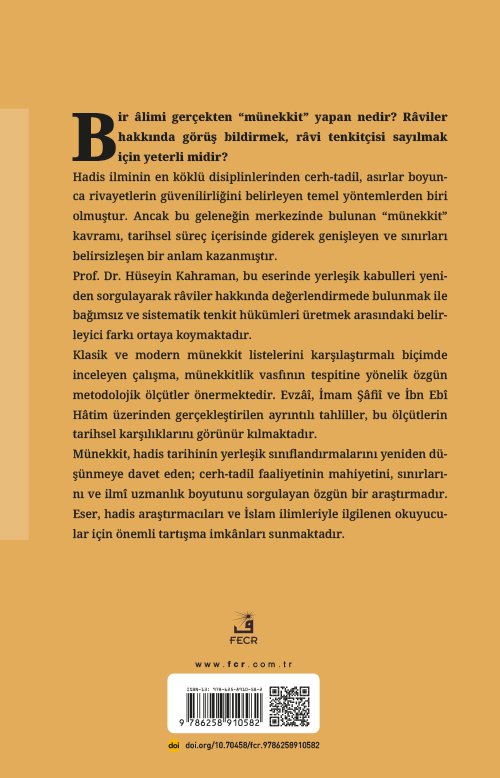
This study examines the nature, historical usage, and methodological boundaries of the
concept of the munaqqid (hadith critic) within the tradition of jarḥ wa-taʿdīl, a fundamental
discipline of hadith scholarship. It addresses the widespread tendency in classical
and contemporary literature to classify scholars as critics merely because they expressed
opinions about transmitters, without adequately examining the nature of those judgments.
The study distinguishes biographical descriptions concerning transmitters’ personal,
intellectual, and moral characteristics from authoritative judgments concerning
their reliability in hadith transmission. Accordingly, the designation of a critic is associated
not simply with transmitting or employing earlier evaluations but with producing independent
judgments through systematic investigation. The research first comparatively
analyzes classical and contemporary lists of hadith critics and subsequently proposes
primary and secondary criteria for identifying genuine critical expertise. These criteria
are examined through three representative figures from different historical contexts:
al-Awzāʿī, al-Shāfiʿī, and Ibn Abī Ḥātim. Their cases illuminate the methodological distinctions
between employing transmitter criticism, transmitting previous assessments, and
independently producing critical judgments. The study concludes that the designation of
a munaqqid should primarily depend on the quality, continuity, and originality of scholarly
activity rather than quantitative indicators. It thereby contributes to a historically
grounded understanding of hadith criticism.
Keywords: Hadith; Jarḥ wa-Taʿdīl; Hadith Critics; Transmitter Criticism; Hadith Methodology


 İÇ SAYFALAR


