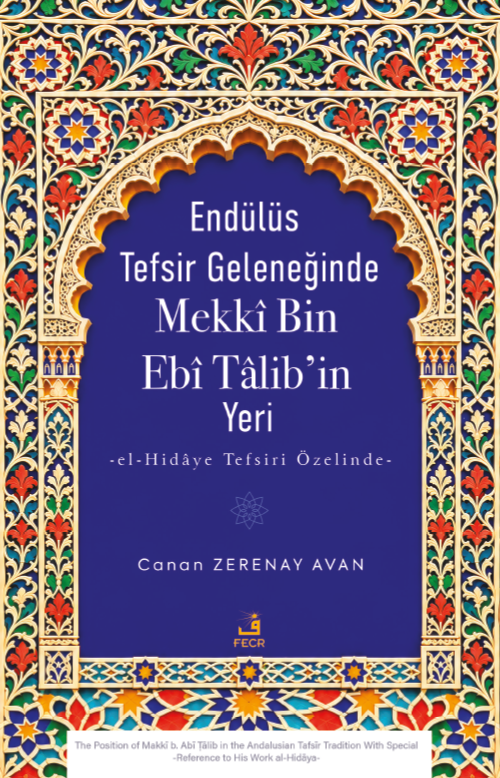
The Position of Makkī b. Abī Ṭālib in the Andalusian
Tafsīr Tradition With Special
Reference to His Work al-Hidāya
This dissertation examines the scholarly position of Makki b. Abi Talib
(d. 437/1045) within the Andalusian tafsir tradition through a study
of his commentary al-Hidaya ila Bulugh al-Nihaya. The study adopts
a comparative approach based on five principal exegetical dimensions-
grammar, transmission (naql), qira’at, Isra’iliyyat, and legal interpretation
(ahkam al-Qur’an)-through an analysis of the works of five
exegetes representing the Andalusian tafsir tradition. Within this framework,
the similarities and differences between Makki b. Abi Talib
and other Andalusian exegetes are identified in an effort to clarify his
place in the history of the Andalusian tafsir tradition. The research was
designed within a phenomenological framework based on a qualitative
research approach. Data were collected through document analysis
and subsequently analyzed using content analysis. The findings indicate
that Makki b. Abi Talib’s al-Hidaya played a formative role in the
development of the Andalusian tafsir tradition and served as a methodological
link and transitional bridge between the exegetical heritage
of the Eastern Islamic world and the Andalusian tafsir tradition.
Keywords: Tafsir; al-Hidaya; Grammar; Transmission (Naql); Qira’at;
Isra’iliyyat; Ahkam al-Qur’an

 İÇ SAYFALAR


