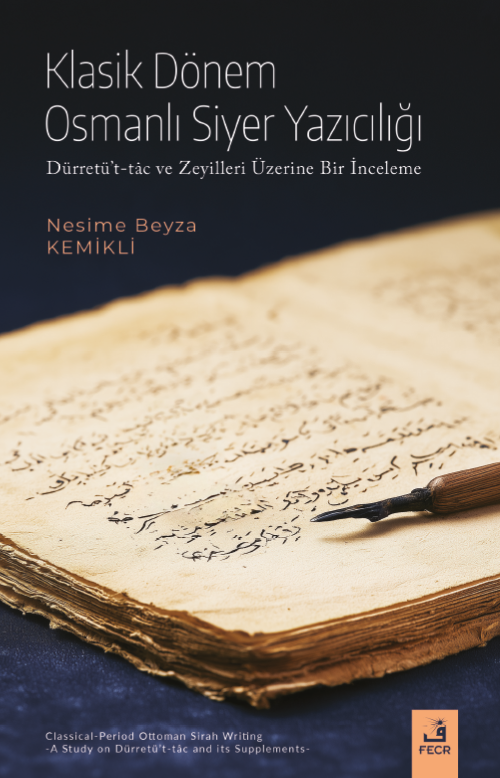
Classical-Period Ottoman Sirah Writing
A Study on Dürretü’t-tâc and its Supplements
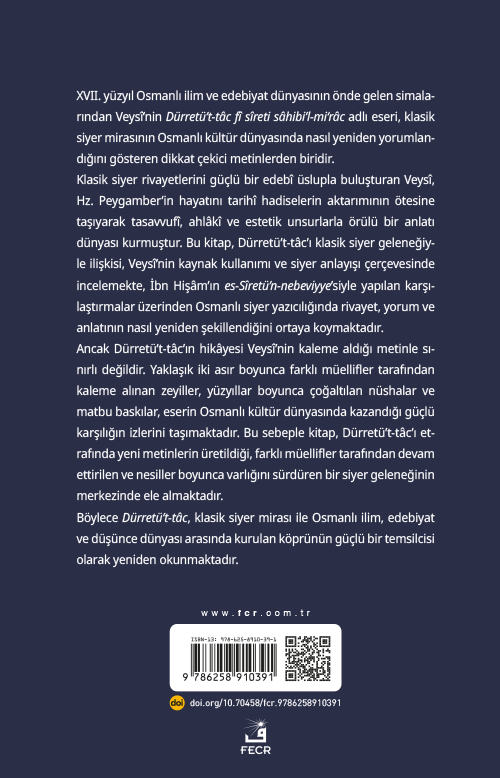
Veysî’s Dürretü’t-tâc fî Sîreti Sâhibi’l-Miʿrâc is one of the notable examples of Ottoman sīra literature produced in the seventeenth century. This book examines Dürretü’t-tâc with particular reference to its relationship with the classical sīra tradition, Veysî’s understanding of sīra, and the work’s influence on Ottoman cultural life. By considering the author’s scholarly background and use of sources, it seeks to situate the work within the broader tradition of Ottoman sīra literature.
Adopting a text-centred and comparative approach, the book compares Dürretü’t-tâc with Ibn Hishām’s al-Sīra al-Nabawiyya, one of the foundational works of the classical sīra tradition. It also examines the manuscript and printed copies of Dürretü’t-tâc as well as the zayl literature that developed around it. In this way, the work is considered not merely as an individual sīra text but as the centre of a broader textual tradition that evolved over time.
While largely preserving the narratives transmitted through the classical sīra tradition, Veysî reinterpreted them through Sufi, ethical, and literary perspectives. In this respect, Dürretü’t-tâc goes beyond the transmission of historical information and assumes a character intended to strengthen the reader’s love for and attachment to the Prophet Muhammad. The zayls composed in continuation of the work and its extensive manuscript transmission further demonstrate the wide circulation and influence that Dürretü’t-tâc attained in the Ottoman period.
With these characteristics, Dürretü’t-tâc stands out as a formative and influential text that reshaped the classical sīra heritage within the scholarly, literary, and cultural dynamics of the Ottoman world, thereby establishing a bridge between the classical sīra tradition and the Ottoman understanding of the Prophet’s biography.
Keywords: Veysî; Dürretü’t-tâc; Sīra; Ottoman Sīra Literature; Prophet Muhammad; Zayl Tradition

 İÇ SAYFALAR