1000₺ ve üzeri alışverişlerde ÜCRETSİZ KARGO
Hafta içi saat 12.00‘ye kadar verilen siparişler AYNI GÜN KARGODA

  • 0 Items - ₺0,00
    • Sepette hiç bir ürün yok.
-30%YENİ

Orijinal fiyat: ₺450,00.Şu andaki fiyat: ₺315,00.

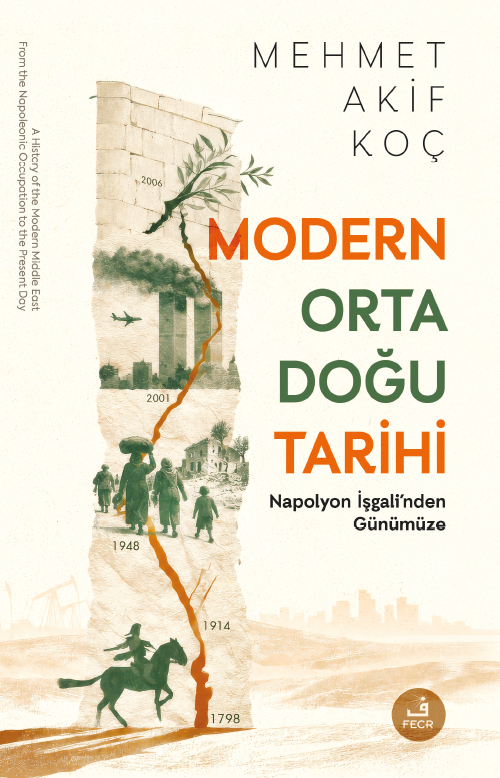
Modern Orta Doğu Tarihi

A History of the Modern Middle East

10.70458/fcr.9786258910346

0000-0001-5179-6027 F1176 , ,
Paylaş
 
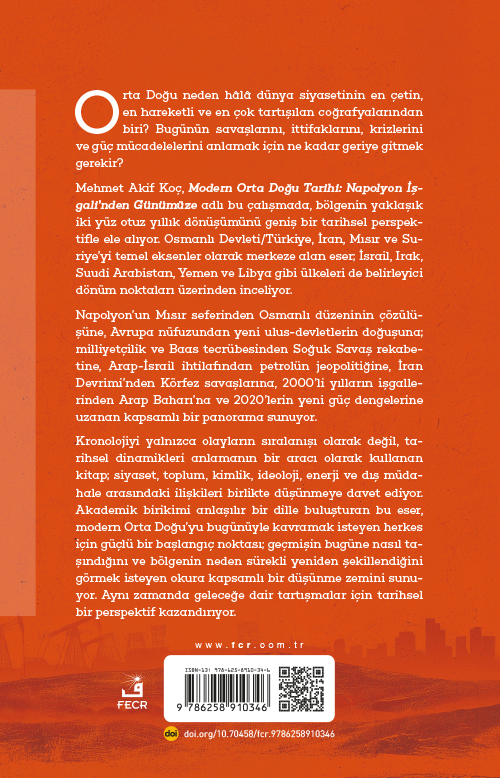
 Modern Orta Doğu tarihi, esasen kavramsal ve dönemsel düzlemde, Orta Doğu’nun yaklaşık son iki yüz otuz yıllık serancamını konu edinmektedir. Bu süreç, 1798 yılında Napolyon Bonapart’ın Mısır’ı işgaliyle başlamış olup, Orta Doğu’nun modern dönem çerçevesini şekillendiren tarihsel gelişmeleri kapsamaktadır. Fakat Orta Doğu’nun coğrafi sınırları sabit değildir; bölgeye ilişkin Doğu’da ve Batı’daki farklı yaklaşımlar bu coğrafyayı (ve kavramı) farklı şekillerde tanımlamaktadır. Kimi tanımlarda bölge, Fas’tan başlayarak Tacikistan’a, Afganistan ve Pakistan’a kadar uzatılmakta; kimi yaklaşımlarda ise Levant ve Arap Yarımadası (Lübnan, İsrail, Suriye, Suudi Arabistan, Yemen, Körfez Emirlikleri ve Irak) ile sınırlı tutulmaktadır.
Bu çalışma kapsamında ise, Orta Doğu daha geniş bir anlamda ele alınacak, ancak Afganistan bu kapsamın dışında bırakılacaktır. Doğu sınırında İran dâhil edilecek, kuzeyde ise Türkiye ile sınırlı tutulacaktır. Bölgenin batı sınırı Fas’a kadar genişletilmeyip Cezayir ve Tunus ile sınırlı kalınacaktır. Zira bu hattın batısındaki bölgeler hem tarihsel bağlamda hem de modern dönemde çoğunlukla bu analiz kapsamında yer almamaktadır. Böylelikle, metodolojik olarak ve bölgesel gelişmelerdeki aktörlükleri çerçevesinde Modern Orta Doğu tarihine dört temel coğrafi eksen üzerinden yaklaşılacaktır: Osmanlı Devleti (Türkiye), İran, Mısır ve Suriye. Bu dört merkez, modern Orta Doğu’nun oluşumunda belirleyici rol oynamış olup, bu çerçevede incelemenin omurgasını oluşturmaktadır. Buna ek olarak, İsrail, Suudi Arabistan, Yemen, Libya ve Irak gibi ülkeler, dönemin siyasi konjonktürüne bağlı olarak belirli bölümlerde ayrıntılı biçimde ele alınacaktır.
Modern Orta Doğu tarihinin başlangıcı genellikle, 1789 Fransız Devrimi sonrasındaki gelişmelerle birlikte anılmakta olup, onu takip eden 1798 Mısır Seferi bu dönemin eşik noktası olarak kabul edilmektedir. Haçlı Seferleri’nden asırlar sonra, Napolyon Bonapart’ın Devrim sonrası kurulan Fransız Direktörlüğü (Direktuvar) adına ve sömürgeci hayallerle Orta Doğu’ya yönelmesi ve ardından İngilizlerin de bölgeye ilk kez askerî olarak ayak basması, bu sürecin öncelikli dönüm noktası olarak görülmektedir. Bu çerçevede Orta Doğu açısından da modern dönem, 1800’lerin başı itibarıyla başlamaktadır.
Bu bağlamda, elinizdeki çalışmanın ilk bölümünde Orta Doğu’nun İslam’ın doğuşundan 1798 yılına kadarki tarihsel süreci genel hatlarıyla ele alınacaktır. Zira bölgenin bugünkü sosyo-politik ve kültürel yapısını şekillendiren temel dinamikler, büyük ölçüde İbrahimî dinlerin tarihiyle paralel bir gelişim göstermiştir. Fakat bu çalışmada çok erken dönemlere odaklanmaktan ziyade İslam dininin doğuşundan itibaren Orta Doğu’nun tarihsel biçimlenişi genel hatlarıyla ele alacaktır. Bu süreç incelenirken de kronolojik bir sıralama yerine tematik bir yaklaşım benimsenecektir. Tek tek ülkelerin tarihsel gelişimi ekseninde ilerlemek yerine, modern Orta Doğu’yu şekillendiren temel dinamikler ve belirleyici parametreler üzerinde durulacaktır. Bu çerçevede, bölgenin yapısal dönüşümünü açıklayan siyasi, toplumsal ve kültürel etkenler bütüncül bir bakış açısıyla analiz edilecektir.
Anahtar Kelimeler: Orta Doğu; siyasi tarih; Arap-İsrail ihtilafı; Milliyetçilik; İslamcılık; dış politika.
 İÇ SAYFALAR
A History of the Modern Middle East
-From the Napoleonic Occupation to the Present Day-
Modern Middle Eastern history essentially examines the trajectory of
the Middle East over roughly the past two hundred and thirty years,
both on a conceptual and a periodic plane. This process begins with
Napoleon Bonaparte’s invasion of Egypt in 1798 and encompasses the
historical developments that shaped the framework of the modern era
in the Middle East. However, the geographical boundaries of the Middle
East are not fixed; varying perspectives in both the East and the West
define this geography (and the concept itself) in different ways. While
some definitions extend the region from Morocco all the way to Tajikistan,
Afghanistan, and Pakistan, others limit it to the Levant and the
Arabian Peninsula (Lebanon, Israel, Syria, Saudi Arabia, Yemen, the
Gulf Emirates, and Iraq).
Within the scope of this study, the Middle East is approached in a broader
sense, though Afghanistan is excluded from this purview. Iran is
included on the eastern border, while the northern boundary is limited
to Turkey. The western boundary of the region is not extended as
far as Morocco, remaining confined to Algeria and Tunisia, as the territories
west of this line predominantly fall outside the scope of this
analysis both in historical context and in the modern period. Consequently,
from a methodological standpoint and within the framework of
their agency in regional developments, Modern Middle Eastern history
is approached through four principal geographical axes: the Ottoman
Empire (Turkey), Iran, Egypt, and Syria. These four centers have played
a decisive role in the formation of the modern Middle East and thus
constitute the backbone of this inquiry. In addition, countries such as Israel,
Saudi Arabia, Yemen, Libya, and Iraq will be examined in detail in
specific chapters depending on the political conjuncture of the period.
The beginning of modern Middle Eastern history is generally associated
with the developments following the 1789 French Revolution, with the
ensuing 1798 Egyptian Expedition accepted as the threshold of this era.
Centuries after the Crusades, Napoleon Bonaparte’s orientation toward
the Middle East on behalf of the post-Revolutionary French Directory
with colonial ambitions, followed by the initial military intervention of
the British in the region, are regarded as the primary turning points of
this process. In this context, the modern era for the Middle East begins
as of the early 1800s.
Accordingly, the first chapter of this book outlines the historical trajectory
of the Middle East from the advent of Islam up to the year 1798.
This is because the fundamental dynamics shaping the region’s current
socio-political and cultural structure have developed largely in parallel
with the history of the Abrahamic religions. However, rather than focusing
on very early periods, this study outlines the historical formation
of the Middle East starting from the emergence of Islam. In examining
this process, a thematic approach is adopted instead of a chronological
ordering. Rather than proceeding along the historical evolution of
individual countries, the study emphasizes the core dynamics and determinative
parameters that shaped the modern Middle East. Within
this framework, the political, social, and cultural factors explaining the
structural transformation of the region are analyzed from a holistic
perspective.
Keywords: Middle East; Political History; Arab-Israeli Conflict; Nationalism;
Islamism; Foreign Policy

Genel Yayın No

2024

Marka

Fecr

Marka No

1176

ISBN

9786258910346

Yayım Tarihi

1.10.2026

Dil

Boyut

13,5 x 21 cm

Baskı Sayısı

1

Sayfa Sayısı

368

Kağıt Cinsi

70gr. Enzo (Renkli Baskı)

Kapak

Taksitleri Güncelle